By Alain Renault
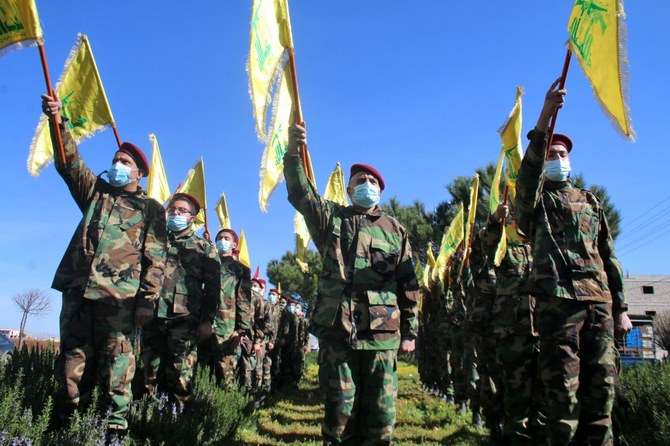
Member states of the Terrorist Financing Targeting Center today announced joint sanctions targeting multiple key parts of Hezbollah’s financial infrastructure. The action designates five entities and sixteen individuals, focusing on the group’s major financial institutions Al-Qard Al-Hassan and Bayt al-Mal, along with their top leaders and operational managers.
This coordinated move demonstrates the shared commitment of participating nations to disrupt Hezbollah’s ability to exploit the international financial system. All targets had previously been designated by the United States.
A Sustained International Effort.
The Terrorist Financing Targeting Center conducts joint actions such as sanctions designations, shares actionable intelligence on terrorist financing networks, and builds member countries’ capacity to counter terrorist organizations that threaten security and stability.
The networks designated today threaten regional stability, international security, mutual interests, and global trade. By restricting Hezbollah’s access to funding, member states aim to protect the integrity of the international financial system, support the Lebanese people, and weaken terror networks.
This designation represents the third action by the Terrorist Financing Targeting Center under the current United States administration and the ninth since the center was established under President Trump in May 2017.
Al-Qard Al-Hassan: Hezbollah’s Unofficial Banking Arm.
Al-Qard Al-Hassan, which translates to “The Benevolent Loan Association,” operates under the cover of a non-governmental organization license granted by the Lebanese Ministry of Interior. In reality, it functions as a full-scale financial institution, providing banking-like services that go far beyond what its registration documents disclose. Hezbollah uses Al-Qard Al-Hassan to move funds through shell accounts and facilitators, supporting its militant activities while undermining Lebanon’s ability to rebuild its economy.
By hoarding hard currency desperately needed by the Lebanese financial system, Al-Qard Al-Hassan enables Hezbollah to strengthen its own support base and compromise the stability of the Lebanese state. After many offices of Bayt al-Mal were destroyed during the 2006 conflict, Hezbollah shifted much of its financial activity to Al-Qard Al-Hassan, which assumed a central role in the group’s financial operations. Bank accounts were often re-registered in the names of senior officials to evade sanctions.
Bayt al-Mal: Hezbollah’s Unofficial Treasury.
Bayt al-Mal functions as Hezbollah’s unofficial treasury. It holds and invests the group’s assets and serves as an intermediary between the organization and mainstream banks. Operating under the direct supervision of the Hezbollah Secretary General, Bayt al-Mal acts as a bank, creditor, and investment arm. Its central headquarters is located in Hezbollah’s stronghold in Beirut’s southern suburbs.
Key Individuals Designated.
The sanctions target senior figures who have managed and sustained Hezbollah’s financial operations:
-Ibrahim Ali Daher serves as Chief of Hezbollah’s Central Finance Unit. He oversees the group’s overall budget and spending, including funding for terrorist operations inside and outside Lebanon. The unit receives worldwide income and manages budgets for all Hezbollah departments.
-Adel Mohamad Mansour is the Executive Director of Al-Qard Al-Hassan. He has used his personal bank accounts to conduct transactions linked to Hezbollah institutions.
-Ahmad Mohamad Yazbeck acts as Al-Qard Al-Hassan’s financial director. He has been involved in maintaining joint bank accounts and “shadow accounts” that facilitated the transfer of more than five hundred million dollars over a decade.
-Samer Hasan Fawaz heads the management division of Al-Qard Al-Hassan, handling administration and coordination with supporting companies.
-Ali Mohamad Karnib leads Al-Qard Al-Hassan’s purchase department and has overseen significant gold acquisitions for the organization.
-Abbas Hassan Gharib, Mustafa Habib Hart, Ezzat Youssef Akar and Hasan Chehadeh Othman participated in joint banking arrangements that allowed large-scale fund transfers despite sanctions.
-Nehme Ahmad Jamil, a senior auditing official at Al-Qard Al-Hassan, jointly owns a supporting company and has provided financial services for nearly twenty years.
-Issa Hussein Kassir oversees procurement and logistics, opening accounts and transferring substantial funds on behalf of the organization.
-Ali Ahmad Krisht managed a branch in Tyre and coordinated closely with senior officials.
-Naser Hassan Neser helped manage an accounting firm linked to Hezbollah’s Central Finance Unit.
-Wahid Mahmud Subayti and Mohammed Suleiman Badir engaged in shadow banking activities and maintained personal accounts to circumvent restrictions.
-Imad Mohamad Bezz heads the evaluation and storage department, managing gold deals and large transactions.
Supporting Companies Also Targeted
-Al-Khobara for Accounting, Auditing, and Studies is owned and managed by senior Al-Qard Al-Hassan figures and provides accounting services directly to the organization.
-Tashilat SARL supplied loans and supported operations for both Al-Qard Al-Hassan and Bayt al-Mal.
-Auditors for Accounting and Auditing is controlled by Central Finance Unit leadership and delivers financial services to Hezbollah.
All listed individuals and entities were previously designated by the United States Office of Foreign Assets Control under Executive Order 13224. The joint international action significantly expands the pressure on Hezbollah’s financial infrastructure.
This latest operation reinforces the determination of nations working through the Terrorist Financing Targeting Center to dismantle the funding channels that sustain terrorist activities and to promote greater stability in Lebanon and the wider region.