By Nancy Lakkis
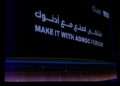
The banners thanking Iran, displayed along Beirut Airport Road and across the streets of the Lebanese capital, are not merely expressions of political loyalty; they are public acts of humiliation. They stand as stark symbols of a nation whose sovereign decision-making has been held hostage by the ideology of Velayat-e Faqih through its military proxy, Hezbollah. These banners are not simply demonstrations of power—they are declarations of the systematic violation of Lebanon’s dignity, carried out by an entity that recognizes neither the authority of the state nor the rule of law, all amid an official silence that borders on complicity.
The deeper tragedy lies within the social environment that embraces these slogans uncritically, refusing to break free from the cocoon of blind allegiance. Rather than holding accountable those who devastated their communities, destroyed their homes, and sacrificed generations for foreign ambitions, many continue to glorify the very architects of their suffering. This is no longer merely political behavior; it is a descent into a state of collective paralysis in which the tormentor is sanctified, while those who have turned an entire community into expendable fuel for expansionist projects are elevated to the status of saviors.
This culture of submission provides Lebanon’s political class with the justification it seeks for its suspicious silence. The timid promises to remove such displays have evaporated, and the once-familiar rhetoric of sovereignty has collapsed before the reality of armed domination. The Lebanese state today appears increasingly fragile—paralyzed before a militia that dictates national priorities by force. The silence of official institutions is no longer neutrality; it has become an unmistakable form of acquiescence by an elite that traded national interests for personal gain and the political dividends offered by Tehran.
After repeated disappointments and failed regional calculations, many Lebanese have come to realize that relying on external actors alone is a dangerous illusion. Great powers ultimately pursue their own interests, often viewing Lebanon as merely another bargaining chip in broader regional negotiations. The struggle for sovereignty, therefore, cannot be reduced to the removal of banners. It is an existential battle against an ideology specifically designed to domesticate minds, suppress independent thought, and subordinate national identity to transnational loyalties.
The confrontation is ultimately with the parallel state that has brought Lebanon nothing but isolation, destruction, economic collapse, and perpetual instability—and with every collaborator who sees in this collapse an opportunity to consolidate personal power.
The time has come to speak the truth without hesitation: the mask of “resistance” must be stripped away from what many Lebanese increasingly perceive as an Iranian occupation exercised through local instruments. Lebanon is not an Iranian card, nor should its future be written in Tehran. Its destiny must be determined in Beirut, by free citizens who choose sovereignty over subjugation and dignity over manufactured loyalties.
When the Lebanese people collectively decide that their dignity is worth more than imposed allegiances and imported ideologies, they will reclaim their state. And when that moment arrives, Lebanon will finally begin the long process of rebuilding a sovereign republic worthy of its history, its sacrifices, and its people.