By Maria Maalouf
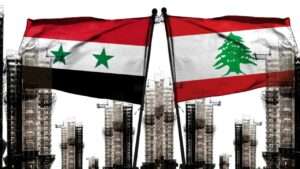
The Lebanese Parliament’s Budget and Finance Committee recently approved a proposal granting a “Golden Residency” to foreigners who invest at least $500,000 in Lebanon. Supporters argue that the initiative could attract foreign capital and stimulate economic activity. However, critics question whether Lebanon’s current economic and institutional environment can genuinely attract sustainable investment.
Investment is not driven solely by residency incentives. It depends primarily on confidence in a country’s financial system, legal framework, and overall stability.
First, Lebanon continues to suffer from a profound banking crisis that began in 2019. The collapse of the banking sector severely undermined confidence among both Lebanese citizens and international investors. Billions of dollars in deposits remain restricted, and comprehensive banking sector restructuring has yet to be completed.
Second, Lebanon was placed on the Financial Action Task Force (FATF) “grey list” in October 2024 due to deficiencies in combating money laundering and terrorist financing. Countries on this list are subject to increased international monitoring, a designation that can complicate financial transactions and discourage foreign investment.
Third, corruption remains a significant challenge. According to Transparency International’s Corruption Perceptions Index, Lebanon ranks among the world’s most corruption-affected countries, scoring only 23 out of 100 and ranking 153rd out of 182 countries in 2024. Weak institutions, limited accountability, and governance failures continue to undermine investor confidence.
Infrastructure deficiencies also represent a major obstacle. Reliable electricity, water services, waste management, transportation networks, and digital infrastructure are fundamental requirements for modern investment. Lebanon continues to face chronic shortages and service disruptions across these sectors.
In addition, Lebanon remains in sovereign default after suspending payments on its Eurobond obligations in 2020. Restoring international confidence requires comprehensive economic reforms, restructuring of the financial sector, and progress in negotiations with the International Monetary Fund (IMF).
The IMF has repeatedly emphasized that restoring confidence in Lebanon requires fiscal reforms, financial sector restructuring, greater transparency, and stronger governance mechanisms.
Finally, investors seek predictability, legal certainty, and security. Ongoing political tensions, regional instability, and domestic security concerns continue to weigh heavily on investment decisions.
The Golden Residency initiative may generate interest among some investors. However, without deep structural reforms, stronger institutions, financial sector recovery, and a stable business environment, residency incentives alone are unlikely to transform Lebanon into a competitive investment destination.
Sustainable investment requires more than incentives; it requires trust.
Sources:
-Financial Action Task Force (FATF) – Lebanon under increased monitoring (“grey list”).
-Transparency International – Corruption Perceptions Index 2024/2025.
-IMF statements on Lebanon’s reforms and financial restructuring.
-Lebanon’s sovereign default and Eurobond suspension
.