By Tim Frazer
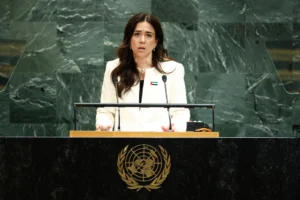
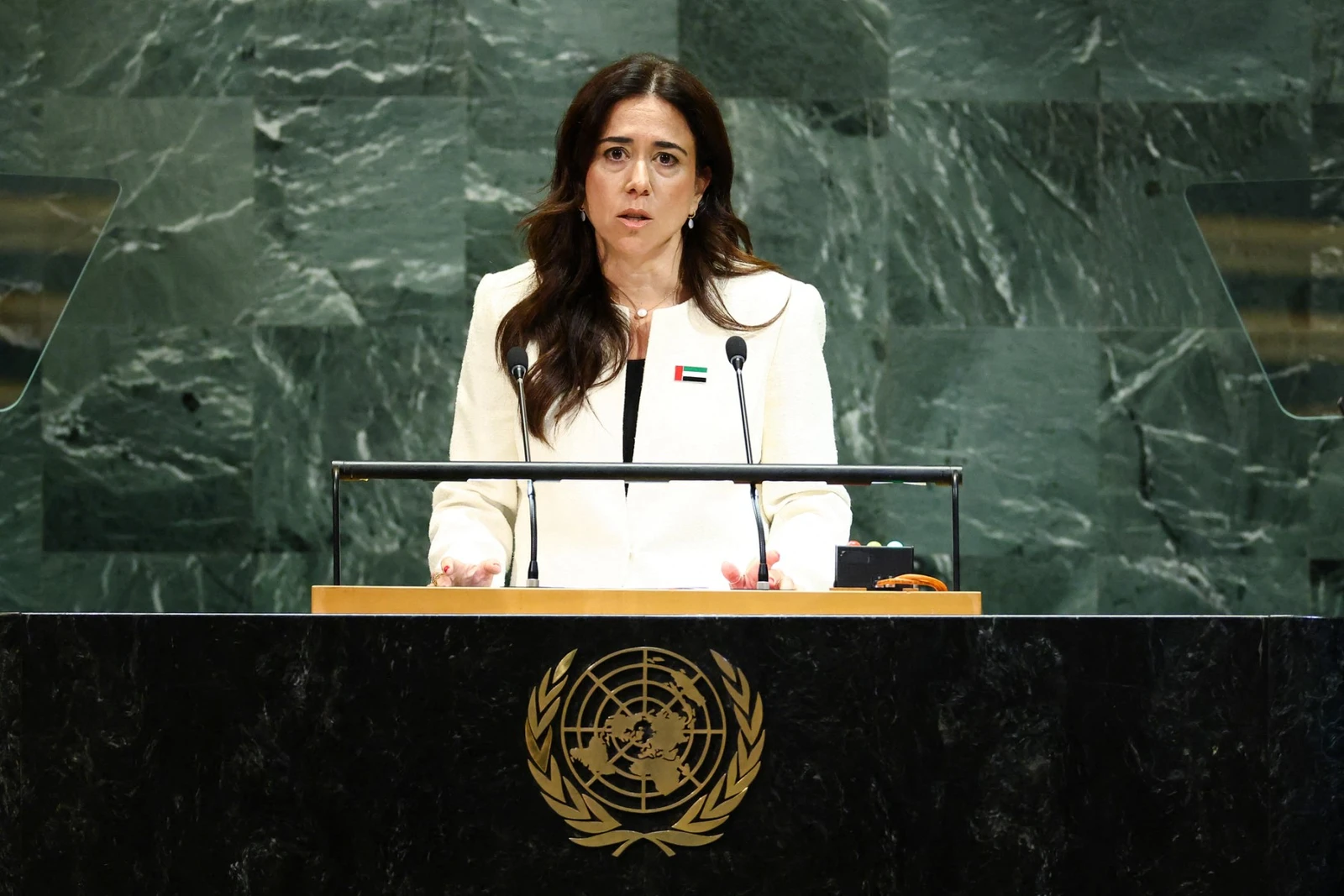
The United Arab Emirates has formally nominated Minister of State for Foreign Affairs Lana Nusseibeh as its candidate to succeed António Guterres as UN Secretary-General when his term ends in December 2026. Born in 1978 in Abu Dhabi, Nusseibeh is an Emirati diplomat whose family traces its roots to one of Jerusalem’s oldest and most prominent Muslim dynasties, the Nusseibehs—historically custodians of the keys to the Church of the Holy Sepulchre. Her father, Zaki Nusseibeh, was a longtime adviser to UAE founding leaders. She studied history at the University of Cambridge and earned a master’s degree in Israeli and Jewish diaspora studies from SOAS, University of London; she speaks Arabic, English, French, and Hebrew.
Nusseibeh became the UAE’s first female Permanent Representative to the United Nations in 2013 and served until 2024. During that period she held senior roles including Vice-President of the General Assembly, President of the Executive Board of UN Women, and co-chair of processes on General Assembly revitalization and Security Council reform. She led the UAE’s delegation during its 2022–2023 term as an elected Security Council member and twice served as Council president. Her portfolio has covered peace and security, humanitarian action, sustainable development, climate-related security risks, women’s affairs, and multilateral reform. UAE President Sheikh Mohamed bin Zayed Al Nahyan submitted the nomination in a letter highlighting her UN experience, judgment on international challenges, and record of constructive work. She has taken leave from her ministerial post to campaign.
The nomination injects a prominent Middle Eastern candidate into a race that has struggled to produce consensus. Informal Security Council straw polls have so far failed to yield a candidate acceptable to all five permanent members (the United States, Russia, China, Britain, and France). Costa Rica’s Rebeca Grynspan has led recent polls but, like other contenders, has received discourage votes from permanent members. Other candidates have included figures such as Chile’s Michelle Bachelet, Senegal’s Macky Sall, and several Latin American diplomats. Nusseibeh has framed her bid around restoring the UN’s role as a practical problem-solver rather than a spectator to crises, emphasizing urgency, bridging differences, and delivering concrete results. She has said she is “stubbornly optimistic” about the organization’s future and is not running because she is a woman but because of her belief in relentless diplomacy.
If selected, Nusseibeh would become the second Arab to lead the UN after Egypt’s Boutros Boutros-Ghali (1992–1996), its first woman, and the first from the Gulf. The Gulf Cooperation Council states have unanimously endorsed her candidacy. As Kristin Smith Diwan of the Arab Gulf States Institute recently observed, “Her candidacy stands as confirmation of the importance Gulf states still place on the UN in their ambitious future planning.” The choice will ultimately rest with the Security Council’s recommendation to the General Assembly, with the next Secretary-General expected to take office in January 2027.
Nusseibeh’s entry underscores both the ongoing deadlock in the selection process and the UAE’s growing investment in multilateral institutions at a time of heightened global crises.