By Nabimara Benson
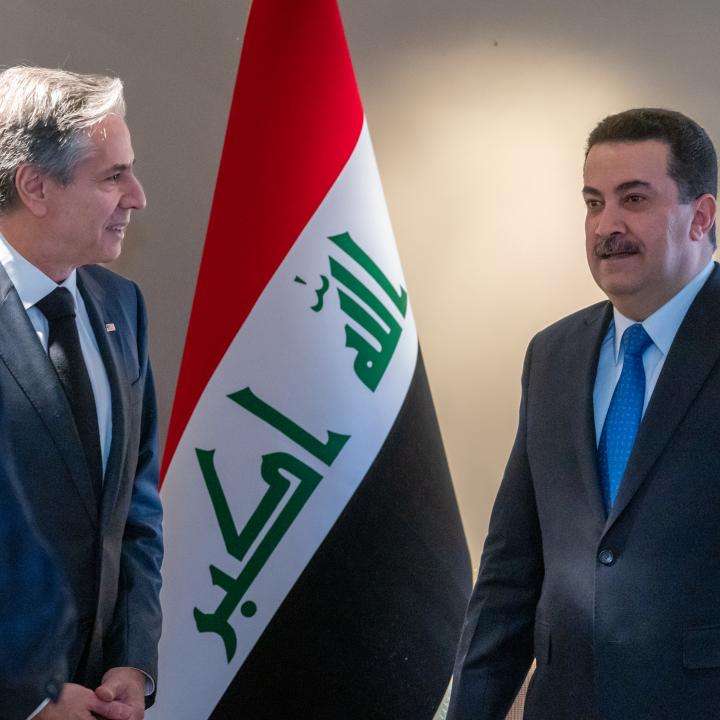
The joint statement issued on June 15, 2026, by Iraqi Prime Minister Ali al-Zaidi and U.S. Special Presidential Envoy Tom Barrack represents far more than a routine diplomatic exchange. Its precise language, prioritized agenda, and tone of mutual commitment signal a profound evolution in U.S. policy toward Iraq: a transition from managing spheres of influence to actively reshaping the foundational architecture of the Iraqi state itself.
This is not merely about bilateral ties. It reflects a critical juncture in redefining sovereignty in a nation that has grappled since 2003 with deep tensions between formal state institutions and fragmented internal power structures. The statement does not portray Iraq as a mature sovereign partner requiring routine support. Instead, it frames the country as a political entity whose core functional boundaries—monopoly on legitimate force, unified economic authority, and control over territory—are under deliberate recalibration.
Key phrases recur deliberately: affirming full Iraqi sovereignty while insisting on confining weapons exclusively to state hands, dissolving armed formations outside official institutions, and preventing Iraqi soil from serving as a regional proxy battlefield. These are not ancillary cooperation points. They constitute foundational conditions for recognizing Iraq as a coherent state actor.
The statement underscores urgency in completing plans for the “complete disarmament and disbandment of all armed groups and formations operating outside the authority and control of the Iraqi state.” This goes beyond immediate counterterrorism. It establishes the monopoly on legitimate violence as the litmus test for statehood in a landscape long marked by armed pluralism, particularly Iran-aligned militias (Popular Mobilization Forces and others) that have operated with varying degrees of autonomy.
Economic dimensions integrate seamlessly into this vision. Discussions covered energy cooperation, development of key oil fields (e.g., West Qurna-2 and Nasiriyah with Chevron), infrastructure projects, resumed operations for U.S. firms like HKN and Hunt, and Starlink licensing. These are not isolated commercial deals but tools for embedding a unified Iraqi authority within global economic networks intolerant of parallel power centers or illicit economies.
The underlying equation shifts from transactional “investment for cooperation” to structural: a state demonstrating consolidated decision-making authority gains deeper integration into international systems. Issues like corruption, oil smuggling, money laundering, and banking reforms form part of the same continuum—eroding parallel economies that undermine central legitimacy.
This approach marks a shift in U.S. regional strategy. Iraq serves as a prototype for rebuilding centralized nation-states in post-conflict environments shaped by decades of war, sanctions, and hybrid governance. Stability alone no longer suffices; success now hinges on the capacity to monopolize sovereign tools within defined borders.
The anticipated mid-July 2026 White House visit for Prime Minister al-Zaidi should be viewed through this lens—not as standard diplomacy, but as consolidation of a reconstructed state model.
By weaving security, economic, anti-corruption, and sovereignty imperatives into one cohesive framework, the statement elevates the Iraqi state from a neutral arena of competing influences to an active reconstruction project. This challenges the post-2003 reality of fragmented authority and tests whether singular, centralized sovereignty can prevail in the Levant amid armed pluralism and parallel structures.
The real stakes transcend Baghdad-Washington relations. They concern the viability of the nation-state model in a region where geography, history, and external actors have often fostered competing sovereignties. Iraq’s trajectory—whether it consolidates as a unified actor capable of independent decision-making or persists as a contested space—will influence the broader political architecture of the Middle East. Success would demonstrate that external partnerships can support internal redefinition without reverting to occupation or endless proxy conflicts. Failure risks perpetuating the conditional state: sovereign in name, contingent in practice.
The coming months, culminating in the White House summit, will clarify whether this vision translates into tangible transformation or remains aspirational rhetoric. For Iraq, the path forward demands resolving the perennial tension between state monopoly and plural power centers. For the region, it poses a fundamental question: Can singular sovereignty be rebuilt where multiple definitions have long coexisted within the same borders? The answer will resonate far beyond Iraq’s frontiers.