By Maria Maalouf
The ongoing civil war in Sudan and the prolonged political fragmentation in Libya present interconnected challenges for American strategy in North Africa and the broader Middle East. In both countries, networks tied to the Muslim Brotherhood have retained or rebuilt influence through armed wings, political parties, and external patronage. These structures complicate efforts to end violence, restore functional governance, and prevent the expansion of hostile foreign influence. Recent US designations and diplomatic activity highlight the stakes for maritime security, energy flows, and counterterrorism.
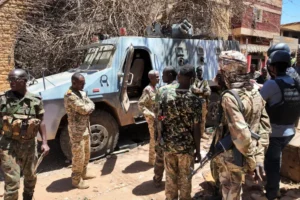
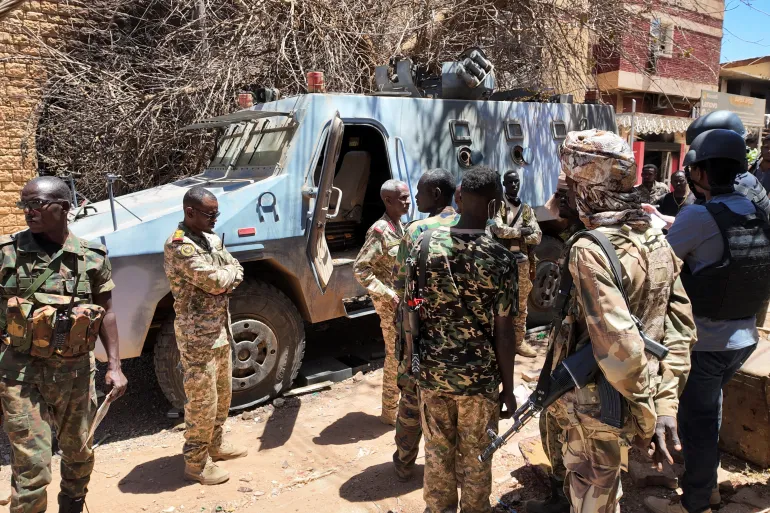
Sudan’s Islamist current, long associated with the Muslim Brotherhood through the Sudanese Islamic Movement, gained extensive institutional power during the three decades of Omar al-Bashir’s rule. After Bashir’s removal in 2019, core elements of those networks persisted within security institutions and political circles. The civil war that erupted in 2023 between the Sudanese Armed Forces (SAF) under General Abdel Fattah al-Burhan and the Rapid Support Forces (RSF) has given them renewed operational space.
The al-Baraa bin Malik Brigade, the main armed formation linked to the Sudanese Muslim Brotherhood, has fought alongside the SAF. US officials have assessed that the broader movement contributed upwards of 20,000 fighters to the conflict, with many receiving training or other support from Iran’s Islamic Revolutionary Guard Corps. The group has been accused of mass executions of civilians based on ethnicity or perceived opposition affiliation. In September 2025, the Treasury Department already sanctioned the Brigade under authorities targeting those destabilizing Sudan. On March 10, 2026, the State Department designated the Sudanese Muslim Brotherhood (encompassing the Islamic Movement and the Brigade) as a Specially Designated Global Terrorist, with the intent to list it as a Foreign Terrorist Organization effective shortly thereafter. The designation cited the use of unrestrained violence against civilians and the IRGC connection.
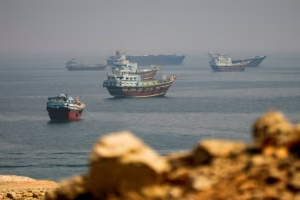
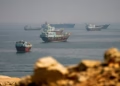
Sudan’s long Red Sea coastline makes these developments strategically relevant. An armed Islamist presence that survives the war and enters any future political settlement could create a vector for disruption of commercial shipping and energy transit, consistent with patterns seen elsewhere in the region involving Iranian-supported groups. US diplomacy aimed at a ceasefire or political transition therefore faces a dual task: reducing the immediate humanitarian catastrophe and ensuring that designated terrorist organizations and their external backers do not acquire lasting coercive power inside the Sudanese state.
In Libya, Muslim Brotherhood-linked actors organized the Justice and Construction Party after the fall of Muammar Gaddafi. The party finished second in the 2012 elections and held several ministerial positions in the early post-revolutionary government. While its national electoral strength later declined, residual influence in local administration and civil society has remained a factor in the country’s divided politics.
Turkey has cultivated ties with these networks and provided sustained military and political support to the western-based government. Ankara’s military presence has been repeatedly extended, and Turkish policy has combined security assistance with broader promotion of political Islam. On October 20, 2026, Libya’s eastern-based House of Representatives unanimously approved a 2019 maritime delimitation memorandum with Turkey that had previously been rejected by eastern authorities. Greece, Cyprus, and Egypt have long described the arrangement as inconsistent with the law of the sea and as infringing on their own maritime claims. The ratification revives disputes over eastern Mediterranean energy exploration and sea lanes.
These dynamics matter for American interests because the eastern Mediterranean functions as a critical corridor for energy products moving toward European markets. US efforts to expand liquefied natural gas deliveries via Greece and related regional infrastructure could be complicated by heightened Greek-Turkish friction. A Libya whose security architecture remains influenced by Brotherhood-linked parties and external patrons risks prolonged institutional weakness and additional opportunities for outside powers to shape outcomes.
Senior Advisor for Arab and African Affairs Massad Boulos has been central to Washington’s engagement on both files, pursuing ceasefires, institutional unification, and dialogue with regional partners. Public US statements have treated the return of Muslim Brotherhood-linked elements or former-regime loyalists as incompatible with a stable Sudanese transition. Similar caution applies in Libya, where durable security structures will require limiting the role of armed Islamist networks.
The essential requirement is that any negotiated settlements exclude designated terrorist organizations from governing roles, impose verifiable limits on external military support (particularly from Iran in the Sudanese case), and prioritize unified national institutions over factional arrangements that preserve hostile capabilities. Paper agreements that simply re-label existing power centers will not produce the reliable partners, secure sea lanes, or reduced terrorism risks that American policy seeks. In both Sudan and Libya, the test of diplomacy will be whether it dismantles the structures that have repeatedly generated instability, rather than accommodating them under new political titles.