By Rick Clay
The United Arab Emirates’ decision on August 19, 2026, to suspend indefinitely all trade, commercial exchanges, and financial transactions with Iran is far more than a diplomatic response to Tehran’s alleged missile attacks on maritime traffic. It is a strategic rupture that may close the most important economic gateway the Islamic Republic retained after years of sanctions, war, and financial isolation.
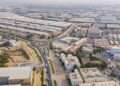
The UAE accounted for approximately 31 percent of Iran’s imports in 2024—about $21 billion—and absorbed roughly 13 percent of Iranian exports. Yet those figures capture only part of the relationship. Dubai was not simply a supplier of Emirati goods. It functioned as Iran’s principal transshipment center, financial intermediary, and connection to third-country products. Through Dubai and the Jebel Ali port complex, Iranian businesses obtained machinery, electronics, dual-use equipment, sanctioned commodities, and access to international financial networks.
Successive American sanctions campaigns could constrain this activity but could not eliminate it. The United States could designate Iranian entities, sanction intermediaries, and interdict oil exports, but it could not unilaterally shut down the commercial infrastructure of a sovereign partner. The UAE has now closed the channel that American financial and naval pressure could not fully reach.
This decision comes at the worst possible moment for Tehran. Operation Epic Fury, launched by American and Israeli forces on February 28, did not strike a healthy economy. It hit a system already weakened by inflation, currency collapse, corruption, capital flight, protests, and years of sanctions. According to estimates cited by the Foundation for Defense of Democracies, the war has inflicted at least $144 billion in damage—approximately 40 percent of Iran’s prewar gross domestic product. That figure is considered a floor because it excludes human-capital losses, internet shutdown costs, long-term investment deterrence, proxy reconstruction, and the broader consequences of wartime inflation.
Iran’s economic indicators now describe structural breakdown, not an ordinary recession. The International Monetary Fund projects a 6.1 percent contraction in real GDP during 2026, the country’s worst annual decline since 1988. Consumer inflation is approaching 69 percent, while the prices of essential foods have risen considerably faster. Bread and cereals increased by approximately 140 percent, meat and poultry by 135 percent, and oils and fats by 219 percent year over year through March.
Meanwhile, the rial has fallen to between 1.32 million and 1.5 million per U.S. dollar. At the time of the 2015 nuclear agreement, it traded near 32,000 to the dollar. That represents the destruction of roughly 97 percent of its dollar value in eleven years. Iran’s Misery Index, which combines unemployment and inflation, reached a record 91.1 in the spring of 2026.
The oil sector, historically the regime’s financial lifeline, has also been devastated. Before the war, Iran exported approximately 2.12 million barrels per day. Following the U.S. naval blockade imposed on April 13, exports reportedly fell toward near-zero by May. The remaining oil has moved predominantly to China through sanctions-evasion networks and at steep discounts, leaving Tehran dependent on a single buyer with enormous leverage over price and payment terms.
China is therefore Iran’s last major economic lifeline—but it is not a guaranteed one. Beijing’s relationship with Tehran is transactional, not ideological. China purchases Iranian oil because it is discounted and strategically convenient, not because the Chinese leadership is committed to preserving the Islamic Republic. As enforcement risks rise, Chinese entities must weigh the value of cheap Iranian crude against access to American markets and the international financial system.
The UAE decision makes that calculation more difficult. Chinese goods destined for Iran often moved through Emirati infrastructure, allowing suppliers to create distance between the original seller and the final Iranian recipient. With Dubai no longer available as a commercial buffer, Chinese businesses face a clearer choice: deal directly with Iran and accept greater exposure to secondary sanctions or withdraw from the relationship.
Tehran is also confronting the deterioration of the regional network it spent decades constructing. Hezbollah has suffered extraordinary leadership, weapons, and logistical losses. The collapse of the Syrian corridor weakened its ability to rearm, while financial pressure has strained internal discipline and reduced support for its constituency. Iranian-aligned militias in Iraq face intensifying pressure, and the Houthis have lost important military infrastructure. The “Axis of Resistance” is no longer the reliable strategic shield it once appeared to be.
The most dangerous variable, however, may lie inside Iran. The Islamic Revolutionary Guard Corps remains the regime’s primary instrument of domestic control. But currency collapse, unpaid salaries, food inflation, and shared economic suffering could test the loyalty of individual personnel. A regime can survive poverty and isolation if its coercive institutions remain united. If those institutions fracture, economic collapse can rapidly become political collapse.
Washington must recognize that the UAE has created a rare but temporary window of maximum leverage. The United States should support Abu Dhabi politically and economically, intensify enforcement against Chinese entities facilitating Iranian oil sales, and prepare urgently for the security of Iran’s remaining nuclear materials should state control weaken.
At the same time, Washington must separate pressure on the regime from punishment of the Iranian people. Verified channels for food, medicine, and essential civilian goods are strategically necessary. America should not allow Tehran to portray humanitarian suffering as the objective of U.S. policy.
Iran is now facing war damage, an oil blockade, currency collapse, proxy degradation, domestic legitimacy failure, and the closure of its principal commercial gateway—all at once. These pressures are not merely additive; they are mutually reinforcing. The UAE has severed a critical artery in Tehran’s economic architecture. What happens next will depend on whether the United States and its allies convert this unprecedented leverage into strategic realignment—or allow the opportunity to disappear.