By Maria Maalouf
For decades, Iran’s deterrence strategy rested on a geographic promise: if the Islamic Republic could not export its oil safely, neither would the rest of the Gulf. The Strait of Hormuz was Tehran’s ultimate instrument of pressure—a narrow passage through which approximately 20 million barrels of crude and petroleum products moved each day before the war.
Iran believed this dependence gave it the power to confront the United States while holding the global economy hostage. But six months of conflict have exposed a serious weakness in that calculation. Tehran can still threaten ships, deploy mines and increase insurance costs. What it can no longer guarantee is that Gulf oil will remain trapped alongside its own.
When the war began in late February, Iran’s strategy initially appeared successful. Commercial traffic through Hormuz collapsed, tankers accumulated inside the Gulf and neighboring producers struggled to move their exports. Regional oil flows fell dramatically as storage facilities filled and several producers reduced output.
Iran, however, continued exporting part of its own crude. Tehran had temporarily created the imbalance it wanted: the Gulf was losing billions of dollars while the Islamic Republic preserved a reduced but functioning export channel.
That advantage did not last.
The Trump administration changed the nature of the confrontation. Instead of waiting for a diplomatic agreement to reopen Hormuz completely, Washington began constructing a protected export system capable of operating despite Iranian threats.
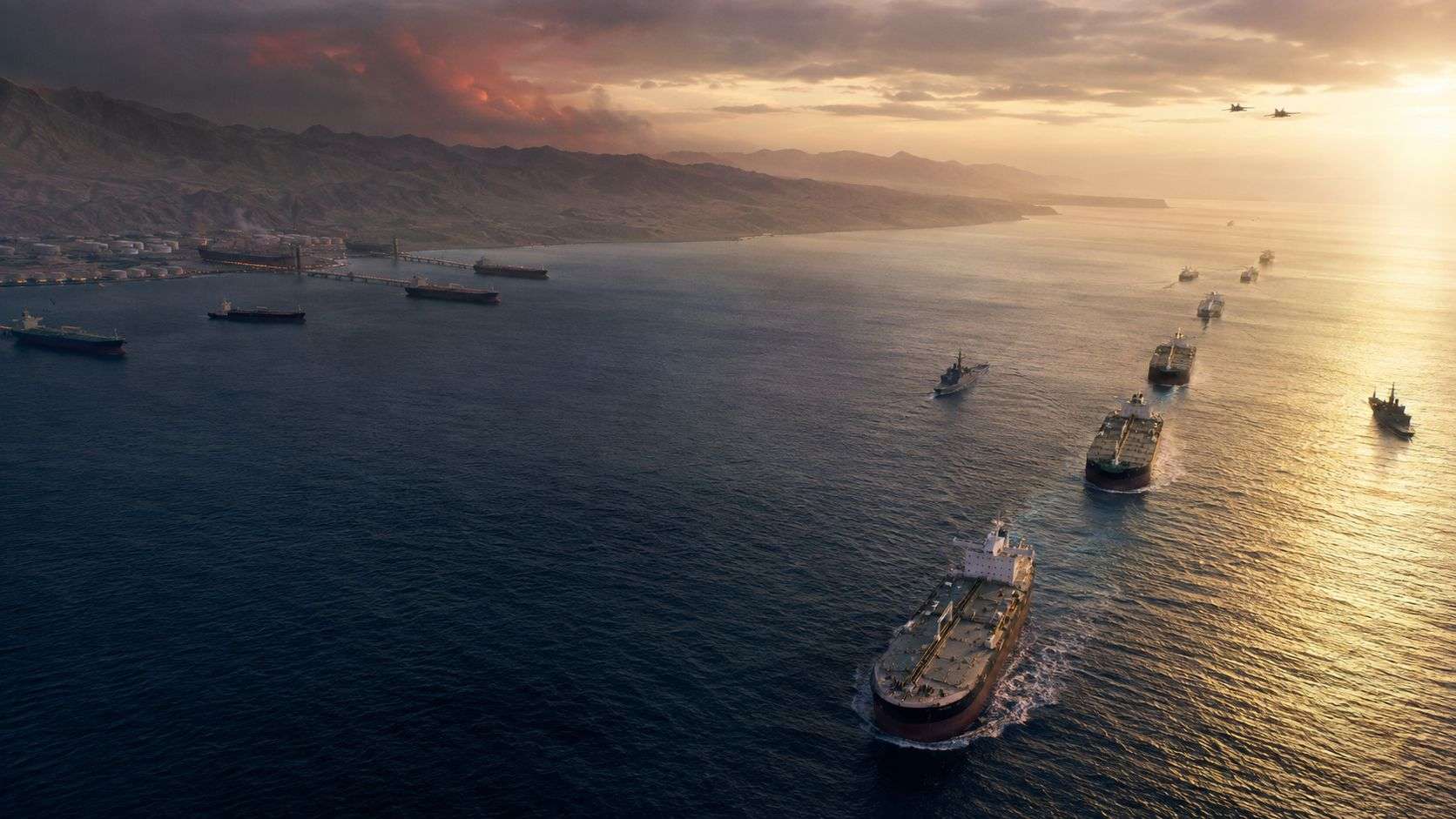
American forces established a corridor through the southern part of the strait near Oman. Tankers began traveling in coordinated groups, frequently at night and sometimes with their tracking systems disabled. According to Axios, between 15 and 20 vessels have moved through the passage under American military guidance and air protection on some nights.
The operation was reinforced by alternative export infrastructure. Saudi Arabia increased the use of its east-west pipeline toward the Red Sea port of Yanbu, while the United Arab Emirates moved more oil through Fujairah, outside Hormuz. These routes cannot replace the strait’s full capacity, but they have reduced Iran’s ability to impose a complete regional shutdown.
Washington was no longer attempting merely to reopen a waterway. It was separating the economic fate of Iran from that of America’s Gulf partners.
The June memorandum between Washington and Tehran briefly accelerated the movement of stranded cargoes. Kpler estimated that approximately 374 million barrels of crude cleared the Gulf during the agreement’s 60-day period. But the arrangement moved accumulated oil without establishing lasting maritime security.
The June 25 attack on the Ever Lovely demonstrated the fragility of the agreement. A U.S. official told the Associated Press that the vessel had been struck by a Revolutionary Guard drone. Further attacks, American retaliation and renewed Iranian threats eventually destroyed the temporary calm.
By mid-July, the United States had reimposed its blockade of Iranian ports. The decision fundamentally altered the balance. Kharg Island, which handled approximately 90 percent of Iran’s oil exports before the war, became increasingly isolated. Jask and Chabahar are located beyond Hormuz, but geography provides little protection when the blockade targets Iranian ports, vessels and commercial networks directly.
By August, Iranian crude loadings had reportedly fallen to approximately 250,000–300,000 barrels per day, compared with around two million before the conflict. Tens of millions of barrels remained trapped aboard tankers, depriving Tehran of revenue and foreign currency.
At the same time, Gulf exports began recovering. The precise volume remains disputed because many vessels travel without broadcasting their positions, and different estimates measure different categories of oil. Yet the direction is clear.
Goldman Sachs estimated that total regional exports of crude and petroleum products had returned to approximately 15–16 million barrels per day. That remains 7–8 million below prewar levels, but it is substantially above the March low. Reuters reported that nighttime movements and tankers operating without transponders may explain why official estimates exceed publicly visible traffic.
This is not a complete American victory, nor has Hormuz returned to normal. Iran still possesses missiles, drones, mines and coastal positions capable of threatening civilian shipping. The latest escalation proved that danger remains. On August 30, U.S. forces struck Iranian launchers on Larak Island after American officials said Revolutionary Guard units were preparing rockets carrying naval mines. Iran retaliated by firing missiles toward U.S. positions in Jordan, pushing Brent crude back above $90.
Nevertheless, Iran’s strategic position has deteriorated. Tehran can disrupt shipping, but disruption is not control. It can increase the price of Gulf exports, but it can no longer assume that every barrel denied to Iran will also be denied to its neighbors.
President Trump’s policy has challenged the central assumption behind Iran’s Hormuz doctrine. Through military protection, alternative infrastructure, sanctions and the selective blockade of Iranian ports, Washington has begun turning Iran’s strongest energy weapon against the regime itself.
Hormuz remains dangerous and regional exports remain below their previous levels. But the world is no longer facing the absolute choice Tehran wanted to impose: accept Iranian demands or lose Gulf oil.
Iran attempted to imprison the region’s energy exports. Instead, Gulf oil is gradually returning to international markets while Iranian crude remains trapped.
The Strait of Hormuz is still a battlefield—but it is no longer Iran’s unquestioned veto over the world economy.