By Alain Renault
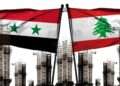
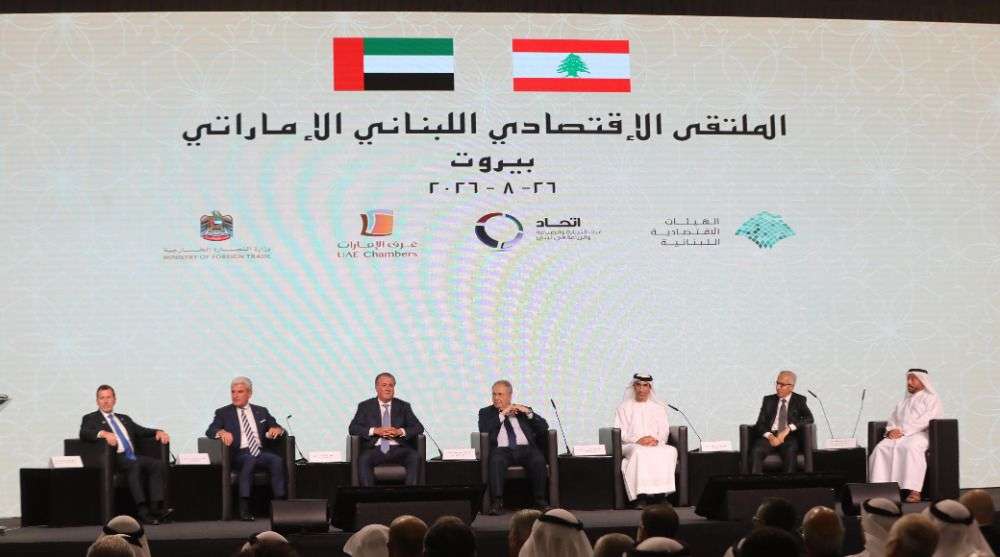
Not every economic visit is merely about economics. Sometimes a business delegation arrives looking for opportunities; sometimes it comes to measure risk. But when UAE Minister of Foreign Trade Dr. Thani bin Ahmed Al Zeyoudi arrives in Beirut at the head of a major delegation of Emirati business leaders and investors, the significance goes well beyond contracts and trade figures. The visit carries a broader message: confidence in Lebanon can return, and investment can become not simply a tool of economic recovery, but an instrument for restoring the capacity of the Lebanese state. The United Arab Emirates is not coming to Lebanon to manage its crisis or substitute itself for Lebanese institutions. It is offering Lebanon an opportunity to move beyond crisis through partnership. That is the real significance of this visit.
President Joseph Aoun described the Emirati delegation’s presence as a message of hope and confidence in Lebanon’s stability and future, emphasizing the country’s enduring assets: its human capital, geographic position, entrepreneurial private sector and globally connected diaspora. Al Zeyoudi offered an equally important definition of successful economic relations when he stressed that relations between countries should not be measured only by trade volumes, but by the partnerships they create and the investments they turn into reality. That distinction matters because the question is no longer simply how much the UAE sells to Lebanon or how much Lebanon exports to the Emirates. The more important question is whether this economic relationship can become a platform for rebuilding Lebanon’s productive capacity and reconnecting the country to regional and global markets.
The existing numbers provide a serious foundation. Non-oil trade between the UAE and Lebanon reached approximately $4.2 billion last year, demonstrating that commercial ties remained resilient despite years of Lebanese economic and political turmoil. But the real significance of that figure lies in what it suggests about the future. If bilateral trade could reach this level during extraordinarily difficult conditions, what could the relationship become under greater political stability, institutional credibility and regulatory clarity? This is precisely why discussion of a Comprehensive Economic Partnership Agreement deserves attention. Such an agreement should not be treated as another ceremonial trade document. Properly structured, it could provide an institutional framework encompassing investment, services, logistics, technology, knowledge transfer and market access. Lebanese businesses could gain stronger pathways into the UAE and, through it, into wider international markets, while Emirati investors could receive the predictability and legal clarity necessary for long-term commitments in Lebanon.
Yet the most strategic elements of this emerging partnership may lie beyond conventional trade. Smart identity systems, modernization of customs at Beirut’s airport, port and land crossings, upgrading petroleum facilities, renewable energy, agriculture, industry, technology and financial services are not simply investment opportunities. They touch the machinery of the Lebanese state itself. This is where the UAE can offer Lebanon something more valuable than capital alone. The Emirates has accumulated extensive experience in developing ports, logistics networks, economic zones, digital government systems and investment platforms capable of connecting businesses to international markets. Cooperation with Lebanon could therefore evolve beyond financing individual projects into transferring the institutional and operational expertise required to make an economy function efficiently.
That is the difference between investment that temporarily alleviates a crisis and investment that changes the structure of an economy. Lebanon does not suffer from a lack of talent, geography, entrepreneurial energy or opportunity. Its deeper problem has been its inability to consistently transform these advantages into functioning institutions, productive investment and sustainable growth. The state is therefore the indispensable element. A functioning state is not built through political declarations. It is built through ports that operate efficiently, customs systems that facilitate rather than obstruct commerce, digital government, reliable energy, transparent regulations, enforceable contracts and institutions capable of protecting investors and citizens alike. If Lebanese-Emirati cooperation reaches these areas, its success should not be measured merely by the number of companies entering Lebanon or the amount of capital announced. It should be measured by jobs created, exports expanded, infrastructure modernized and industries moved from an economy of survival toward an economy of growth.
There is also a wider Arab and geoeconomic dimension. Renewed Emirati engagement sends a message beyond bilateral commerce: Lebanon can restore its place within the Arab economic system if it provides the political, security and institutional conditions required for serious investment. The UAE can be more than a source of capital; it can become a gateway. Its economy sits at the intersection of commercial networks connecting the Gulf, Asia, Africa and Europe. A serious institutional partnership with Abu Dhabi could therefore give Lebanese companies access not only to the Emirati market but to wider networks of finance, logistics, technology and global commerce. For a country historically defined by its ability to connect East and West, this is an opportunity of strategic importance.
There is also a human foundation to build upon. The UAE has long been a destination for Lebanese professionals, entrepreneurs and businesses, and Lebanese communities have contributed significantly to the Emirates’ development. Al Zeyoudi’s acknowledgment of that contribution was important because it underlined that this relationship is not being constructed from zero. It rests on decades of commercial ties, personal relationships and accumulated trust. The challenge now is to convert that historical capital into a new economic architecture capable of producing measurable results.
But this is precisely where responsibility shifts back to Beirut. The UAE can bring capital, expertise, companies, markets and confidence. It cannot replace the Lebanese state. Investors require security; security requires functioning institutions; institutions require reform; and reform ultimately requires political decisions. The real test of this visit therefore begins after the Emirati delegation leaves Beirut. Will memoranda of understanding become projects? Will investment pledges become actual investments? Will political momentum translate into a regulatory and institutional environment capable of sustaining them? Those are the benchmarks by which Lebanon should judge success.
The significance of Al Zeyoudi’s visit is therefore much greater than its immediate economic agenda. It represents an opportunity to move the Lebanese-Emirati relationship from solidarity to productivity, from assistance to investment, and from restoring confidence to building common strategic interests. More importantly, it offers Lebanon a path toward recovering its natural role—not as a country permanently waiting to be rescued, but as a country capable of creating value for its partners once it restores the authority and functionality of its own state.
The question is no longer what the UAE can offer Lebanon. The UAE can offer capital, expertise, access to markets and, perhaps most importantly, renewed confidence. The real question is whether Lebanon can provide the state capable of turning those assets into lasting growth. The Emirates can open doors, but it cannot walk through them on Lebanon’s behalf. What Lebanon must provide is the state itself. If it does, Al Zeyoudi’s visit could be remembered not simply as the arrival of another business delegation, but as the beginning of a strategic economic partnership—and as one of the moments when Lebanon began reconnecting its future to its Arab neighborhood and the global economy.