By Tumwesigye Anslem
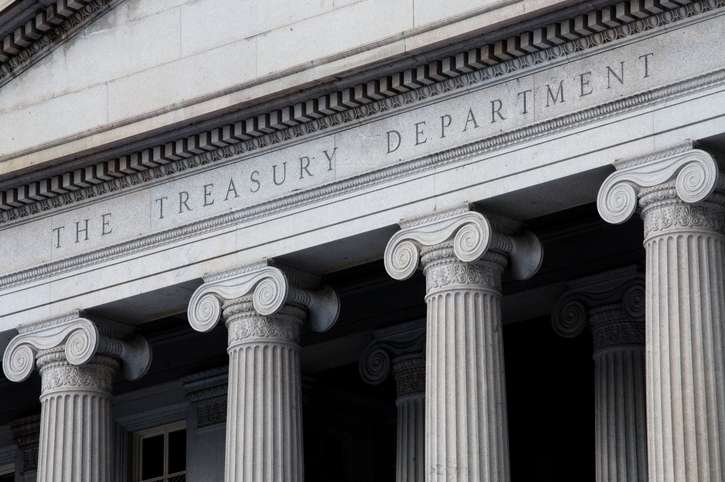
The U.S. Department of the Treasury’s Office of Foreign Assets Control (OFAC) has taken decisive action by designating three individuals and six entities involved in facilitating financial transactions for the Islamic State of Iraq and Syria (ISIS) and its regional affiliates. Spanning Europe, the Middle East, and West Africa, these designations aim to sever critical funding channels that allow the terrorist group to sustain operations and threaten global security, including attacks on civilians and religious minorities.
This latest effort underscores the Treasury’s commitment to disrupting ISIS’s evolving financial networks. Despite sustained military pressure that has decentralized the group, ISIS continues to rely on autonomous cells and facilitators who move funds through money service businesses, cryptocurrencies, and traditional hawala systems. The action aligns with broader U.S. strategies outlined in recent national risk assessments and advisories from the Financial Crimes Enforcement Network, emphasizing vigilance against emerging financing methods.
Among those targeted is Miloud Abderrahmane, a French national based in France, who has conducted transactions with ISIS affiliates in Syria and provided instructional materials on explosives manufacturing to supporters. In Syria, Abdelhakim Boukich controls Bitcoin Xchange, a money service business established in 2020 that has transferred funds for ISIS associates from countries including Norway, Belgium, the Netherlands, South Africa, and the United States. Mohamad Alhmidan, previously sanctioned in 2016, oversees Spider Gayrimenkul Ve Genel Ticaret Limited Sirketi and its affiliate Alkaram Danismanlik in Türkiye, entities that originated as hawala networks used to shift money from ISIS-controlled areas in Syria.
In West Africa, the sanctions focus on Mukhtar Adamu Muhammad and three Nigeria-based money service businesses he owns or controls: Nine to Nine Exchange Bureau de Change Limited, Manhattan Bureau de Change Limited, and Generation Currency Bureau de Change Limited. Muhammad has facilitated money transfers supporting ISIS in West Africa (ISIS-WA). These measures come shortly after the May 2026 joint U.S.-Nigerian operation that eliminated Abu-Bilal al-Minuki, a senior ISIS figure who led the group’s General Directorate of Provinces, highlighting intensified cooperation against the terrorist organization’s African networks.
Secretary of the Treasury Scott Bessent emphasized that ISIS persists in seeking innovative ways to fund attacks, but the United States will deploy all available tools to dismantle its capabilities and safeguard American interests. The designations, carried out under Executive Order 13224, block all property and interests in property of the targeted parties within U.S. jurisdiction. U.S. persons are generally prohibited from engaging in transactions with them, and foreign entities risk secondary sanctions for significant dealings.
These sanctions not only freeze assets but also send a clear message: individuals and firms providing financial connectivity to ISIS whether knowingly or through compliance lapses face severe consequences. The Treasury continues to balance enforcement with pathways for delisting those who demonstrate changed behavior, reinforcing that the goal remains disrupting terrorism rather than permanent punishment. Financial institutions worldwide are urged to enhance due diligence to avoid exposure.
This coordinated strike on ISIS’s financial lifelines reflects ongoing international resolve, building on prior actions against the group’s facilitators and adapting to its decentralized structure in the face of persistent counterterrorism efforts.