By Toni Nissi
There are rare moments in the life of nations when history moves faster than politics, compelling leaders to make decisions that will shape not only the fate of their governments, but the destiny of future generations. I believe that Lebanon stands today at one of those defining moments. The recent war between Hezbollah and Israel was not merely another military confrontation; it marked a strategic turning point for the Middle East. It reshaped the regional balance of power, altered international priorities, and placed Lebanon before a new political and security reality that can no longer be addressed with the tools or the mindset of the past.
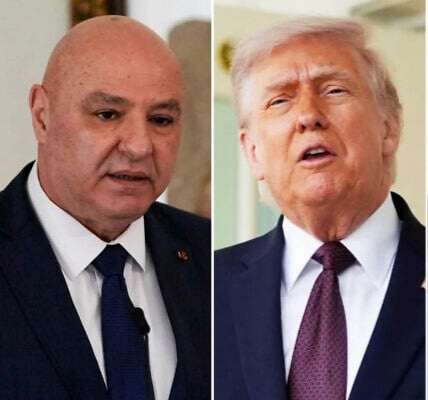
It is within this context that the forthcoming meeting between the President of the Lebanese Republic, General Joseph Aoun, and the President of the United States, Donald J. Trump, acquires exceptional significance. Not because two presidents are meeting—heads of state meet every day around the world—but because the real question is not who will sit in the Oval Office. The real question is what Lebanon will bring to that office. Will Lebanon arrive with yet another list of requests, or will it arrive with a national project? Will it ask the United States to help it overcome another crisis, or will it convince America that Lebanon has finally decided to redefine its historical path?
For decades, Lebanon has spent enormous energy debating governments, elections, political alliances, power-sharing arrangements, and constitutional crises, while the most fundamental question has remained unanswered:
What kind of Lebanon are we trying to build?
Until we answer that question honestly and collectively, every reform will remain temporary, every government transitional, every political settlement short-lived, and every crisis destined to return in one form or another. Nations are not built by managing crises; they are built by embracing a clear national vision that guides the State during both times of stability and times of adversity. A country that lacks a national doctrine will always remain reactive rather than proactive. It will adjust to events instead of shaping them, and it will wait for international initiatives instead of creating its own future.
For this reason, I believe that President Joseph Aoun’s primary responsibility in Washington is not to present a catalogue of requests, nor to seek financial assistance, military aid, or emergency economic support. His first responsibility is to present a comprehensive vision for a new Lebanon. The world does not invest in crises; it invests in countries that know where they are going. The international community is not looking for another nation asking for help to manage the symptoms of decline. It is looking for a nation determined to address its root causes.
Therefore, the conversation with President Trump should begin with Lebanon itself—not with Israel, not with Iran, not with Syria, and not even with economic assistance. It should begin with a single, fundamental question:
What is Lebanon’s national project?
Lebanon does not simply need to rebuild what wars have destroyed. It needs to rebuild the Republic itself. It must rebuild trust between citizens and the State. It must restore confidence in public institutions. It must revive its economy. It must reaffirm the rule of law. Nations are not rebuilt through concrete alone; they are rebuilt through the institutions that govern that concrete, the laws that protect investment, the judiciary that safeguards rights, and the public administration that serves the people rather than political interests.
This naturally brings us to the concept most frequently invoked—and perhaps least understood—in Lebanese political discourse: sovereignty.
Over the years, sovereignty has become a political slogan repeated in speeches and official statements. Yet sovereignty is neither a slogan nor a media declaration.
Sovereignty is not proclaimed; it is exercised.
It is exercised when decisions of war and peace belong exclusively to Lebanon’s constitutional institutions. It is exercised when every inch of Lebanese territory falls under the authority of the State alone. It is exercised when the law applies equally to every citizen, when borders are effectively protected, when the judiciary is independent, when public institutions function efficiently and transparently, and when citizens once again believe that the State exists to serve and protect them.
I fully expect President Trump to ask direct and practical questions. Does Lebanon possess the political will to reform? Can its institutions regain the confidence of both its citizens and the international community? Can corruption be addressed seriously? Can the Lebanese Armed Forces continue strengthening their national role as the sole legitimate security institution protecting the State?
These are legitimate questions. More importantly, they are questions Lebanon must answer for itself before answering them before the world.
Those answers cannot consist of promises or political rhetoric. They must consist of a national strategy, measurable reforms, credible institutions, and an implementation plan capable of restoring confidence both domestically and internationally.
Naturally, the discussion will also include Israel.
Yet I believe Lebanon must approach this subject differently from the way it has done in the past. The conversation cannot remain imprisoned by slogans, emotions, or historical grievances alone. The Lebanese people have paid an enormous price through repeated wars. Villages have been destroyed, communities displaced, investment discouraged, and generations of young Lebanese have lost confidence in the possibility of building their future at home.
The responsibility of statesmen is not to refight yesterday’s wars.
It is to prevent tomorrows.
Lebanon should therefore ask a different set of questions. How can the current ceasefire evolve into lasting stability? How can international commitments be implemented in a manner that strengthens Lebanon’s sovereignty while preventing future military confrontations? How can unresolved border issues be addressed through diplomacy and international law? How can the Lebanese Armed Forces continue assuming greater responsibility for security across all Lebanese territory? How can southern Lebanon become a region of stability, development, and opportunity rather than a permanent arena for conflict?
These are not Israeli questions.
They are not American questions.
They are, first and foremost, Lebanese questions, because Lebanon’s national interest requires that future generations inherit peace rather than recurring wars, stability rather than uncertainty, and a State capable of protecting both its sovereignty and the dignity of its citizens.
At the same time, the meeting must not be limited to security issues alone. No nation has ever achieved lasting stability through security arrangements alone. Sustainable peace requires economic opportunity, quality education, productive investment, modern infrastructure, reliable energy, effective water management, efficient public administration, and an independent judiciary.
For this reason, Lebanon should invite the United States to move beyond the traditional donor-recipient relationship toward a genuine strategic partnership. Lebanon needs long-term investment more than permanent assistance. It needs American companies investing in technology, water, energy, digital transformation, artificial intelligence, higher education, entrepreneurship, healthcare, and innovation. Assistance may alleviate crises, but investment builds nations.
Perhaps the most important message President Joseph Aoun should carry to Washington is that Lebanon is not asking the United States to solve its problems on its behalf. Rather, Lebanon seeks a partnership that enables it to build a State capable of solving its own problems.
Lebanon’s greatest wealth is neither its natural gas nor its potential oil reserves, important as they may be.
The true wealth of Lebanon is not beneath its mountains, but within its people.
Wherever Lebanese citizens have settled around the world, they have excelled in medicine, engineering, science, finance, education, entrepreneurship, and public service. The challenge before us is therefore not to produce talented Lebanese—we have already done so. Our challenge is to build a Republic worthy of their talents and capable of encouraging them to invest their knowledge, creativity, and experience in their own homeland rather than elsewhere.
When President Joseph Aoun leaves the White House, history will not remember how long the meeting lasted, how many cameras were present, or how many official statements were issued.
History will remember only one question:
Did Lebanon arrive in Washington carrying a list of demands… or carrying a vision for a nation?
History never judges leaders by the number of crises they inherit.
It judges them by the future they leave behind.
True leadership is measured not by the ability to manage crises, but by the ability to prevent the next one.
If this meeting succeeds in launching a process that restores Lebanon’s sovereignty, strengthens its institutions, rebuilds public confidence, and opens new horizons for strategic partnership, investment, and stability, it may one day be remembered not simply as another diplomatic encounter between two presidents, but as the moment when Lebanon decided to move beyond managing crises and began rebuilding the Republic—from waiting for the future to shaping it, and from searching for temporary solutions to embracing a national vision worthy of its history and its people.