By Michael Arizanti
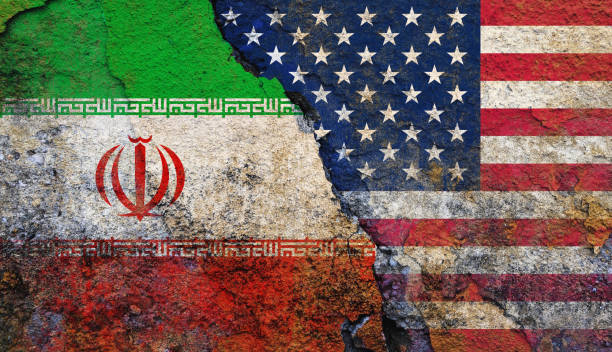
Iraq’s post-war realignment is being sold as an energy story. It is really the most consequential attempt in two decades to pull the country out of Iran’s orbit — and its success is far from assured.
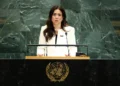
When Ali al-Zaidi sat beside Donald Trump in the Oval Office on 14 July, the headlines went to the oil. Memoranda with Chevron and TI Capital, a revived Kirkuk–Baniyas pipeline, new Mediterranean export routes that skirt the Strait of Hormuz. The deals are real and they matter. But they are not the prize. The prize is Iraq itself — and whether Washington can finally pry it loose from Tehran.
For twenty years, Iraq has been Iran’s most valuable possession abroad. Not through occupation, but through dependency: a shared border, a Shia political class woven into Iranian networks, and an archipelago of armed factions that answer, when it counts, to Tehran. Iraq is where Iran moved money, laundered sanctioned oil, and kept a militia infrastructure that struck US and Gulf targets on demand. Losing it would cost Iran more than losing another air-defense battery.
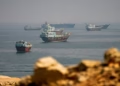
The lever. What makes Iraq pryable now is the same thing that makes it fragile: geography. Iraq exports roughly 95 percent of its crude through the Strait of Hormuz, and oil sales are about 90 percent of the state budget. When Iran throttled the strait this spring, Iraqi seaborne exports collapsed to a fraction of their normal volume. A state that cannot sell its oil cannot pay its salaries, and a government that cannot pay salaries does not last. Iran’s grip on Hormuz, meant as a weapon against the West, turned into a knife at Baghdad’s own throat. That is the opening Washington is working.
The carrot. The energy package is the inducement. Kirkuk–Baniyas, and the larger Basra–Haditha corridor feeding both Ceyhan and the Syrian coast, would give Iraq an export route beyond Iran’s reach for the first time in a generation — and hand US firms a foothold in fields and infrastructure long closed to them. Reconstruction runs into the billions. The message to Baghdad is plain: choose the Mediterranean over the Gulf, and Washington over Tehran, and the money follows.
The stick. The inducement does not travel alone. Baghdad has set 30 September — the date the US-led coalition’s mission formally ends — as the deadline for Iran-aligned factions to surrender their weapons to the state. The pairing is not coincidental. Al-Zaidi himself reportedly proposed tying the expansion of US investment and service projects to progress on disarmament. Carrot and stick are the same instrument. Washington holds its own lever besides: for months it withheld Iraqi oil revenues parked at the New York Federal Reserve, releasing them only against concrete steps on the militias. Iraq’s oil money, its export geography, and its armed factions are being bundled into a single transaction.
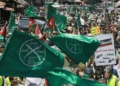
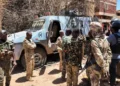
The resistance. Here the severance thesis meets reality. The militia front has already cracked — but only halfway. Muqtada al-Sadr’s Saraya al-Salam has dissolved its brigades and begun handing over weapons; Asaib Ahl al-Haq and Kataib al-Imam Ali have pledged to disengage from the Popular Mobilisation Forces. These are real breaks from the armed status quo. But the hard core has refused outright. Kataib Hezbollah says it will not give up a single bullet. Harakat Hezbollah al-Nujaba, Kataib Sayyid al-Shuhada and others cast their arms as ideological rather than political — and Kataib Hezbollah’s leadership still traces the group’s founding to a decision by the late Ali Khamenei. They will not disarm while US troops remain, and they trust none of the guarantees on offer, citing what they see as broken American and Israeli commitments elsewhere.
Tehran is not spectating. The Quds Force commander Esmail Qaani reportedly made an unannounced trip to Baghdad after Iran’s foreign minister passed through in late June — a signal that Iran means to hold what it can. And the PMF is no minor obstacle. It is some 200,000 armed men, a vast budget, and one of the load-bearing pillars of the Shia political order. Dismantling its hard core is not an administrative act. It is a confrontation with the coalition that made al-Zaidi prime minister.
The man in the middle. That is the paradox Washington keeps underplaying. Al-Zaidi is a businessman with no political base of his own, installed by the Coordination Framework — the Iran-aligned Shia bloc — after Trump blocked the alternative. He owes his office to the very system he is now being asked to break. He can sign energy deals in Washington and speak of the state’s monopoly on force. Whether he can move against Kataib Hezbollah in Baghdad without fracturing his own government is another matter. US pressure helps him by squeezing the whole Framework at once. It also lets the hardliners paint him as Washington’s instrument — precisely the charge they need.
The verdict. So is this severance, or a rebalance Iran can absorb? Honestly, both remain open, and the pipeline will not settle it. Pipelines take two to three years and run through terrain patrolled by the very factions in question. The disarmament deadline is ten weeks out and already contested. What is genuinely new is that, for the first time, Baghdad’s oil, its export routes, and its guns are being pulled in the same direction — westward — by a government that has staked its legitimacy on state authority. That alignment is real, and Iran should be worried by it.
But severance is not a signature. It is a process that must survive contact with Kataib Hezbollah’s rifles, the Framework’s arithmetic, and Iran’s long patience. Washington has bought a real opening. Whether al-Zaidi walks through it, or is swallowed by the system that sent him, is the question worth watching between now and 30 September.