By Kasondra Watkins
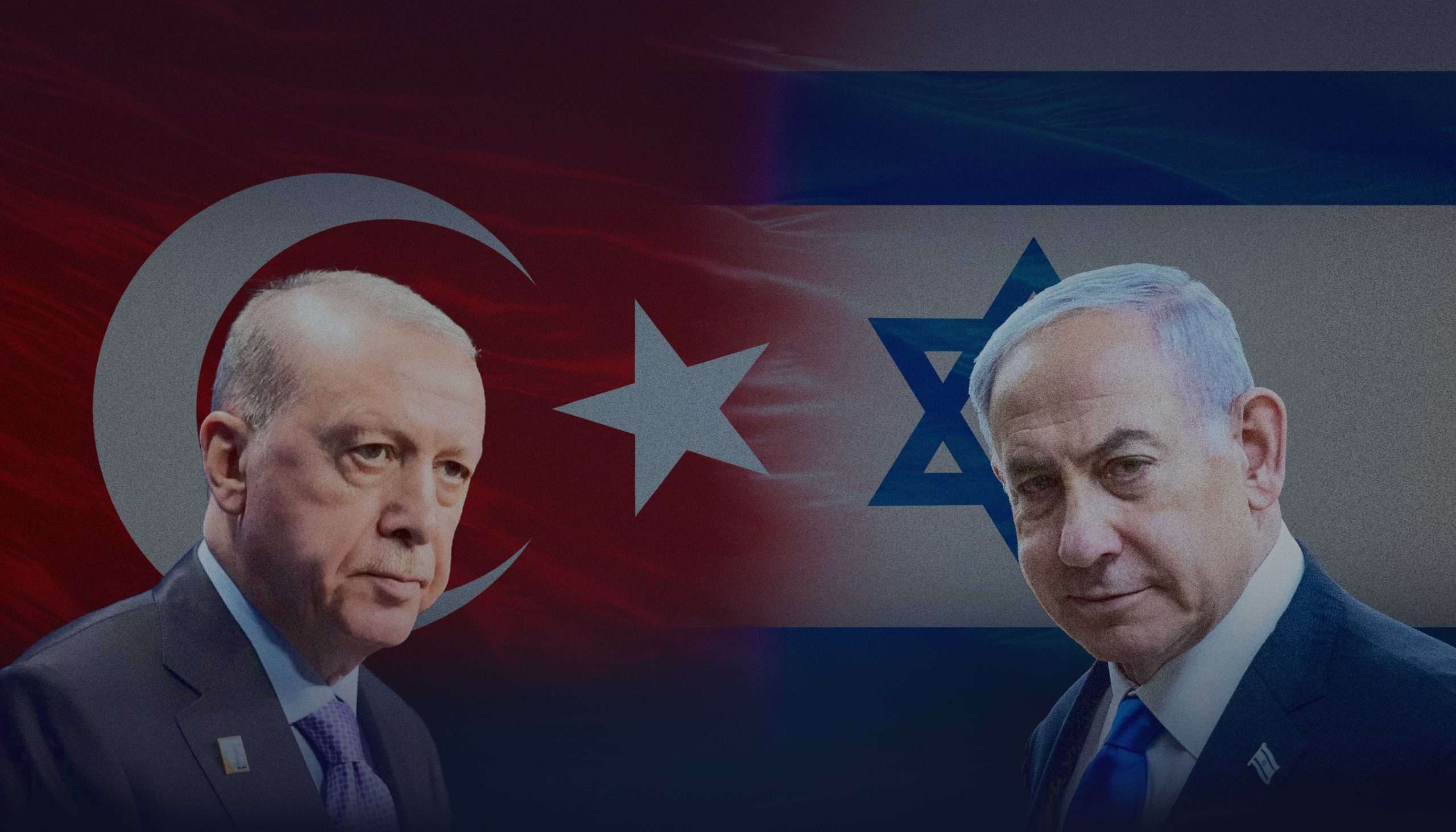
Legislative elections in Israel are due to take place in Israel on October 27, 2026. This will elect the 120 members who will inaugurate the twenty-sixth Knesset. The rivalry stems mainly between the incumbent Prime Minister Benjamin Netanyahu and Likud, and the leader of “Together,” Naftali Bennett. The latter served as a prime minister before and is much younger than Netanyahu. While the election will center on many thorny and debatable issues that have been dividing the Israeli public opinion sharply including the current standoff between the United States, Israel versus Iran, interestingly Turkey has emerged as a possible election subject.
Essentially, this refers to the statements Bennett uttered during interviews lately on Piers Morgan’s program “Uncensored,” where Bennett designated Turkey as “the new Iran.” Bennett charged that Turkey under President Erdoğan is a “stalwart supporter” of Hamas. Among his accusations are Turkey defending Hamas, hosting its leaders, financing many of its members’ activities, and providing its supporters with many services including medical treatment.
The Gaza War caused a serious rift between Turkey and Israel. Trade stoped which was valued annually at a figure of $6.8 billion dollars in 2023-2024. Turkey also endorsed the legal proposals against Israel in the International Court of Justice (ICJ.) In November 2025, Turkey issued arrest warrants against 37 Israeli officials including Netanyahu himself on the basis of them committing “genocide and crimes against humanity,” in the Gaza Strip. Moreover, the Government of Turkey has denied its airspace to Israeli airplanes, closing a critical aviation route for Israel. Furthermore, Turkey is not accepting products and commodities that are coming from European Union countries heading to Israel. Turkey has also revealed cases of espionage done by agents of Mossad operating from its land, with arrests made against those caught and jailed.
The question is: if Israel and the United States beat Iran hard, will Israel start a new political and military campaign against Turkey? The answer is no for many reasons.
Turkey is a member of NATO and the Western Alliance can invoke Article Five of the charter of the North Atlantic Treaty Organization which stipulates the principles of collective security to defend Turkey or any NATO member against any potential act of aggression by Israel or any other nation. In addition, the growing cooperation among Israel, Greece, and Cyprus is not mostly directed against the Republic of Turkey. Greece and Cyprus will not be hostile to Turkey for the sake of Israel.
The situation inside Israel itself agitates against a war with Turkey. Turkish-Israeli relations are not major topics in the campaign for the Knesset seats in 2026. The Israeli public is tired of wars in Gaza, against Iran and Lebanon, and is not desirous of seeing another war against a big Islamic country. Israel fears any reprisals against the Jewish community living in Turkey which is estimated at figure of 15,000 members. Turkey has a big army and significant military capability including advanced fighters and bombers. Turkey has also advanced drone technology able at long-distance strikes. Turkey ethnically is part of the “Turkmen,” family of nations that have roots and extensions in Central Asia. Israel wants to maintain good ties with the ex-Soviet Central Asian Republics. Any act of aggression against Turkey will endanger these bonds.
Turkey is not Iran. Where Tehran is isolated, Turkey is visited by millions of tourists every year and is an economic hub for many businesses. Therefore, there are global economic interests that will prevent a war between Israel and Turkey. As well, Turkey is a Sunni nation and this will draw much support and sympathy for her in case of a confrontation between her and the State of Israel.
Geopolitics figures prominently in any possible scenario of conflict between Turkey and Israel. Russia and China are good friends of Turkey. They do not Turkey to be weak against Israel or vulnerable against either Netanyahu or Bennett. The Kurds of Turkey will not be mobilized against their own nation and government. Israel cannot promote its interests against Turkey by playing the Kurdish card. Syria represents a focal point of strife between Israel and Turkey. Israel has expanded its presence in Syria following the overthrow of the Assad regime in December 2024. However, Turkey has strong relations with the current government of Ahmad Al Sharaa. They actually both agree to keep him in power because this will remove the influence of Iran. The United States has been a catalyst for this tacit understanding between Turkey and Israel over Syria. The Trump Administration is acting to ease tensions between Israel and Lebanon. This requires stabilizing Syria and preempting her from becoming an arena of disputation between Israel and Turkey.
Persistently, a few areas of cooperation are still preserved between Israel and Turkey. Much of Israel’s energy exports especially crude oil are shipped from Azerbaijan through the Baku-Ceyhan pipeline, considering that Ceyhan is a Turkish port. So far, there has been no disruption of that vital trade route. Finally, the Trump Administration will veto any war between these two countries. President Trump himself does not want to see another war in the Middle East. He does not approve of a proxy war either since the two nations do not share borders. Most likely, Trump will foster an atmosphere of reconciliation between the Israelis and the Turks, where the private sector in each country may play a key role. Yet, if Turkey and Israel are still at odds, the Trump Administration should manage and administer a very sophisticated strategic competition between two of its close partners and allies.