
Stitt’s Probe Follows the Money: From Hamas Convictions to Oklahoma Mosques.

BY Adrian Calamel On Christmas Day 1992, investigative journalist Steve Emerson was in Oklahoma City on an unrelated assignment when he stumbled upon a large gathering at the convention center. What he witnessed was the annual conference of the Muslim Arab Youth Association (MAYA). Thousands of attendees, many in traditional Middle Eastern dress, filled the halls. Vendors sold literature promoting jihad and the destruction of Jews and Christians. Speakers included Khalid Mashal (a Hamas leader), Kamal Helbawy (a senior Muslim Brotherhood figure), and representatives of al-Gama’a al-Islamiyya (Egyptian Islamic Jihad). Emerson later learned that MAYA had been founded and headed by Abdullah bin Laden, a half-brother of Osama bin Laden. The open calls of “Kill the Jews” and “Destroy the West” in the heart of America shocked him and launched his career tracking Islamist networks on U.S. soil.  MAYA was no isolated youth group. Federal prosecutors later listed it among the unindicted co-conspirators in the landmark Holy Land Foundation (HLF) terrorism-financing case. The same list included the North American Islamic Trust (NAIT), the Islamic Society of North America (ISNA), the Council on American-Islamic Relations (CAIR), and individuals such as Tareq Al-Suwaidan. The Holy Land Foundation Convictions: Following the Money Trail In November 2008, a federal jury in Dallas convicted the Holy Land Foundation for Relief and Development and five of its leaders on all 108 counts of providing material support to Hamas, money laundering, and related charges. Sentences handed down in May 2009 ranged from 15 to 65 years. Prosecutors proved that HLF, once the largest Muslim charity in the United States, had funneled approximately $12.4 million to Hamas after the group was designated a foreign terrorist organization.  The trial did far more than shut down one charity. It introduced into the public record the Muslim Brotherhood’s 1991 “Explanatory Memorandum on the General Strategic Goal for the Group in North America.” Authored by Mohamed Akram, the document described the Brotherhood’s work in America as a “Civilization-Jihadist Process” aimed at “eliminating and destroying the Western civilization from within.” Attached was a list of “our organizations and the organizations of our friends,” which included NAIT, ISNA, MSA, MAYA, and others. Prosecutors demonstrated that the U.S. Muslim Brotherhood had created a Palestine Committee whose fundraising arm was HLF and whose social-infrastructure entities included the organizations later named as unindicted co-conspirators.  Central to the financial architecture was NAIT. Founded in 1973 by the Muslim Students Association, NAIT functions as a waqf (Islamic endowment) that holds title to the real estate of hundreds of mosques and Islamic schools across the United States. In the HLF trial, evidence showed NAIT and ISNA had helped move money on behalf of Hamas in the late 1980s and early 1990s. By controlling the deeds, NAIT ensures long-term institutional continuity even if individual leadership changes. Oklahoma’s Affiliated Institutions The same networks that surfaced in the HLF evidence and the 1992 MAYA conference remain visible in Oklahoma’s Islamic infrastructure today. Oklahoma City / Edmond metro area • Islamic Society of Greater Oklahoma City (ISGOC / Masjid An-Nasr) at 3815 N. St. Clair Avenue is the state’s largest mosque. It partners with the Muslim American Society of Oklahoma (MAS-OK) for youth programming. MAS is widely regarded by researchers as the primary U.S. organizational vehicle of the Muslim Brotherhood. ISGOC is closely tied to Mercy School Institute, a K–12 Islamic school in Edmond that integrates Quran, Arabic, and Islamic studies with the state curriculum. • Islamic Society of Edmond / Masjid Al-Salam (525 N. University Drive) sits on land historically held by NAIT and faced public opposition during a 2013 expansion attempt over those ties. • Grand Mosque of Oklahoma City / American Muslim Association (3201 NW 48th Street) traces its organizational roots to the 1980s student-era networks; Tareq Al-Suwaidan, a self-identified Muslim Brotherhood leader later banned from the United States, was active in founding similar AMA entities and converting a Tulsa church into a mosque. Tulsa / Broken Arrow • Islamic Society of Tulsa (IST) at 4630 S. Irvington Avenue is the main Tulsa mosque. Its constitution and property records list NAIT as trustee. In 2014 IST acquired 15 acres in Broken Arrow that were shortly deeded to NAIT. A 2026 proposal for a large Islamic center and commercial complex on that land was rejected by the Broken Arrow City Council after intense public opposition; the state attorney general opened an inquiry citing NAIT’s documented history. • Al-Salam Mosque in Tulsa was established by Tareq Al-Suwaidan while he studied petroleum engineering in Oklahoma. University towns Islamic Society of Norman (serving the University of Oklahoma) and Islamic Society of Stillwater (serving Oklahoma State University) continue the campus-based MSA tradition that produced the original Brotherhood infrastructure in North America. These institutions deny any operational control by foreign terrorist organizations and describe NAIT simply as a protective waqf. Critics note that the same legal and financial structure identified in the HLF trial—property held by NAIT, ideological continuity through MAS and ISNA-linked programming, and historical overlap with the Palestine Committee—remains intact. Governor Stitt’s 2026 Investigation On August 12, 2026, Oklahoma Governor Kevin Stitt issued Executive Order 2026-29 directing the Oklahoma Office of Homeland Security (within the Department of Public Safety) to conduct an intelligence-based assessment of whether the Muslim Brotherhood, CAIR, or any affiliates, agents, or persons acting in concert with them present a terroristic or public-safety threat in the state. The order further instructs state officials to advocate for federal designation of the Muslim Brotherhood and CAIR as Foreign Terrorist Organizations and encourages the legislature to enact corresponding state legislation. Stitt’s order explicitly references Hamas’s origins in the Muslim Brotherhood and builds on Oklahoma’s existing Homeland Security and Antiterrorism Acts. It arrives amid the still-active Broken Arrow zoning dispute and years of local debate over NAIT-held properties. Why Following the Money Matters The 1992 MAYA conference showed the open ideological recruitment. The 2008–2009 Holy Land Foundation convictions proved the financial pipeline that sustained Hamas while building parallel institutions inside the United States. NAIT’s role as deed-holder ensures those institutions endure. The same entities that appeared on the Brotherhood’s own 1991 list and on the HLF unindicted co-conspirator list continue to own or influence mosques and schools in Oklahoma City, Edmond, Tulsa, Norman, and Stillwater. Governor Stitt’s executive order returns attention to the same question Emerson asked himself in 1992: What networks operate in plain sight, and who ultimately controls the assets and the ideology? In terrorism financing, the money trail has repeatedly proven more revealing than public statements of moderation. Oklahoma’s current scrutiny of those trails is the latest chapter in a story that began more than three decades ago in a convention center on Christmas Day.
Washington Chokes Hezbollah’s Money — and Redefines It as Part of Iran’s Quds Force Network.

By Maria Maalouf The sanctions announced by the U.S. Treasury Department on August 20, 2026, should not be read as simply another entry in Washington’s long campaign against Hezbollah. They mark something more significant. The United States is no longer concentrating only on Hezbollah’s money. It is targeting the infrastructure that allows that money to […]
Junaid, Palestines Saydnaya: The Human Slaughterhouse Run by the Abbas Authoritys Security Apparatus in the Heart of Nablus.

By Dr. Abdel Aziz Tarekji Not every human slaughterhouse is called Saydnaya. In the heart of Nablus stands Junaid Prison, a name that, for many of those who have passed behind its walls, no longer signifies merely a prison or detention center. It has become associated with horrifying testimonies of suspension and stress positions, beatings with hoses, sleep deprivation, insults and threats, humiliating body searches, the forced shaving of hair and beards, and the abuse and mistreatment of detainees. What makes these testimonies even more disturbing is that they do not concern abuses committed by a foreign occupation. They concern Palestinians being humiliated at the hands of security agencies that operate in the name of Palestine. Inside Junaid, the name of the so-called Security Committee repeatedly emerges. The term sounds innocuously administrative, yet published testimonies describe it as one of the most terrifying places inside the prison. According to those accounts, detainees who object to abuses may be sent there and subjected to suspension, beatings, mistreatment and sleep deprivation. In a recent account concerning detainee Amin al-Qouqa, the Committee of Families of Political Detainees stated in July 2026 that he had been subjected daily to suspension, torture and mistreatment, while masked guards allegedly stormed his cell at night and deprived him of sleep. If established by an independent investigation, these practices are not mere excesses or mistakes committed during interrogation. They are acts that may constitute torture and cruel, inhuman or degrading treatment under international law. A hose is not an interrogation instrument. Suspension and stress positions are not lawful means of extracting information. Deliberate sleep deprivation is not a security measure. And humiliating a detainees body is not within the lawful authority of any officer, regardless of rank or the accusation facing the person standing before them. The institutions involved must be named rather than concealed behind the convenient phrase security services. We are speaking about a system in which the Palestinian General Intelligence Service, the Palestinian Preventive Security Service, and Palestinian Military Intelligence appear, alongside other competent agencies depending on which authority carried out the arrest and interrogation. These institutions have commanders, department heads, officers, interrogators and a chain of command. Any investigation into torture therefore cannot end with the guard or interrogator who physically carried out the act. It must ask: Who ordered it? Who supervised it? Who knew? Who covered it up? And who had the power to prevent the abuse but failed to do so? More disturbing still, recent allegations go beyond torture itself and raise the possibility of concealing evidence of abuse from oversight bodies. In May 2026, the Committee of Families of Political Detainees accused Palestinian Authority security agencies at Junaid of transferring detainees out of the Security Committee section to coincide with visits by the Red Cross and human rights organizations, allegedly to prevent monitors from hearing their accounts of what they had endured. According to these reports and other documentation, we are therefore not speaking only about abuses behind cell doors, but about a potential attempt to conceal those abuses from oversight bodies. It is here that the comparison with Saydnaya becomes morally legitimatenot as a comparison of the number of victims, but as a comparison of the logic of the human slaughterhouse. Saydnaya did not become a global symbol of horror because of the prisons name. It became one because Assads security apparatus treated the human being behind its walls as a body that could be broken and humiliated at will. And when testimonies from Junaid speak of suspension, hoses, sleep deprivation, humiliation, masked men, rooms of abuse and, at times, deaths under torture, the question is no longer: Is Junaid another Saydnaya? The question is: How did we ever allow a Palestinian prison to exist whose alleged practices could evoke the name of Saydnaya? Junaid also embodies an even more bitter moral paradox: a Palestinian who has spent decades demanding that the world protect him from torture should not today find himself at the mercy of a Palestinian interrogator employing against him the very methods we condemned when others used them. A torturer does not become less despicable because he speaks the victims language. A hose does not become legitimate because it is held in Palestinian hands. And torture does not acquire legitimacy because the Palestinian flag flies above the building. This is why the institutions must be named: the General Intelligence Service, Preventive Security and Military Intelligence are not above the law. The State of Palestine is a party to the United Nations Convention against Torture, and the prohibition of torture is absolute. Neither national security, nor the dangerousness of the accused, nor political affiliation, nor orders from a superior can justify torturing a human being. Even a person accused of the gravest crimes retains a right that the state cannot take away: the right not to be tortured. This issue has nothing to do with the Fatah-Hamas conflict, nor should it be allowed to become a political bazaar. Whether a detainee belongs to Fatah, Hamas, the political left, is an independent, a journalist, an opposition figure, or even someone accused of a serious crime, that detainee remains a human being protected by law. Human rights that change according to the identity of the victim are not human rights at all; they are a political position disguised in the language of human rights. And if the Palestinian Authority and its security agencies believe these testimonies are false or exaggerated, the solution is simple: open Junaid completely to independent, unannounced human rights inspections. Open the Security Committee. Allow monitors to select the detainees they wish to interview without security personnel present, and disclose camera records, injury records, complaints, investigations, and disciplinary measures imposed on officers and interrogators. Those who are not hiding a slaughterhouse behind their walls should have nothing to fear from opening its doors. Junaid is not merely a prison with a sinister reputation; it is a moral and legal test for the entire Palestinian Authority. Either the allegations of torture are transparently investigated and everyone whose responsibility is established is held accountablefrom the lowest-ranking guard to the highest officialor the name Junaid will remain a stain haunting everyone who knew and remained silent. The world came to know Syrias Saydnaya after its secrets emerged from behind its walls. Do not wait for the day when Junaids doors are opened and its detainees walk out carrying their testimonies and the marks of what they endured, only for everyone to begin asking, too late: How did we allow a human slaughterhouse bearing the name of a Palestinian institution to exist in the heart of Nablus? A Final Message to Mahmoud Abbas I conclude with a message to Mahmoud Abbas: You were elected president on January 9, 2005, for a term that the law set at four years. That original electoral mandate ended in January 2009, yet you have remained in power throughout all these years without new presidential elections granting you a renewed popular mandate. My advice to you, now that you are in the final stage of your life, is to think carefully about the legacy you will leave behind before you stand before God. Do not allow your name to be written into Palestinian memory alongside those rulers who governed their peoples through an iron security grip and left behind prisons, fear and victims. Open Junaid Prison to an independent investigation. Stop the torture. Hold accountable those who have violated the dignity of Palestinians before history holds you accountable for knowing what was happening and remaining silent. Power fades, and no seat of authority lasts foreverbut the cry of the oppressed outlives every dictator.
Oklahoma Takes the Lead: Governor Stitt Confronts the Muslim Brotherhood Network in America
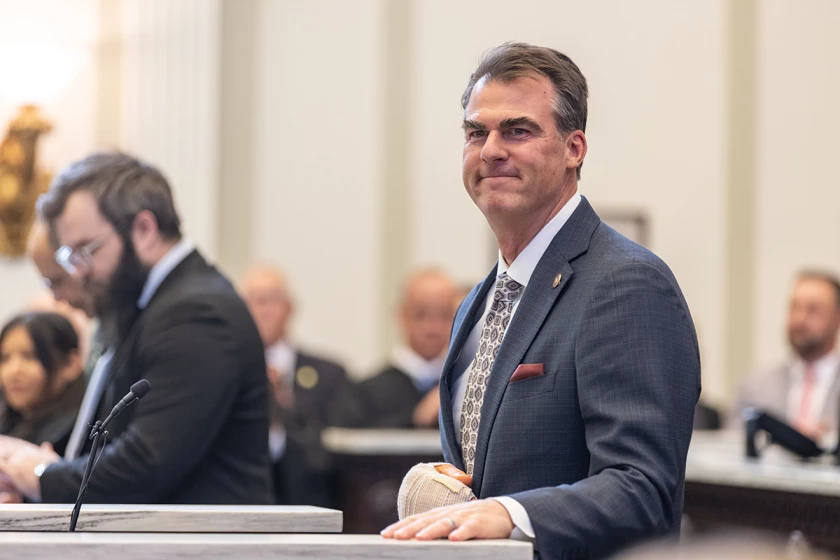
By Ampamya Ronah Oklahoma Governor Kevin Stitt has taken a courageous and necessary step by ordering an intelligence-based assessment of the Muslim Brotherhood, CAIR, and individuals or entities operating on their behalf in Oklahoma. This is not simply an Oklahoma story. It is part of a much larger national-security question that the United States can […]
Sudan’s Chemical Weapons Allegations: When an International Red Line Becomes Just Words.
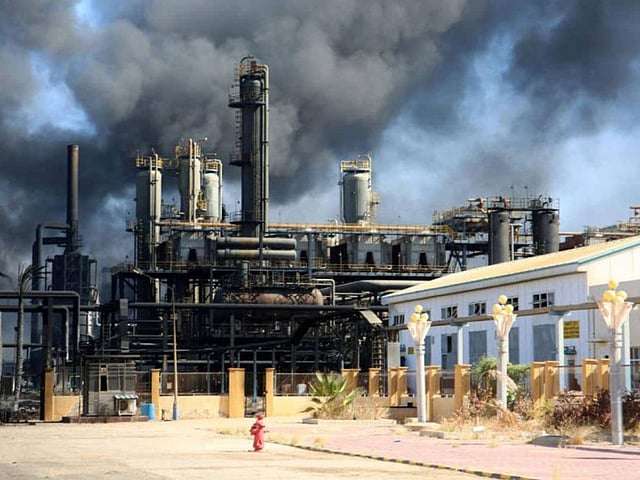
By Maria Maalouf An August 11 editorial in The National forces the international community to confront one of the darkest allegations to emerge from Sudan’s catastrophic war: that the Sudanese Armed Forces used chemical weapons. If substantiated, this is not simply another violation in a conflict already defined by atrocities, displacement, siege, starvation, and destruction. […]
Lebanon: The Country We Chose to Build Together
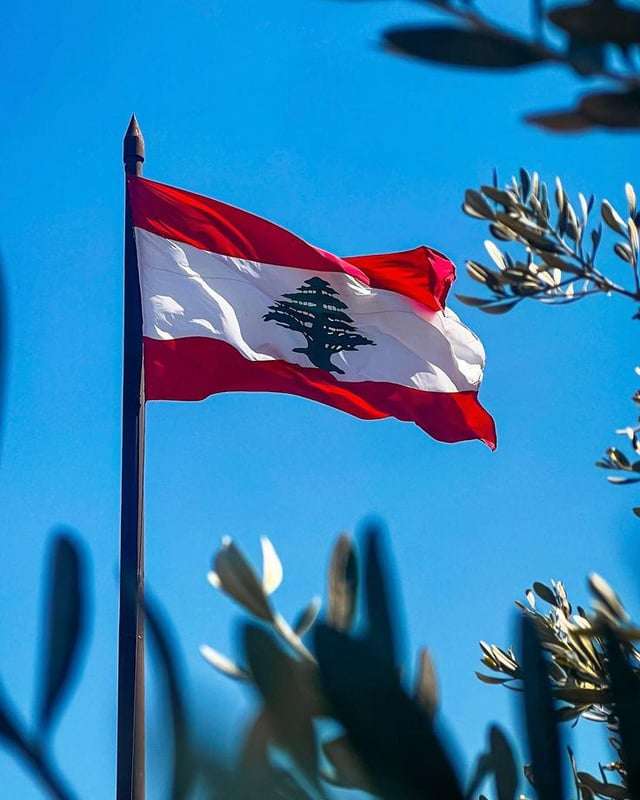
By: TONI NISSI Lebanon was made for the Christians, not to become a Christian state or a country in which Christians would dominate others, but because Christians sought a homeland where they could live freely, preserve their identity and heritage, and participate with dignity and confidence in shaping their own future. At decisive moments in our history, Christians could have pursued a smaller country centered on the territories where they constituted an overwhelming majority, yet they chose Greater Lebanon, accepting a larger, more diverse and more ambitious country that they would share with Muslims and all the communities that became part of the Lebanese Republic. We chose partnership because we believed that Christians and Muslims, while remaining different in faith, culture and historical experience, could build together something exceptional in this region. Today, we say to our partners: do not make us regret that choice by asking Christians to choose between partnership and the preservation of their identity, by allowing demographic change to become an instrument of political domination, or by expecting any Lebanese community to surrender its culture, freedom or dignity in order to belong. We chose you as our partners, and we continue to believe in that partnership, but genuine partnership requires reciprocity, mutual respect and the recognition that Lebanon does not belong more to Christians because of their historic role in its creation, nor more to Muslims because of demographic numbers. Lebanon belongs equally to every Lebanese. The Lebanon we propose is therefore neither Christian nor Muslim; it is Lebanese, with a national identity enriched by the civilizations, religions and cultures that have shaped this land throughout its history. A Christian should not have to become less Christian to belong, a Muslim should not have to become less Muslim, and an Armenian should not have to abandon his heritage, while those who emphasize Arab culture should be respected just as those who emphasize their Syriac-Aramaic, Phoenician or Mediterranean heritage should be respected. Our common national identity is Lebanese, and our differences enrich rather than diminish it. This Lebanon must be sovereign and neutral, maintaining the best possible relations with the Arab world, Europe, the United States and the international community while refusing to become a battlefield for their rivalries, because no foreign state, regional axis, armed organization or ideology should determine our future or decide when Lebanon goes to war. There must be one state, one army, one legitimate authority and one national decision of war and peace: friends with everyone, but a battlefield for no one. Lebanon must also be decentralized in a manner that reflects its cultural, communal and ethnic pluralism, giving its regions meaningful administrative, political and financial authority to preserve their particularities and develop according to their needs, while sovereignty, defense, foreign affairs and borders remain exclusively with the central state. Decentralization is not partition; properly understood, it is a means of preserving diversity within one united country and ensuring that no demographic majority can use democracy to redefine Lebanon or impose its identity upon others. No community should dominate another. Our message to our Muslim partners and to every Lebanese community is therefore simple: join us in building this Lebanon. We chose partnership over separation and a shared country when we could have pursued a smaller country of our own, so let us not make future generations question that historic choice but prove together that it was the right one. We chose each other; now let us choose Lebanon together, because our differences are not Lebanon’s weakness, but part of what makes Lebanon unique and worth preserving.
Two Visions for the Middle East: The UAE Builds While Iran’s Regime Threatens.
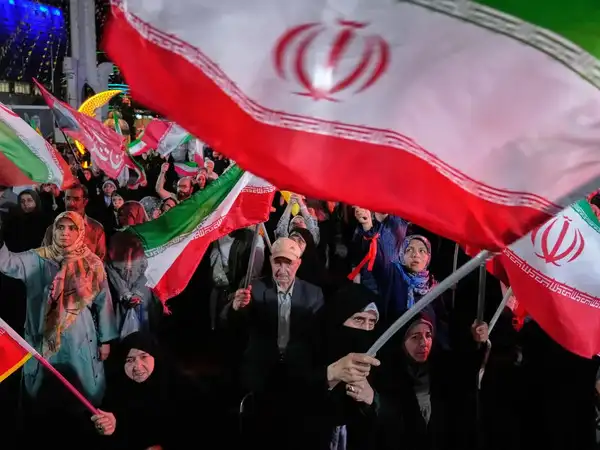
By Avi Kaner The Iranian regime has crossed another dangerous line.The United Arab Emirates has confirmed that Iran attacked two tankers belonging to ADNOC as they were passing through the Strait of Hormuz. Thankfully, no one was injured. But the absence of casualties should not diminish the seriousness of what occurred.This incident is about far […]
An Attack on Tankers, An Attack on the World: Why the Strait of Hormuz Must Stay Open.
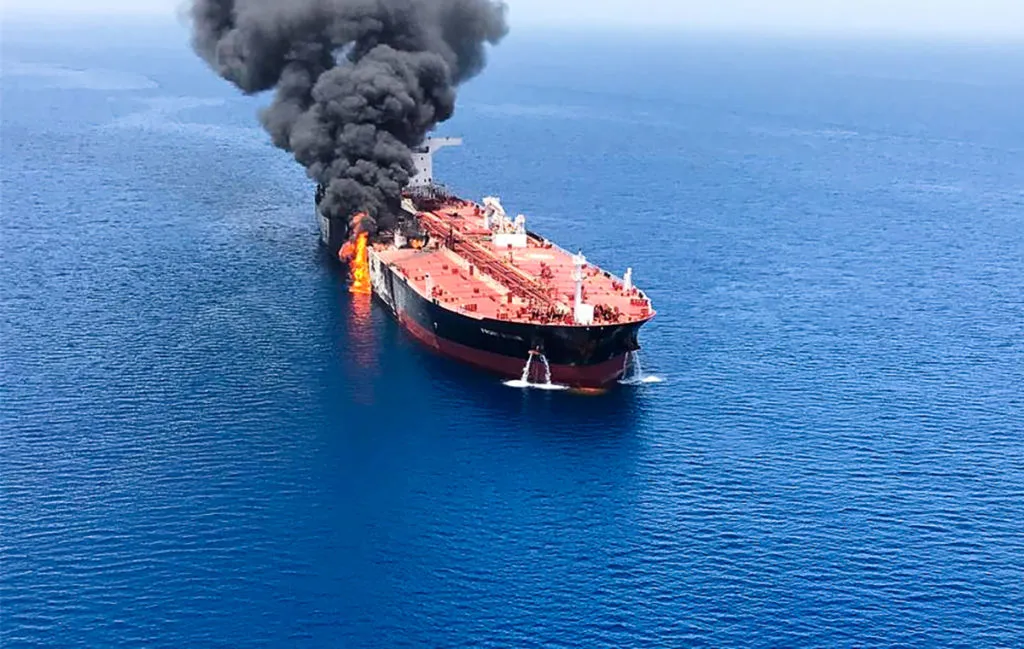
By Avi Kaner The Iranian regime has crossed another line. The United Arab Emirates has confirmed that Iran attacked two tankers belonging to ADNOC as they were passing through the Strait of Hormuz. Thankfully, no one was injured. But think about what is happening here. The UAE has spent years building one of the most […]
ADNOC Offers Dark-Transit Shuttle Service for Iraqi Crude Through Strait of Hormuz.

By Tim Frazer Abu Dhabi National Oil Company (ADNOC) is positioning itself as a critical logistics partner for Iraqi oil exports, offering to move Basrah and other Iraqi crude grades through the Strait of Hormuz using the same discreet “dark-transit” methods that have made the UAE the most reliable Gulf producer at keeping oil flowing […]
Mohammed Abdulsalam: When the Negotiator Becomes Part of the Machinery of War and Money.
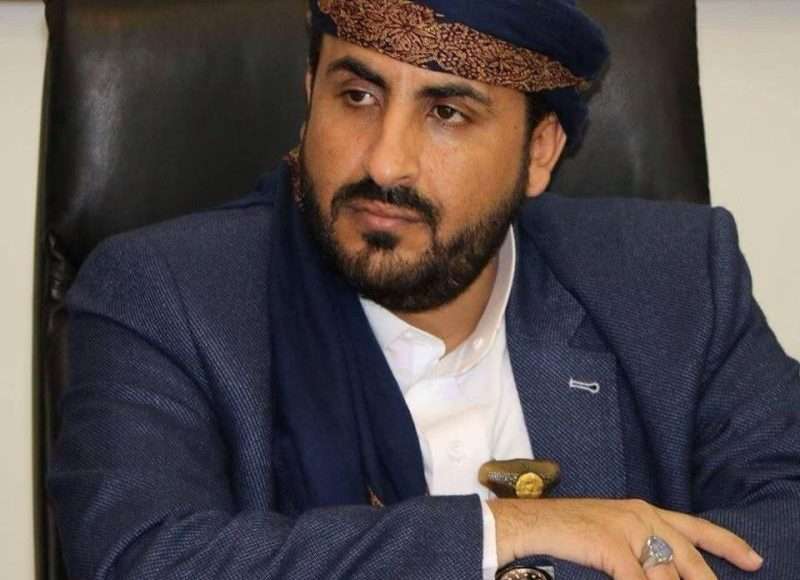
By John Rossomando U.S. sanctions against Mohammed Abdulsalam should not be read as merely another designation targeting a senior Houthi official or the public face of an armed movement. Their significance is potentially far greater. Washington is effectively challenging the distinction between the Houthis’ diplomatic representation and the broader machinery that sustains their power—where politics […]