By Nash Seman
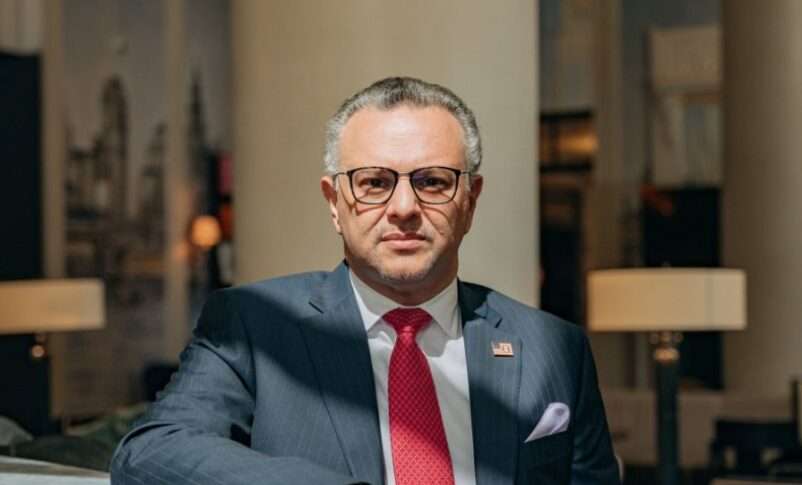
Massad Boulos is the Trump administration’s senior adviser for Arab and African affairs and, since April 2025, senior adviser for Africa at the State Department. Lebanese-born and a longtime businessman in Nigeria, he holds citizenship in Lebanon, the United States, France, and Nigeria. He came to wider notice after his son Michael married Tiffany Trump in 2022, helped the 2024 campaign reach Arab-American voters, and was named to his advisory post shortly after the election. His brief covers peace efforts, commercial ties, and high-level diplomacy from the Middle East into the continent, with Sudan treated as the most urgent file.
Sudan’s war, which began in April 2023 between the Sudanese Armed Forces under General Abdel Fattah al-Burhan and the Rapid Support Forces under Mohamed Hamdan Dagalo, known as Hemedti, is the world’s largest humanitarian crisis. Tens of millions need food and medical aid, and millions have fled into Egypt and neighboring states. Boulos has worked through the Quad the United States, Egypt, Saudi Arabia, and the United Arab Emirates—and with partners including Qatar, Turkey, and European governments. The framework he has promoted starts with a humanitarian truce, often framed as a 90-day pause, then moves to sustained aid access, a permanent ceasefire, a civilian-led political transition, and reconstruction. Washington has also pressed to widen the arms embargo beyond Darfur and to constrain the gold trade that helps fund the fighting.
The mediation has been public, personal, and frequently stalled. Boulos has met both generals and regional leaders, including talks in New York in September 2026 with Egypt’s foreign minister and Sudan’s army-appointed foreign minister. U.S. statements have said neither military camp holds legitimate constitutional authority and that both have preferred battlefield gains to an unconditional truce. The army side has rejected proposals that it sees as locking in a Libya-style partition and has demanded an internationally monitored RSF withdrawal from cities. SAF-aligned voices have at times accused Boulos of bias; the RSF has at points accepted truce language. As of early October 2026 no ceasefire was in force, and a visa for Burhan was withheld amid the dispute over terms.
Outside Sudan, Boulos has been the administration’s most visible Africa envoy. His clearest result is the June 2025 Washington Accord between the Democratic Republic of the Congo and Rwanda, signed at the White House and aimed at easing the war in eastern Congo. He shuttled among Kinshasa, Kigali, Nairobi, and Kampala, linked the talks to minerals access and the Lobito Corridor, and secured attention that ordinary channels had struggled to obtain. He has also engaged Libya’s rival authorities in Tripoli and Benghazi, coordinated with Egypt on institutional unity and elections, and backed Morocco’s Western Sahara autonomy plan. African presidents have received him directly; critics note his limited prior diplomatic experience and the overlap between official mandates and family business networks in West Africa.
The style is transactional and personal rather than institutional. Supporters argue that White House access lets him move files that bureaucracy alone cannot. Skeptics point to fragile implementation in the Great Lakes, friction with Congress over briefings, and the risk that commercial interests color security talks. In Sudan those doubts are sharper because external backers, gold revenues, and atrocities especially in Darfur give both sides reasons to keep fighting.
Whether Boulos can convert shuttle diplomacy into a durable Sudanese settlement depends less on the envoy than on the generals and their sponsors. The U.S. position remains that there is no military solution, that civilians must eventually govern, and that the cost of continued war should rise for both camps. Until that calculation changes in Khartoum, Port Sudan, and the RSF’s strongholds, the humanitarian truce he has spent months pressing will stay a proposal rather than a fact.