By Rick Clay
The Islamic Republic of Iran is in an advanced state of systemic collapse. This is not analytical hyperbole or a projection of future contingency, but the most precise description available for the present condition of the Iranian state. What is unfolding in late 2026 is not another cyclical episode of political turbulence that clerical rule has historically survived since 1979, but the irreversible unwinding of the institutional, economic, and ideological architecture that sustained it for nearly five decades. Cyclical crises invite managed responses, while structural collapses demand strategic reckoning. This assessment synthesizes five interconnected domains that together place Iran beyond the threshold of recoverable governance: the global strategic environment that has shifted decisively against Iranian interests, the interior mechanics of institutional decay and uprising, the compounding pressures of water and oil, the energy market implications of restored Hormuz flows, and the power vacuum that will define the regional order for a generation.
For more than four decades Iran compensated for conventional military weakness through the artful construction of strategic depth, a layered architecture of proxy relationships and calculated ambiguity that allowed it to project influence and deter adversarial action through asymmetric escalation. That architecture has now been systematically dismantled. By early 2026 Tehran’s forward defensive perimeter had been fundamentally broken. The kinetic campaign against Hezbollah’s leadership and military infrastructure beginning in late 2024 decapitated an organization Iran had spent three decades building into its most capable proxy. The fall of the Assad government in Damascus in late 2024 severed what IRGC Quds Force planners described as the logistical spinal cord connecting Tehran to the Mediterranean, and the new Syrian authority has expelled Iranian military assets and closed institutional channels of influence. In Gaza, catastrophic losses have eliminated Hamas as a coherent instrument of Iranian coercive strategy. In Yemen, the Houthi campaign in the Red Sea has increasingly served Houthi rather than Iranian interests while inviting international counter-pressure. In Iraq, the Shia militia landscape has fragmented along lines of local political calculation that increasingly subordinate Iranian direction to national interest.
The structural isolation produced by the normalization era constitutes a second dimension of exposure that is equally consequential. The Abraham Accords and the broader pattern of Arab-Israeli normalization that followed fundamentally altered regional political geometry in ways profoundly disadvantageous to Tehran. Iran’s historic capacity to mobilize Arab sentiment behind the Palestinian cause as a mechanism of deterrence has been substantially eroded as Arab governments have demonstrated that their security and economic interests are better served by coordination with Israel and the United States than by solidarity with a clerical state they regard as an existential threat. Saudi Arabia’s gradual but deepening security relationship with the United States and Israel has closed a channel of strategic maneuver Iranian diplomacy had long relied upon. The posture of Russia and China has similarly evolved to leave Tehran more exposed than at any prior point. Neither has abandoned Iran entirely, but both have recalibrated in response to their own priorities. Russia’s comprehensive entanglement in Ukraine has reduced its capacity to expend political capital on Iranian defense. China’s overriding interest in stable global energy markets, in protecting its Gulf partnerships with Saudi Arabia and the UAE, and in avoiding secondary sanctions risk has produced qualified commercial engagement rather than strategic solidarity, even as China absorbed eighty to ninety percent of Iran’s seaborne crude in 2025 at discounts of six to eleven dollars per barrel through independent refiners in Shandong, generating twenty-five to thirty-five billion dollars annually. Iran’s admission to BRICS in 2024 provided symbolic validation without substantive partnership. Iran’s nuclear program, long its most powerful instrument of deterrent leverage, has revealed itself as a weapon whose value was always contingent on the ambiguity of non-weaponization. The decision never to cross the final threshold has left a program that imposes costs without conferring full deterrent benefits, and successive Israeli and American kinetic actions have substantially degraded near-term breakout potential while exposing deterrent credibility as hollow.
What has emerged in place of the old architecture is a new security order anchored by Saudi Arabia, Israel, and the UAE, backed by tacit and increasingly explicit American support, that has effectively encircled Iran strategically through intelligence-sharing, coordinated military posturing, and aligned diplomatic positions. The result is a geopolitical environment in which Iran faces simultaneous pressure from every external direction with no alliance capable of offsetting that pressure and no diplomatic off-ramp the regime in its current form is capable of accepting. The strategic depth that sustained the Islamic Republic for forty-seven years has been reduced to the borders of the Iranian state itself, and those borders are now the front line of a collapse driven from within.
That internal disintegration is driven by four interconnected pathologies. The factional architecture of the Islamic Republic was never a model of coherent governance, but the character and stakes of competition have changed. The IRGC’s hardline core, emboldened by decades of economic empire-building and control of ballistic missile and drone programs, has consolidated power in ways that have marginalized both the pragmatist clerical establishment and what remains of the reformist current, which was systematically extirpated through disqualification, imprisonment, and delegitimization after the electoral experiences of 2009 and subsequent cycles. What remains is competition between IRGC factions and the clerical hierarchy not over ideological debate but over distribution of economic resources and coercive capacity. The delegitimization of the Supreme Leadership represents perhaps the most structurally consequential dimension. Ali Khamenei consolidated authority through institutional maneuvering and loyalty networks, creating a system where authority derived from proximity to the Leader. The prospect of a successor has produced not a coherent plan but a destabilizing competition among potential successors, as no figure commands consolidated authority and the Assembly of Experts constitutionally charged with selecting a successor is itself questioned by large portions of the clerical establishment and public. It is a structural void at the center of the state, and structural voids do not remain stable under current pressures.
The socioeconomic dimensions represent the dissolution of the material basis upon which political legitimacy ultimately depends. The rial has lost more than ninety percent of its value over the past decade, trading around 1.5 million per dollar in early 2026, a visible manifestation of loss of public and market confidence in basic institutional functionality. Annual inflation above forty percent, accelerated by full snapback sanctions in late 2025, has eroded wages, savings, and pensions across every stratum. Youth unemployment exceeding thirty-five percent has created a generation with no material stake in continuation of the existing order. Oil revenues declined by an estimated seventy percent following intensification of sanctions enforcement, depriving government of foreign currency needed to stabilize the currency and sustain imports. The consequence has been cascading deterioration of basic services, food security, and economic function that has affected not only the working poor but the urban middle classes who once constituted the most reliable base of passive acquiescence.
The evolution of popular resistance has followed a trajectory of escalating radicalization and organizational sophistication that distinguishes the current cycle from its predecessors. The fuel subsidy protests of 2019 represented economic grievance without sustained infrastructure. The Mahsa Amini movement of 2022 introduced a qualitative transformation with explicitly political demands, cross-gender and cross-class participation, geographic breadth across the full span of territory, and cultural directness through public removal of the veil that attacked symbolic foundations of clerical rule. By 2025 and into 2026 what authorities initially characterized as manageable disorder had evolved into a sustained insurgency characterized by regime-change demands rather than reform demands, by coordination mechanisms resilient against state disruption, and by geographic diffusion that has stretched IRGC domestic suppression capacity to and beyond operational limits. The reliability of the Basij paramilitary, the regime’s primary instrument of domestic suppression, has been materially degraded by documented unit-level passive non-compliance, individual refusals to execute lethal orders, and outright defections. Mass arrests totaling an estimated twenty-one thousand in June 2025 and executions reaching at least fifteen hundred in 2025 attest to continued capacity for extreme coercion, yet the very scale of repression required reflects the degree to which consent-based governance has collapsed entirely. A regime governing exclusively through fear requires an unbroken chain of coercive success, and any significant break becomes potentially terminal. Economic desperation drives protest, protest drives crackdown, crackdown drives defection, and defection accelerates institutional hollowing.
Beyond geopolitical and internal mechanics, two additional external-origin pressures have compounded the trajectory. Iran’s hydrological emergency has reached acute emergency affecting an estimated fifty million people in daily access to potable water, agricultural viability, and economic function. Lake Urmia, once among the world’s largest saltwater lakes, has been reduced to less than ten percent of its historic volume, one of the most dramatic visual records of environmental catastrophe anywhere. The Zayandeh Rud, upon which Isfahan was built, has run dry for extended and repeated periods, leaving ancient bridges spanning empty riverbeds in an image Iranians across the political spectrum interpret as metaphor for governance failure. Across the central plateau groundwater depletion has reached seventy percent in some areas compared to early 2000s levels. President Pezeshkian warned publicly in July 2025 that Iran had no water behind its dams and wells were running dry, illustrating that scale had exceeded official denial. Structural causes are inseparable from governance pathologies. Agricultural policy consumed approximately ninety-one percent of total water withdrawals while delivering chronically inadequate returns, driven by ideological commitment to self-sufficiency and systematic diversion to politically connected enterprises. Dam construction altered hydrological systems without accounting for downstream consequences. Climate change reducing rainfall by up to fifty percent in some provinces and increasing evaporation is a force multiplier on foundations of mismanagement rather than primary cause. Water allocation has been particularly incendiary in Khuzestan, where state-directed diversion from the Karun River to central provinces has fused environmental injury with ethnic marginalization, producing regional protest dynamics of unusual intensity, as seen when residents marched carrying signs reading we are thirsty in one of Iran’s richest oil-producing regions in 2021, with similar protests recurring in Sistan and Baluchestan and Isfahan.
The oil flow paradox presents a different but equally illuminating dimension. Iran’s petroleum resources constitute in theory its most powerful economic asset, capable under normalized conditions of sustaining state finances and population welfare. In practice, sanctions, governance failures, and IRGC interests have transformed this potential asset into a mechanism of institutional self-preservation that operates in explicit tension with welfare of the state as a whole. Facing comprehensive sanctions, the regime has sold oil through shadow networks of several hundred tankers operating without proper insurance or flag jurisdiction, conducting ship-to-ship transfers in the Gulf of Oman and falsely documenting cargoes as Malaysian or Omani origin before delivery to independent Chinese refineries. The critical point is not that this shadow economy exists but who it serves. Revenue has flowed disproportionately to the IRGC’s operational budget and vast economic empire, which analysts estimate controls between twenty and fifty percent of the broader economy through foundations, construction enterprises, port operations, and black-market financial channels, receiving an estimated thirty-seven percent of the military budget in 2023 with allocations rising dramatically in 2025. By contrast, state capacity to pay public sector salaries, sustain welfare programs, fund education and healthcare, and maintain basic infrastructure has deteriorated continuously. The IRGC can sustain its own payroll, weapons programs, and economic interests through shadow revenue while the state descends into fiscal crisis and revolt, widening the gap between security apparatus interests and population welfare in a manner that accelerates systemic collapse.
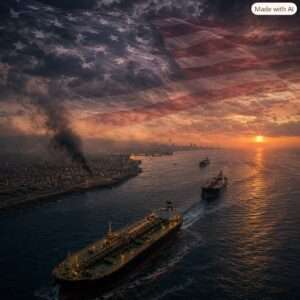
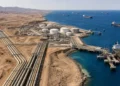
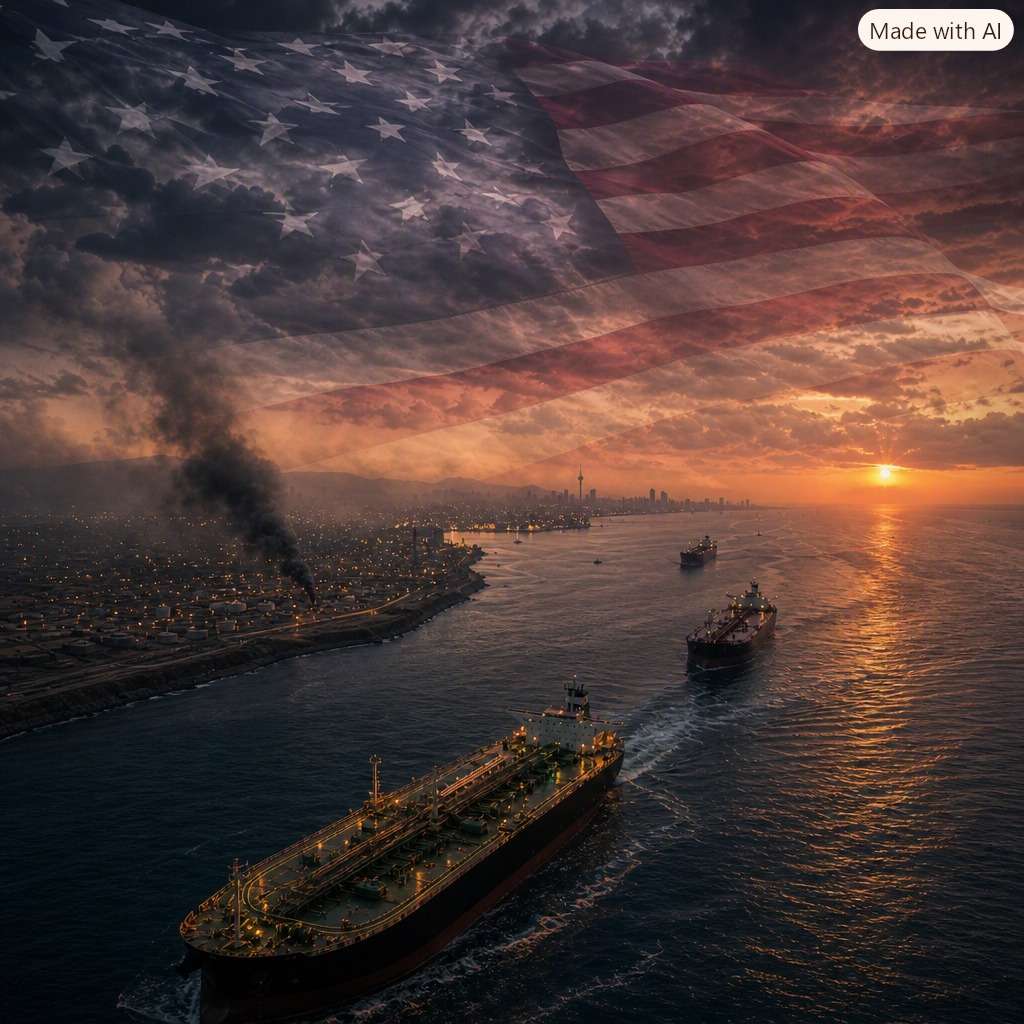
Few choke points carry the strategic weight of the Strait of Hormuz, a passage of approximately twenty-one nautical miles connecting the Persian Gulf to the Gulf of Oman and broader Indian Ocean, serving as transit for an estimated twenty percent of traded oil and enormous liquefied natural gas exports. For decades Iran exploited threat of closure as its most consequential leverage, backed by IRGC naval assets, mines, anti-ship missiles, and swarm boat doctrine, to embed a persistent risk premium in global crude prices and deter external pressure. The removal of that threat through collapse of IRGC naval capacity, establishment of a transitional authority willing to normalize maritime relations, or installation of a successor order with no interest in closure threats would constitute one of the most significant structural events in global energy markets in decades. Wood Mackenzie in May 2026 estimated more than eleven million barrels per day of Gulf crude and condensate production had been curtailed as consequence of conflict, warning prolonged closure could drive Brent toward two hundred dollars. The US Energy Information Administration’s April 2026 outlook recorded Brent at ninety-six dollars for 2026, forecast to peak at one hundred fifteen in the second quarter before gradually easing. Morgan Stanley modeled effective closure scenarios at one hundred fifty to one hundred eighty dollars, levels associated with global recession and central bank crisis management. Each figure represents not merely a market price but a tax on every economy dependent on imported energy. The scenario of post-collapse normalization would produce mirror-image effects. Wood Mackenzie’s Quick Peace scenario envisions Brent easing to approximately eighty dollars by end-2026 and declining further toward sixty-five in 2027 as market returns to structural oversupply. The elimination of the Hormuz risk premium, which has embedded persistent upward distortion across multiple years and crisis cycles, would represent a supply-side shock of magnitude few single geopolitical events have produced.
The differential impact on Gulf producer economies requires particular attention because it reveals a complex and counterintuitive calculus. Saudi Arabia and the UAE would face a paradox in which normalization of Hormuz flows eliminates a long-standing security risk and dramatically improves stability of regional environment while simultaneously suppressing oil prices upon which fiscal projections depend. The Saudi fiscal breakeven estimated at seventy to eighty dollars in recent years would be compressed, requiring adjustment in sovereign investment strategies for Vision 2030. The UAE’s more diversified economy offers somewhat greater resilience, but calculus is similar in direction. The critical judgment is that both have made a strategic determination, reflected in active support for new regional security architecture, that elimination of Iranian strategic threats outweighs fiscal costs of lower oil prices. They are accepting reduced upside in exchange for dramatically reduced existential risk. For major Asian energy importers, China, India, South Korea, and Japan, who collectively account for dominant share of Persian Gulf exports, calculus runs in opposite direction with unambiguous national economic interest in restoration of stable flows and price relief. China’s position is particularly complex as both largest purchaser of discounted Iranian crude and largest buyer of legitimate Gulf energy, requiring navigation from shadow-market arrangement toward normalized market environment that better serves long-term energy security. India, with rapidly growing import dependence, has signaled increasing openness to arrangements normalizing Gulf security environment. For the United States, with domestic production reaching approximately thirteen and a half million barrels per day in 2025 and direct import dependence at historic lows, significance is primarily indirect. It eliminates the most consequential single threat to stability of global energy market, reduces operational burden on naval forces responsible for freedom of navigation, and removes leverage instrument through which Iran most effectively constrained American freedom of strategic action. A Middle East where Hormuz flows are secure makes significantly fewer demands on American strategic attention and military resource allocation.
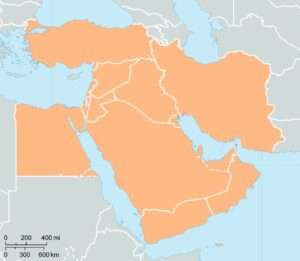
The analytical record of great power collapse offers sobering evidence for one proposition above all others: the moment of a regime’s fall is rarely the most consequential moment in transformation that follows. It is what comes after, the competition to fill vacuum, that determines whether collapse yields a new and more stable order or descent into prolonged conflict, fragmentation, and humanitarian catastrophe. The first succession scenario, most immediately plausible given IRGC’s current institutional position, is a military-authoritarian transition in which the IRGC or dominant faction consolidates power following collapse or incapacitation of clerical leadership. Such transition would follow a familiar pattern where the armed institution most capable of monopolizing violence steps into vacuum created by collapse of ideological-civilian leadership. This would mean an IRGC-led governing council preserving security prerogatives, economic empire, and external intelligence and covert operations capacity while shedding clerical ideological framework that has become source of delegitimization. This offers stability in narrow sense with borders substantially intact and basic state functions continuing, but perpetuates authoritarian governance that produced collapse conditions in first place and does not resolve whether regional adventurism would be abandoned. The second scenario is a federal or confederal democratic transition driven by coalition of urban reformists, diaspora organizational networks, and ethnic minority movements, Kurdish, Azerbaijani, Balochi, and Arab constituencies representing substantial share of Iran’s approximately ninety-two million people, who have demonstrated capacity for organized political expression exceeding anything clerical state has acknowledged. This scenario carries strongest claim to internal popular legitimacy and would reflect demands Iranians articulated across protest cycles of 2019, 2022, and 2025 to 2026, offering framework capable of addressing socioeconomic conditions over time, but is also most vulnerable to fragmentation dynamics historically attending attempts to construct pluralist governance over ethnically diverse populations in conditions of institutional weakness and external pressure. The third scenario, demanding most urgent international attention as worst-case outcome, is prolonged state failure characterized by competing warlordism, IRGC factional warfare, and emergence of ungoverned spaces exploited by jihadist networks and organized criminal enterprises. Geographic scale, ethnic diversity, stockpiles of conventional weapons distributed across large and partially fragmented IRGC command structure, and precedents of state failure in neighboring Iraq, Syria, and Afghanistan all raise possibility that no single actor can establish effective governance. Humanitarian consequences would be catastrophic, potentially producing refugee flows measured in millions toward Turkey, Gulf states, and Europe. Security consequences would include potential haven for reconstituted jihadist networks, proliferation risk associated with nuclear materials and expertise, and source of chronic regional instability across borders with Iraq, Turkey, Armenia, Azerbaijan, Turkmenistan, Afghanistan, and Pakistan. The fourth scenario is a managed transition supported by coalition of regional powers, each bringing different priorities and capabilities. Turkey’s overriding concern would be Kurdish political consolidation, as Ankara has consistently demonstrated it will accept considerable costs to prevent emergence of Kurdish autonomous entity on its borders. Saudi Arabia’s interest would be neutralization of Shia political infrastructure as regional force, not elimination of Shia communities but dismantling of institutional networks through which Islamic Republic mobilized Shia political identity as instrument of hegemony. Israel’s interest would be focused on permanent dismantlement of nuclear infrastructure and elimination of Quds Force capacity for external covert operations. China’s interest would be protection of energy investments, Belt and Road infrastructure commitments, and continuity of commercial relationships through which it obtained discounted crude.
The international community faces a closing window in which proactive strategic planning can shape post-Iran order rather than merely react to it. The connective tissue that runs through all domains is worth drawing explicitly, because it is integration of these pressures rather than severity of any single one that produces terminal character of current trajectory. Global realignment removed external lifelines, internal decay hollowed governing institutions, water crisis and shadow oil economy deepened internal contradiction between IRGC self-preservation and welfare of state and people, disruption to Hormuz flows has redrawn global energy market in ways that will produce structural consequences regardless of how collapse unfolds, and power vacuum forming in advance of fall is already shaping behavior of regional and global actors whose competing interventions will determine whether post-Iran order is one of managed transition or catastrophic fragmentation. Four domains of pre-collapse contingency planning are most immediately urgent. The first is humanitarian preparedness, where scenario of acute state failure carries prospect of refugee flows of scale and speed that would overwhelm unprepared receiving countries and international humanitarian systems, requiring planning, pre-positioning, and diplomatic coordination well in advance. The second is nuclear security, where enriched uranium stockpiles, centrifuge infrastructure, and human expertise distributed across nuclear establishment represent proliferation risks of first order in conditions of state fragmentation, requiring design of protocols including potential military options to prevent IRGC factions from weaponizing, selling, or dispersing material. The third is energy market hedging, where transitional period will produce price and supply volatility that energy-dependent economies must prepare for through coordinated strategic reserve management, demand-side flexibility, and diplomatic coordination among major consuming nations. The fourth is diplomatic framework development, designing criteria, processes, and international structures for recognizing and legitimizing successor authorities capable of stabilizing Iranian state, work that must be undertaken before such authorities emerge because capacity to shape successor legitimacy is greatest in earliest phases when range of possible outcomes is still wide and signals sent by external actors carry maximum weight. The collapse of the Islamic Republic is the most consequential geopolitical event of the current decade. No other development carries comparable implications across so many intersecting domains simultaneously, energy markets, regional security, nuclear nonproliferation, humanitarian law, great power competition, and long-term governance trajectory of a nation of ninety-two million people with one of oldest and most sophisticated civilizations in human history. The difference between a managed transition that gives Iran realistic prospect of stable, legitimate self-governance and catastrophic fragmentation generating decades of regional instability will be determined entirely by quality of strategic preparation undertaken in months immediately ahead.