By Tim Frazer
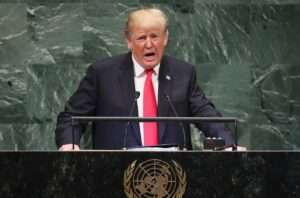
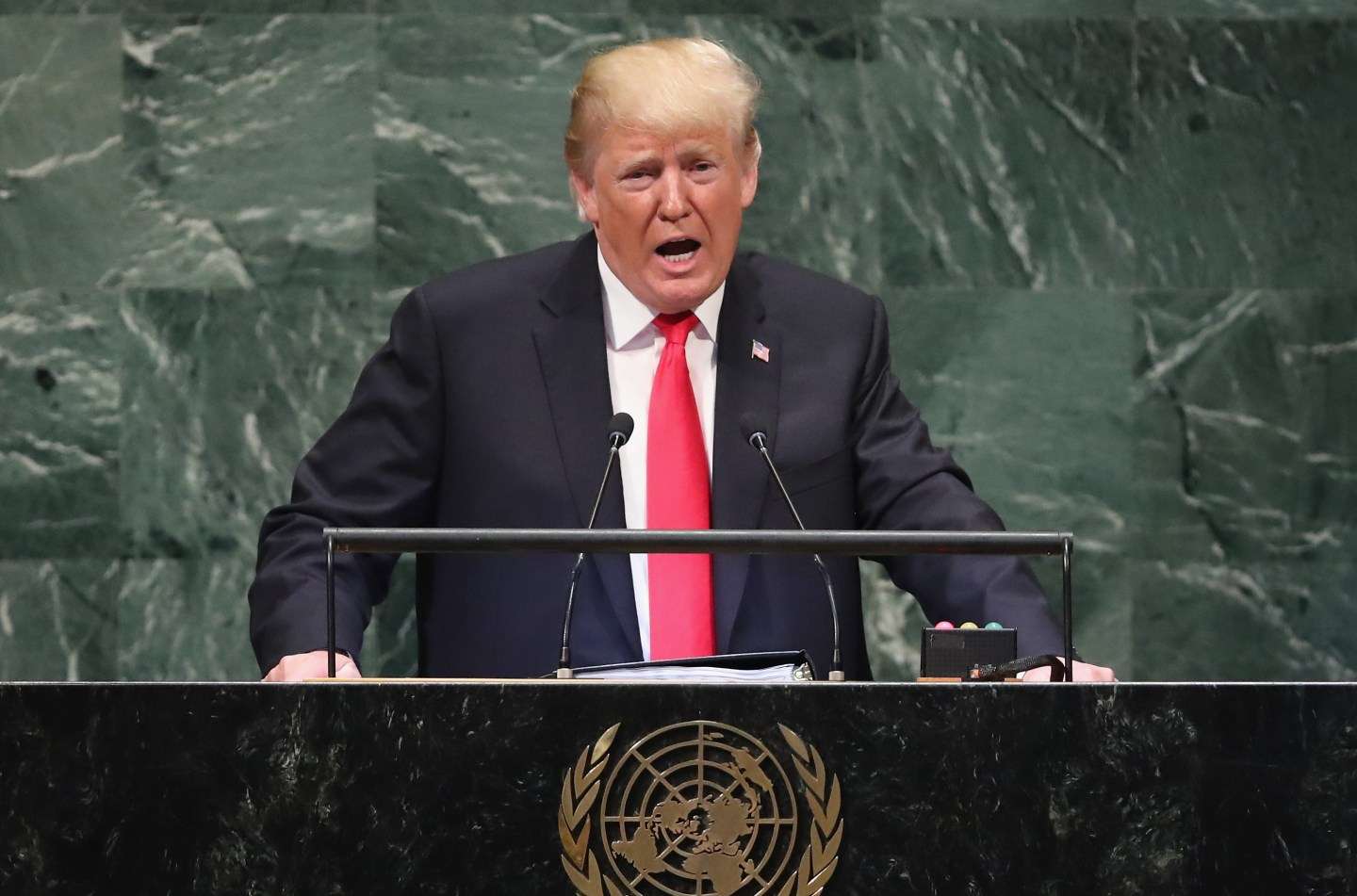
On September 22, 2026, President Donald Trump used the General Debate of the 81st United Nations General Assembly to turn a familiar slogan into a governing theory. The phrase was “peace through strength.” The argument was sharper: peace is not produced by statements, institutions, or waiting. It is produced by American power used early, publicly, and without apology. “While others have talked, I have acted,” he told the hall. “While others have spoken of peace, I have made peace. While others have ignored threats, I have confronted them.” That cadence was the speech’s thesis. Diplomacy, in this telling, is not the opposite of force. Force is what makes diplomacy possible. The setting made the claim more pointed. Trump spoke as the United States approaches its 250th anniversary, presenting the country as restored: a booming economy, a sealed border, a military being rebuilt at historic cost, and an America that no longer treats dangers as problems for the next administration. Then he turned outward. The world, he said, had allowed threats to mature. His job was to finish them.
Iran occupied the center of the address. Trump described the Islamic Republic as the world’s leading sponsor of terror and the clearest example of a danger left to grow. He said he had offered Tehran economic cooperation in exchange for an end to its nuclear program and support for terrorism; when that offer was refused, the United States struck. He cited Operation Midnight Hammer against Iran’s nuclear facilities and Operation Epic Fury against its navy, air defenses, and missile infrastructure. The regime, he said, was no longer the bully of the Middle East. It was weak, isolated, and desperate.
Then came the line that froze the room. “I have a big decision to make,” Trump said. Would Iran accept a deal that allowed it to rebuild, even become “one of the greatest” countries in the region? Or would he “annihilate the Islamic Republic and do it quickly”? He predicted a deal after the midterm elections, while insisting the only immovable condition was that Iran would never obtain a nuclear weapon. Members of Iran’s delegation walked out.
That sequence is the doctrine in miniature: offer first, strike if refused, isolate afterward, keep the door to a deal open, and treat the adversary’s remaining strength as proof that more pressure is required. The United Nations was not asked to mediate so much as to ratify the pressure. Trump thanked the Security Council for a resolution condemning Iranian attacks on commercial shipping and called on every nation to enforce “complete economic isolation” until Tehran stopped those attacks, abandoned nuclear ambitions, and ended support for terror.
Trump did not present himself only as a wartime president. He claimed credit for ending eight conflicts since returning to office, listing Cambodia and Thailand, Kosovo and Serbia, Congo and Rwanda, Pakistan and India, Armenia and Azerbaijan, and Gaza. The method, he said, was personal relationships, trade, tariffs, and the threat of tariffs. On Gaza, he said a sideline meeting at last year’s assembly had begun a process that later produced a cease-fire, the return of hostages, a 20-point peace plan endorsed by the Security Council, and a Board of Peace that he chairs. Those claims are central to the speech’s politics. They let Trump argue that coercion and settlement are the same project. Critics have disputed how complete, durable, or presidentially driven some of those “ended wars” actually are. The speech did not linger on those distinctions. It treated results as self-evident and process as secondary.
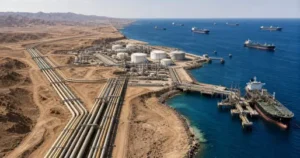
The same logic was applied closer to home. Trump said the United States would no longer allow threats to gain a foothold in the Western Hemisphere and would use military power if necessary. He described drug cartels as the “ISIS of the Western Hemisphere,” said they had been designated foreign terrorist organizations, and defended strikes on suspected drug boats. He pointed to the removal of Venezuela’s Nicolás Maduro, a subsequent political transition, and a vast oil agreement as proof that decisive action produces new facts on the ground. Cuba, he predicted, would eventually see freedom; its delegation left the hall.
Here the doctrine is less about distant nuclear thresholds than about primacy in America’s neighborhood: cartels as enemy combatants, energy as a strategic prize, and communist governments as systems to be squeezed until they break.
The United Nations itself was treated as an instrument to be used, cut, or ignored. Trump boasted of slashing the U.N. budget and shrinking its bureaucracy. He rejected “global government” and “global taxes,” called on countries to leave the International Criminal Court, and said the United States would not accept a global regulatory regime for artificial intelligence, which he renamed “Super Intelligence.” Human-rights bodies were accused of lecturing Washington on borders and social policy while ignoring worse abuses elsewhere. The right that mattered, he said, was the right of a nation to remain sovereign.
That is the other half of the doctrine. International institutions are useful when they bless American initiatives. They are illegitimate when they constrain American action.
The address will be remembered less for new policy than for clarity. Trump did not invent “peace through strength.” He defined it as the use of force and economic isolation to compel outcomes, then retroactively describe those outcomes as peace. Iran remains the unfinished experiment. Venezuela is the example he prefers. Gaza is the settlement he wants on the ledger. The U.N. is the audience, not the author.
The tension is obvious. A doctrine that makes American power the guarantor of order also makes American credibility hostage to results. If Iran bargains, the speech looks like leverage well applied. If the war drags on, oil stays expensive, and the claimed settlements fray, the same words will sound less like a theory of peace than a theory of permanent pressure.
For now, Trump has told the General Assembly what he believes the postwar system was too polite to say: in his second term, the United States will not wait for consensus to ripen. It will act, then invite the world to ratify the new reality. That is a doctrine of peace through force. Whether it produces peace is the question the next year will answer.