By Captain Gary Yuri Tabach
As someone who devoted 30 years to serving America in the United States Navy—from a rank of Ensign in 1985 to a Captain upon my retirement in 2011—and who later continued working in the post-Soviet space, also serving as the first American in leading the NATO Center for Counter-Terrorism, I would like to say a few words about the most important events that are rapidly changing the world. I would like the logic behind what is happening to become clearer, so that you perceive these developments not as random coincidences, but as a chain of interconnected and well-planned events.
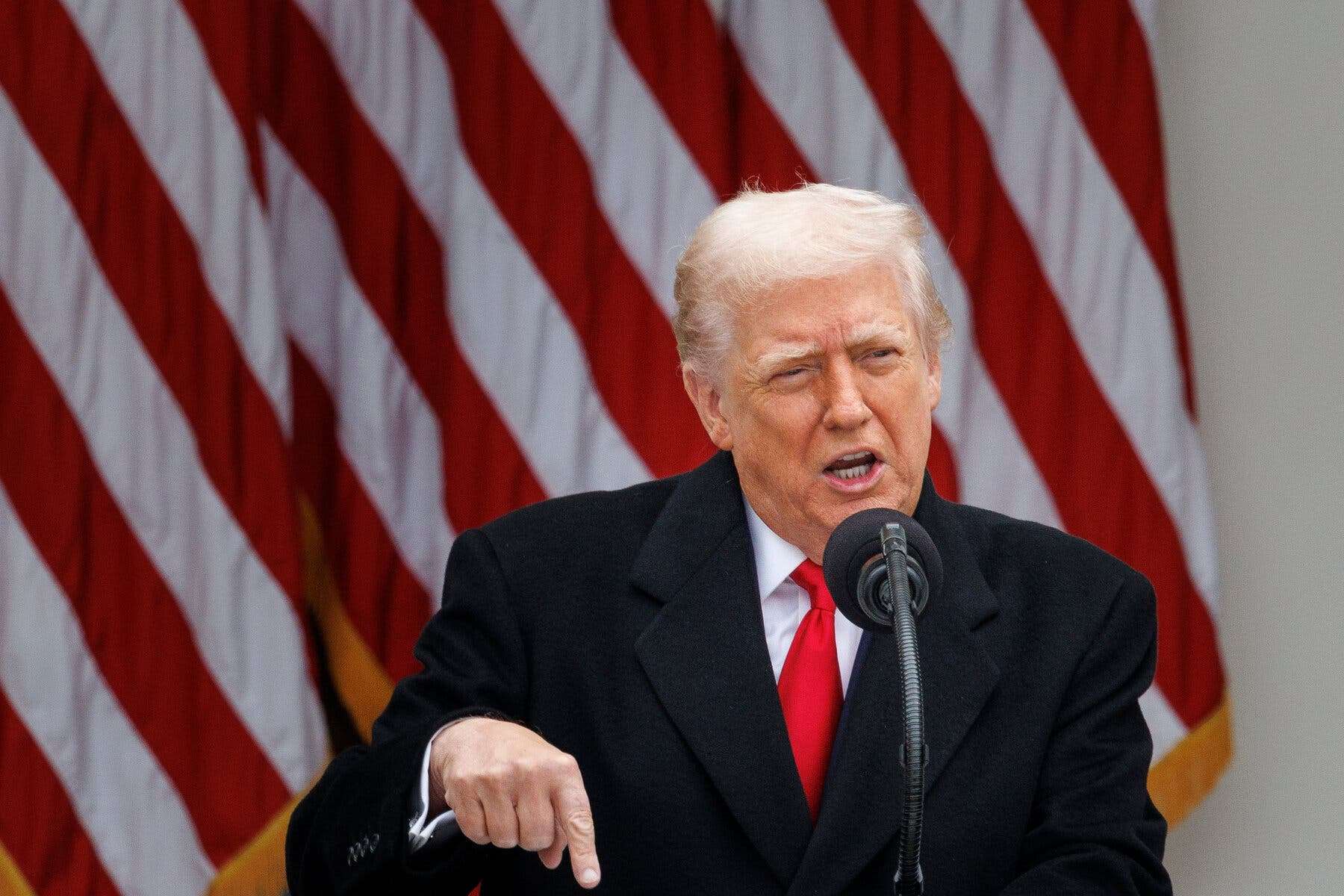
We often hear unfounded criticism directed at President Trump, claiming that he is inconsistent. This is a classic manipulation. In reality, Trump demonstrates a level of consistency that is rare in politics. Let us look at the example of Iran. As far back as 1980, at the age of 34, in an interview with Rona Barrett, he openly described the seizure of American hostages in Iran as an unimaginable horror and said that the United States must act decisively—including military intervention—to restore respect and stop the threat. Since then, nothing has changed: from that early position—through tough sanctions, withdrawal from the nuclear deal, the elimination of Soleimani—to today’s operations. Agenda 47 and current actions continue the same line: Iran must not possess nuclear weapons, the ayatollah regime is a source of terror, and America will not tolerate it. For his opponents he may appear unpredictable—yet in military affairs suddenness has always been a key to success, an element of surprise that breaks the enemy’s plans. But for those who watch closely, Trump is predictable in the most important sense: he does not retreat from the principles of strength and defending national interests.
Today Iran is weakened as never before—its economy is under pressure, internal protests are growing, and its proxy networks are losing effectiveness. We see a window of opportunity: further weakening of the nuclear program, disruption of financial flows, and isolation of the regime. This is not adventurism—it is calculation: to remove from the game the main sponsor of terror in the Middle East so that the entire region has a chance at stability.
The same logic works more broadly. Assad has already paid a price for chemical weapons. Maduro for the destruction of Venezuela and narcotics. Putin will pay his price for aggression against his neighbors. Trump does not change his position: he believes in strength as the foundation of peace, not in concessions that provoke new adventures.
In the United States, professionals value such an approach. It is very important that Ukraine see in Trump’s actions—his unprecedented efforts to achieve peace—a clear, step-by-step, well-thought-out plan. Once again, in Trump’s rhetoric we see a consistent commitment to declared goals, something that cannot be said about many Ukrainian political figures who can change their public attitude toward President Trump within a single day—despite the fact that it is precisely Trump who has the ability to truly achieve the peace that the Ukrainian people are waiting for.
Within the Republican administration, the appearance of General Budanov in the negotiating group is viewed positively. Kyrylo Budanov consistently speaks about Trump respectfully and substantively—emphasizing his experience, determination, and understanding of military realities. In the Republican team, his American counterpart in the negotiations, U.S. Army Secretary Daniel Driscoll, also values this. Their joint work within the negotiating group is aimed at achieving an agreement—they are fighting for real peace: to keep the army combat-capable and motivated, and to prevent exhaustion. Preserving people and equipment today means having strength tomorrow. This is the pragmatism of a warrior.
America and Ukraine stand shoulder to shoulder in the fight for common values. We will continue to work together—consistently, effectively, and with a focus on long-term security.
President Trump is also consistent on the issue of peace in Ukraine. This is one of the priorities of his foreign policy. Knowing President Trump’s determination, there is no doubt that a lasting peace will be achieved and Ukraine will begin its path toward recovery and prosperity.