BY Adrian Calamel
On Christmas Day 1992, investigative journalist Steve Emerson was in Oklahoma City on an unrelated assignment when he stumbled upon a large gathering at the convention center. What he witnessed was the annual conference of the Muslim Arab Youth Association (MAYA). Thousands of attendees, many in traditional Middle Eastern dress, filled the halls. Vendors sold literature promoting jihad and the destruction of Jews and Christians. Speakers included Khalid Mashal (a Hamas leader), Kamal Helbawy (a senior Muslim Brotherhood figure), and representatives of al-Gama’a al-Islamiyya (Egyptian Islamic Jihad). Emerson later learned that MAYA had been founded and headed by Abdullah bin Laden, a half-brother of Osama bin Laden. The open calls of “Kill the Jews” and “Destroy the West” in the heart of America shocked him and launched his career tracking Islamist networks on U.S. soil. 
MAYA was no isolated youth group. Federal prosecutors later listed it among the unindicted co-conspirators in the landmark Holy Land Foundation (HLF) terrorism-financing case. The same list included the North American Islamic Trust (NAIT), the Islamic Society of North America (ISNA), the Council on American-Islamic Relations (CAIR), and individuals such as Tareq Al-Suwaidan.
The Holy Land Foundation Convictions: Following the Money Trail
In November 2008, a federal jury in Dallas convicted the Holy Land Foundation for Relief and Development and five of its leaders on all 108 counts of providing material support to Hamas, money laundering, and related charges. Sentences handed down in May 2009 ranged from 15 to 65 years. Prosecutors proved that HLF, once the largest Muslim charity in the United States, had funneled approximately $12.4 million to Hamas after the group was designated a foreign terrorist organization. 
The trial did far more than shut down one charity. It introduced into the public record the Muslim Brotherhood’s 1991 “Explanatory Memorandum on the General Strategic Goal for the Group in North America.” Authored by Mohamed Akram, the document described the Brotherhood’s work in America as a “Civilization-Jihadist Process” aimed at “eliminating and destroying the Western civilization from within.” Attached was a list of “our organizations and the organizations of our friends,” which included NAIT, ISNA, MSA, MAYA, and others. Prosecutors demonstrated that the U.S. Muslim Brotherhood had created a Palestine Committee whose fundraising arm was HLF and whose social-infrastructure entities included the organizations later named as unindicted co-conspirators. 
Central to the financial architecture was NAIT. Founded in 1973 by the Muslim Students Association, NAIT functions as a waqf (Islamic endowment) that holds title to the real estate of hundreds of mosques and Islamic schools across the United States. In the HLF trial, evidence showed NAIT and ISNA had helped move money on behalf of Hamas in the late 1980s and early 1990s. By controlling the deeds, NAIT ensures long-term institutional continuity even if individual leadership changes.
Oklahoma’s Affiliated Institutions
The same networks that surfaced in the HLF evidence and the 1992 MAYA conference remain visible in Oklahoma’s Islamic infrastructure today.
Oklahoma City / Edmond metro area
• Islamic Society of Greater Oklahoma City (ISGOC / Masjid An-Nasr) at 3815 N. St. Clair Avenue is the state’s largest mosque. It partners with the Muslim American Society of Oklahoma (MAS-OK) for youth programming. MAS is widely regarded by researchers as the primary U.S. organizational vehicle of the Muslim Brotherhood. ISGOC is closely tied to Mercy School Institute, a K–12 Islamic school in Edmond that integrates Quran, Arabic, and Islamic studies with the state curriculum.
• Islamic Society of Edmond / Masjid Al-Salam (525 N. University Drive) sits on land historically held by NAIT and faced public opposition during a 2013 expansion attempt over those ties.
• Grand Mosque of Oklahoma City / American Muslim Association (3201 NW 48th Street) traces its organizational roots to the 1980s student-era networks; Tareq Al-Suwaidan, a self-identified Muslim Brotherhood leader later banned from the United States, was active in founding similar AMA entities and converting a Tulsa church into a mosque.
Tulsa / Broken Arrow
• Islamic Society of Tulsa (IST) at 4630 S. Irvington Avenue is the main Tulsa mosque. Its constitution and property records list NAIT as trustee. In 2014 IST acquired 15 acres in Broken Arrow that were shortly deeded to NAIT. A 2026 proposal for a large Islamic center and commercial complex on that land was rejected by the Broken Arrow City Council after intense public opposition; the state attorney general opened an inquiry citing NAIT’s documented history.
• Al-Salam Mosque in Tulsa was established by Tareq Al-Suwaidan while he studied petroleum engineering in Oklahoma.
University towns
Islamic Society of Norman (serving the University of Oklahoma) and Islamic Society of Stillwater (serving Oklahoma State University) continue the campus-based MSA tradition that produced the original Brotherhood infrastructure in North America.
These institutions deny any operational control by foreign terrorist organizations and describe NAIT simply as a protective waqf. Critics note that the same legal and financial structure identified in the HLF trial—property held by NAIT, ideological continuity through MAS and ISNA-linked programming, and historical overlap with the Palestine Committee—remains intact.
Governor Stitt’s 2026 Investigation
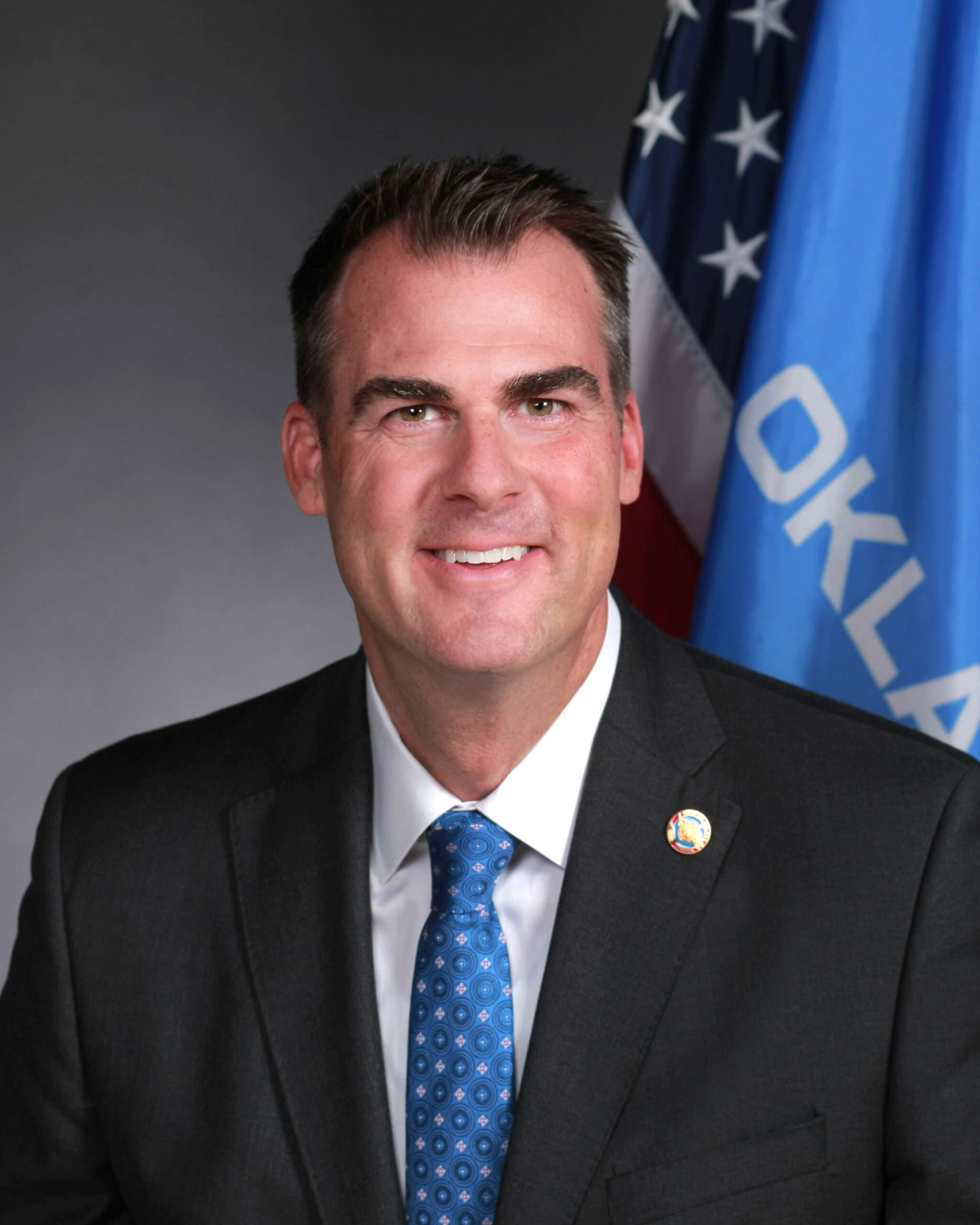
On August 12, 2026, Oklahoma Governor Kevin Stitt issued Executive Order 2026-29 directing the Oklahoma Office of Homeland Security (within the Department of Public Safety) to conduct an intelligence-based assessment of whether the Muslim Brotherhood, CAIR, or any affiliates, agents, or persons acting in concert with them present a terroristic or public-safety threat in the state. The order further instructs state officials to advocate for federal designation of the Muslim Brotherhood and CAIR as Foreign Terrorist Organizations and encourages the legislature to enact corresponding state legislation.
Stitt’s order explicitly references Hamas’s origins in the Muslim Brotherhood and builds on Oklahoma’s existing Homeland Security and Antiterrorism Acts. It arrives amid the still-active Broken Arrow zoning dispute and years of local debate over NAIT-held properties.
Why Following the Money Matters
The 1992 MAYA conference showed the open ideological recruitment. The 2008–2009 Holy Land Foundation convictions proved the financial pipeline that sustained Hamas while building parallel institutions inside the United States. NAIT’s role as deed-holder ensures those institutions endure. The same entities that appeared on the Brotherhood’s own 1991 list and on the HLF unindicted co-conspirator list continue to own or influence mosques and schools in Oklahoma City, Edmond, Tulsa, Norman, and Stillwater. Governor Stitt’s executive order returns attention to the same question Emerson asked himself in 1992: What networks operate in plain sight, and who ultimately controls the assets and the ideology? In terrorism financing, the money trail has repeatedly proven more revealing than public statements of moderation. Oklahoma’s current scrutiny of those trails is the latest chapter in a story that began more than three decades ago in a convention center on Christmas Day.