By Alain Renault
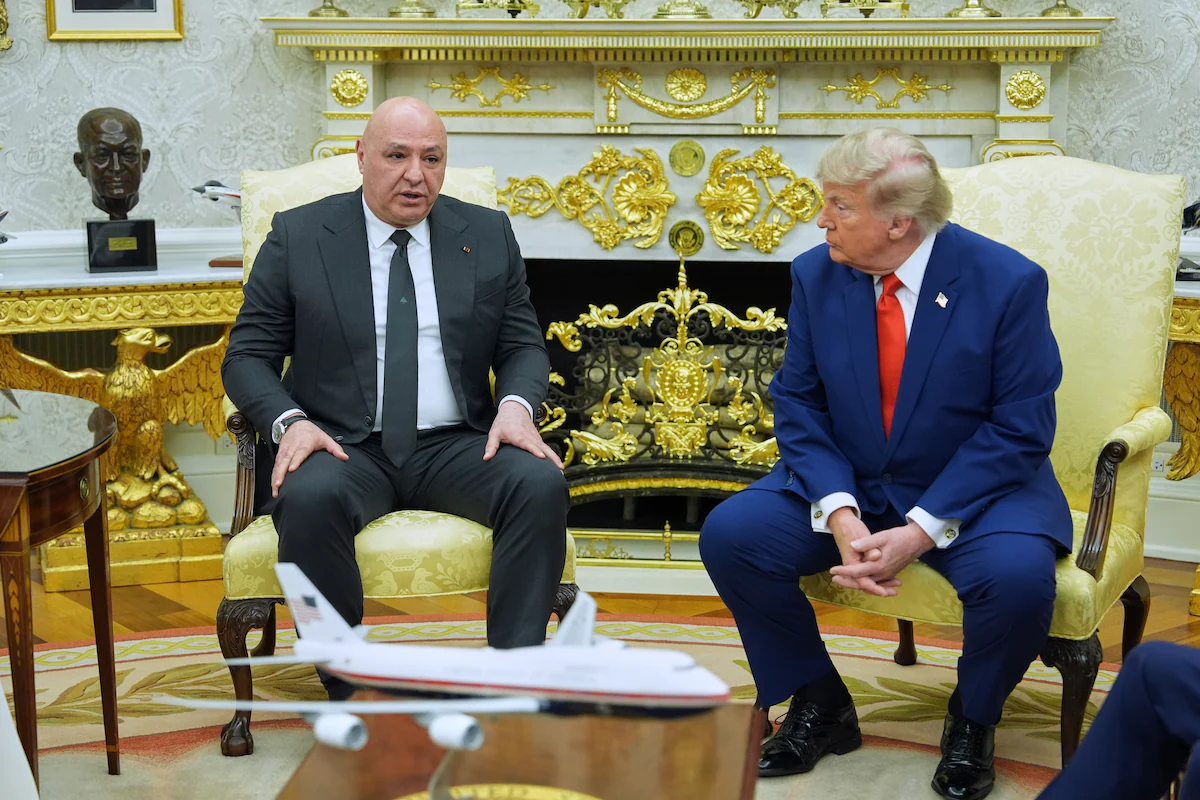
Lebanese President Joseph Aoun’s meeting with U.S. President Donald Trump this week arrives at a pivotal moment. Just days earlier, on July 20, the U.S. State Department announced the launch of the first pilot zones in Froun, Ghandouriyeh, and Zawtar al-Gharbiyeh. These limited areas in southern Lebanon are intended to let the Lebanese Armed Forces (LAF) demonstrate it can dismantle Hezbollah’s military infrastructure under a verification mechanism outlined in the June 26 Trilateral Framework.
The concept is straightforward and overdue. The LAF would take control of small, defined zones, remove Hezbollah’s weapons and positions, and prove that the Lebanese state—not an Iranian-backed militia—can exercise sovereignty south of the Litani. Success here could expand outward. Failure would confirm what many already suspect: that Beirut continues to slow-walk its commitments while Hezbollah rebuilds.
Aoun and Prime Minister Nawaf Salam entered office in early 2025 promising security and stability. Disarming Hezbollah was the clear prerequisite. Instead, 2025 saw repeated assurances that the process was underway, followed by the army’s January 2026 claim that it had completed disarmament south of the Litani—a claim Israel rejected. No credible public inventory of seized weapons ever emerged. Hezbollah, true to form, waited, rearmed, and in March 2026 opened another front after strikes on Iran, once again dragging Lebanon into conflict and displacing hundreds of thousands.
This pattern is familiar. Agreements look solid on paper. Implementation evaporates. The pilot zones offer a narrow, practical way to break that cycle. They are geographically limited, giving the LAF a manageable test. The United States has long provided the army with resources and training. The capacity exists. What has been missing is the political will to confront Hezbollah directly—or even to name it consistently in public.
From Israel’s perspective, the continued presence of Hezbollah’s arsenal and infrastructure justifies the IDF’s residual deployments, including in Zawtar al-Gharbiyeh. A security zone reminiscent of earlier decades is the logical result of Lebanese inaction. Governments across the region should find Hezbollah’s parallel army equally unacceptable. It undermines Lebanese sovereignty first and foremost, then destabilizes the neighborhood.
The White House meeting gives Washington leverage. Trump, Secretary of State Marco Rubio, and other officials have invested significant political capital in Lebanon. The message should be unambiguous: the pilot zones must move from announcement to verified operations. “Trust but verify” is not optional. The LAF needs to show concrete results—dismantled positions, collected weapons, secured villages—rather than another round of declarations.
Lebanon’s political class has long preferred inertia. Figures such as Parliament Speaker Nabih Berri and others who have dominated the system for decades have preserved a status quo that prioritizes balance among factions over effective state authority. Meanwhile, parts of the wider Middle East are moving. New leadership in Syria and Iraq has shown a willingness to engage the United States and pursue different paths. Trump has signaled readiness to support those who deliver results and attract investment. Lebanon can join that trajectory or remain an exception defined by weakness and militia power.
The pilot zones are small by design. That is their strength. They give the Lebanese army a chance to succeed where broader promises failed in 2025 and early 2026. Success would strengthen the institution, reassure partners, and create momentum for the next zones. Continued hesitation would confirm that the old habits remain intact.
Aoun has an opportunity in Washington to commit to measurable action rather than more process. The United States has done its part by helping create the framework and launching the first zones. Lebanon must now demonstrate that the state is prepared to reclaim its territory. The alternative is more of the same: paper agreements, rearmament, and renewed conflict. The pilot zones are the clearest available measure of whether this time will be different.