By Asiimwe Angel
The United Arab Emirates is urging a diplomatic breakthrough through Qatar-mediated talks to head off a renewed round of fighting between the United States and Iran, warning that military options would only deepen an already complex crisis without providing any rapid way out.
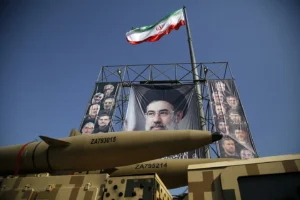
Speaking Sunday at the 22nd Manama Dialogue, the annual security summit organized by the International Institute for Strategic Studies, UAE presidential advisor Anwar Gargash described 2026 as a “watershed year” for the region and the world. The conflict began on February 28 with joint U.S.-Israeli strikes on Iran—operations that killed Supreme Leader Ali Khamenei and other senior officials—followed by Iranian missile and drone attacks on Gulf states, including energy infrastructure and targets in the UAE, Qatar, Saudi Arabia, and Bahrain. “We don’t really want to see another round of confrontation in the region,” Gargash told the gathering of regional and international officials and experts. He stressed that the current situation demands “a lot of wisdom, with political tools being our main tools,” and that “military solutions will only complicate the current very complicated scene that we have and will not actually bring any quick off-ramps.”
The region remains locked in a prolonged “no war, no peace” limbo. U.S. and Iranian positions remain far apart on core issues including Iran’s nuclear program, the status of the Strait of Hormuz, and related sanctions or blockades. “If these positions are not bridged, then we have to worry about the worst,” Gargash said, while noting that another round of war serves neither the region’s interests nor Iran’s.
He pointed to ongoing Qatar-led mediations as a potential path forward. Iranian negotiators have been in Doha discussing proposals that could lead to a reopening of the Strait of Hormuz, though Iranian Foreign Minister Abbas Araghchi has stated there are no direct talks with the United States and that outcomes depend on Washington’s responses to Iranian questions. The UAE has emphasized restoring pre-war freedom of navigation through Hormuz as a non-negotiable priority, arguing that Gulf states should not bear the economic costs of a crisis they did not create. Disruptions to energy and trade flows have repeatedly affected shipping, with intermittent Iranian actions and U.S. naval measures continuing amid stalled diplomacy.
Gargash made clear the UAE is not relying solely on diplomacy. “We’re also, as we’ve shown before, braced for the worst,” he said, underscoring the country’s readiness to protect its citizens, residents, development model, and economic infrastructure. He noted that the war has strengthened the UAE’s security partnership with the United States, making it even more central to Emirati defense calculations. At the same time, he observed that while individual Gulf states demonstrated resilience praising Bahrain’s steadfastness and expressing solidarity with Saudi Arabia after attacks on civilian infrastructure the Gulf Cooperation Council as a collective “have not collectively risen to the challenge.” Rebuilding regional confidence, he suggested, will take years.
Trust with Iran has been particularly damaged. Gargash has previously described Iran’s attacks on Gulf neighbors as a strategic miscalculation that burned bridges built over decades. Relations may eventually be restored for practical reasons of geography, but rebuilding confidence is a longer process that will depend on Iranian actions rather than words. All Gulf states maintain some channels of communication with Tehran.
The backdrop includes ongoing threats of renewed U.S. or Israeli strikes and Iranian vows of broad retaliation. Reports have circulated of American preparations for possible further military action, even as officials, including U.S. Secretary of State Marco Rubio, have indicated that no final decision has been made and that diplomacy remains an option. The Manama Dialogue itself unfolded under the shadow of these risks, with Gulf states largely united in preferring de-escalation over another round of hostilities.
Gargash’s remarks reflect a consistent UAE position: prioritize political and diplomatic tools to avoid prolonged confrontation, strengthen regional partnerships and economic integration, respect sovereignty, and move away from extremist rhetoric. Whether Qatar’s mediation can produce the hoped-for breakthrough or whether wider gaps on nuclear issues, Hormuz access, and security guarantees prove insurmountable will shape whether the Gulf remains in its uneasy holding pattern or slides toward renewed fighting.