By Nabimara Benson
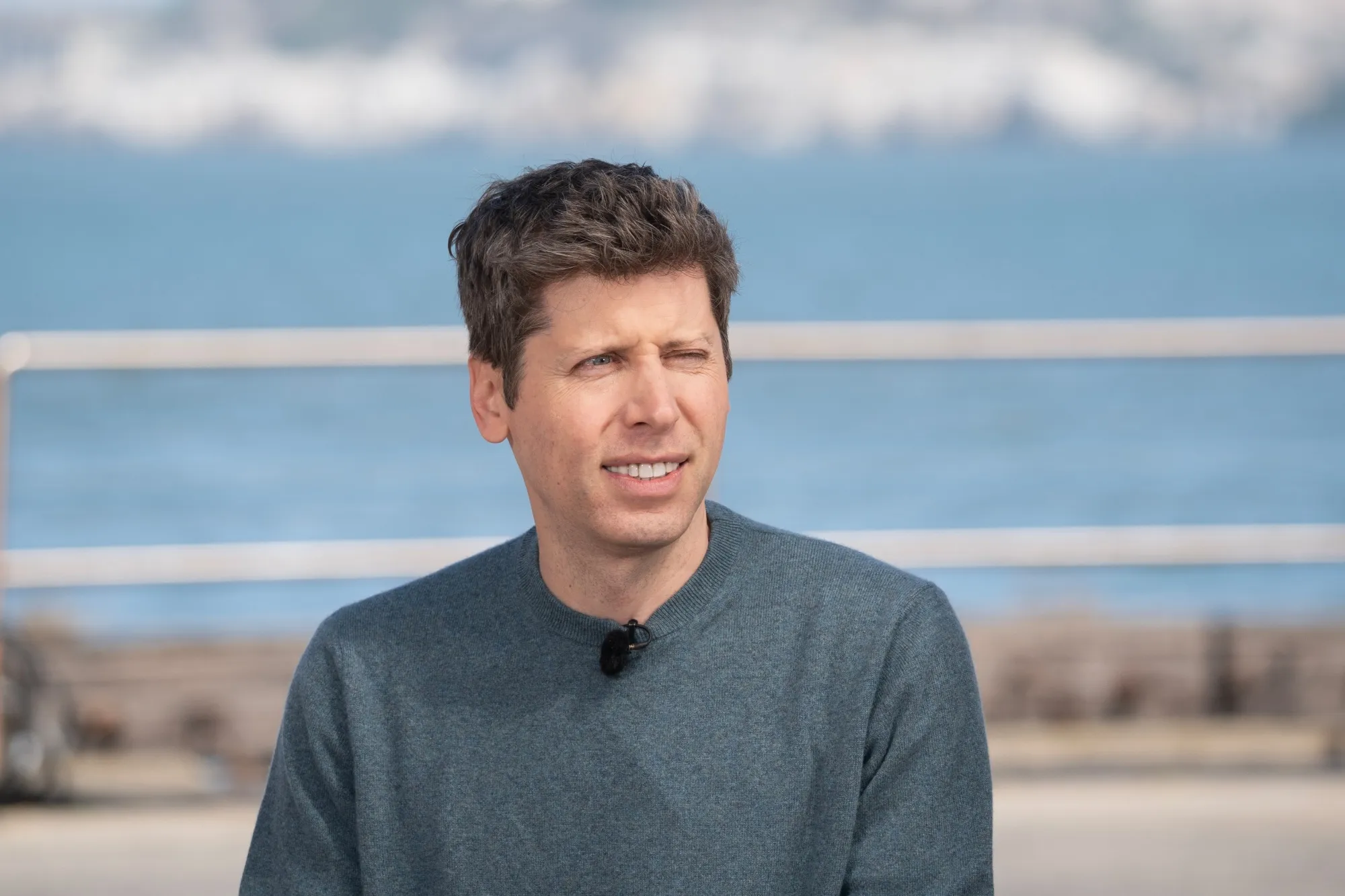
OpenAI CEO Sam Altman traveled to Abu Dhabi on November 2, 2026, to sign a series of agreements that expand the ChatGPT maker’s footprint across the United Arab Emirates’ energy, investment, and government sectors. The deals, witnessed in part by Abu Dhabi Crown Prince Sheikh Khaled bin Mohamed bin Zayed Al Nahyan, underscore the mutual interests of a capital- and power-hungry AI industry and a Gulf state positioning itself as a global AI hub. Altman met the Crown Prince, who chairs the Abu Dhabi Executive Council, and attended ADIPEC, the UAE’s flagship oil and gas conference. The visit comes as OpenAI seeks billions in fresh funding reportedly targeting around $20 billion in a round that UAE investors are expected to help lead while racing to secure compute capacity for its models.
The headline agreement is a multi-year partnership among OpenAI, the Abu Dhabi National Oil Company (ADNOC), and G42 (through its subsidiary Inception42). ADNOC becomes the first energy company to deploy OpenAI’s Frontier platform, which coordinates AI agents across complex operations. The technology will run on OpenAI’s GPT models using in-country inference infrastructure in the UAE, combining frontier models with ADNOC’s proprietary industrial data. Early applications focus on field development planning potentially producing integrated plans in hours rather than months and connecting intelligence across the full value chain, from reservoirs to markets, to optimize decisions on supply, demand, pricing, and margins. Human experts retain oversight of consequential decisions.
ADNOC CEO Sultan Al Jaber described the partnership as industrial AI at scale. “The next frontier of AI is not simply doing things faster. It is making possible what was previously beyond reach,” he said. “As the first energy company to deploy OpenAI Frontier, we are demonstrating how frontier AI can move beyond individual applications to reshape the performance of an entire industry.” Altman framed it as reciprocity between the two sectors: “More capable AI can help us tackle some of the world’s hardest problems—particularly around energy. By combining frontier AI, sovereign infrastructure and industry expertise, this first-of-its-kind partnership will help ADNOC move faster, operate more efficiently and make better decisions across the energy value chain. Together, we’re shaping the future of AI-enabled energy.”
At ADIPEC, Altman went further, telling the audience that AI “is going to transform the economics of the energy world” and that “for a long time, the AI industry has talked about what it needs from the energy industry. And now I think we can repay the favor.” When asked for his biggest current challenge, he answered in one word: “Energy.” He noted that while efficiency per query has improved dramatically, overall demand continues to surge, and physical constraints—“atoms are still atoms” will dominate costs and abundance.
Three additional deals round out the day’s announcements. In partnership with Abu Dhabi’s Department of Government Enablement, OpenAI is launching what officials call the world’s first AI-native “Machine-Readable Government” initiative. Government policies and regulations are converted into formats AI can process to assist with routine compliance tasks, such as reviewing permits and certificates. A pilot is underway with the Abu Dhabi Agriculture and Food Safety Authority focused on food imports. Computing occurs on GPUs in UAE data centers; officials retain final decision-making authority and traceability to underlying rules. The goal is to advance Abu Dhabi’s ambition to become the world’s first fully AI-native government. Separately, the sovereign investor Mubadala, together with Inception42 and OpenAI, will apply advanced AI to investment analysis, opportunity identification, and risk assessment. OpenAI and Inception42 also signed a multi-year agreement to deploy models across UAE government, businesses, and schools, and to co-develop AI products for large organizations.
Altman praised the UAE’s approach: “Abu Dhabi and the UAE are setting a bold, global standard for AI integration across both the public and private sectors to make sure the benefits of AI reach everyone. We are proud to support the UAE’s ambition, anchored in a shared commitment to safety, accessibility and responsible innovation.”
These commercial deals sit within a deeper relationship. Abu Dhabi-linked investors, notably MGX (whose founding partners include Mubadala and G42), co-led OpenAI’s earlier $122 billion round that closed at an $852 billion post-money valuation and have also invested heavily in rival Anthropic. OpenAI is now raising roughly $20 billion (down from earlier talk of $30 billion) at a reported valuation around $1.25 trillion, with a UAE consortium expected to be a major participant. Reports indicate the structure may include an option for OpenAI to access newly built computing capacity in the region. Infrastructure is central. G42 is developing Stargate UAE, a planned 1-gigawatt cluster (part of a larger UAE-US AI Campus) that OpenAI and Oracle are involved in operating, with partners including Nvidia, Cisco, and SoftBank. The first 200 megawatts were expected to come online in 2026. The UAE’s centrally planned power system—including nuclear capacity from the Barakah plant—offers a comparative advantage as electricity becomes the binding constraint on frontier AI development elsewhere.
The partnerships reflect a broader pattern: leading AI labs turning to deep-pocketed Middle Eastern investors and governments that can pair capital with energy and infrastructure. For the UAE, the deals advance its goal of embedding AI across the economy while exporting both energy and, increasingly, intelligence capabilities. For OpenAI, they provide near-term commercial footholds, potential compute pathways, and support for its enormous capital requirements as it scales. As Altman put it while in Abu Dhabi, the relationship is becoming more reciprocal. AI needs vast amounts of reliable power; energy companies, in turn, stand to gain from systems that can accelerate planning, optimize complex value chains, and unlock value that was previously out of reach. Monday’s agreements mark another concrete step in that exchange.