By Nabil (Bill) S. Mikhail
On Saturday, October 24, 2026, Washington, D.C., witnessed an impressive event when the
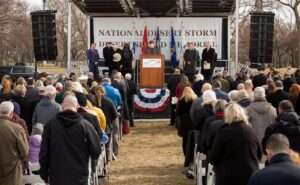
The National Desert Shield and Desert Storm Memorial was officially dedicated. It was a very honorable ceremony attended by representatives from the Government of the State of Kuwait, along with the civilian and leadership of the Pentagon, and top officials from the United States Government. Hundreds from the veterans of that war were also present. The memorial became accessible to the public afterwards. This incident has a great deal of significance and it designates many strong meanings in humankind’s contemporary life.
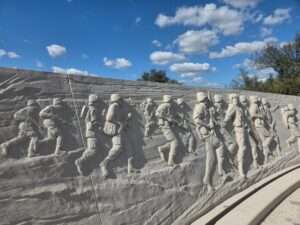
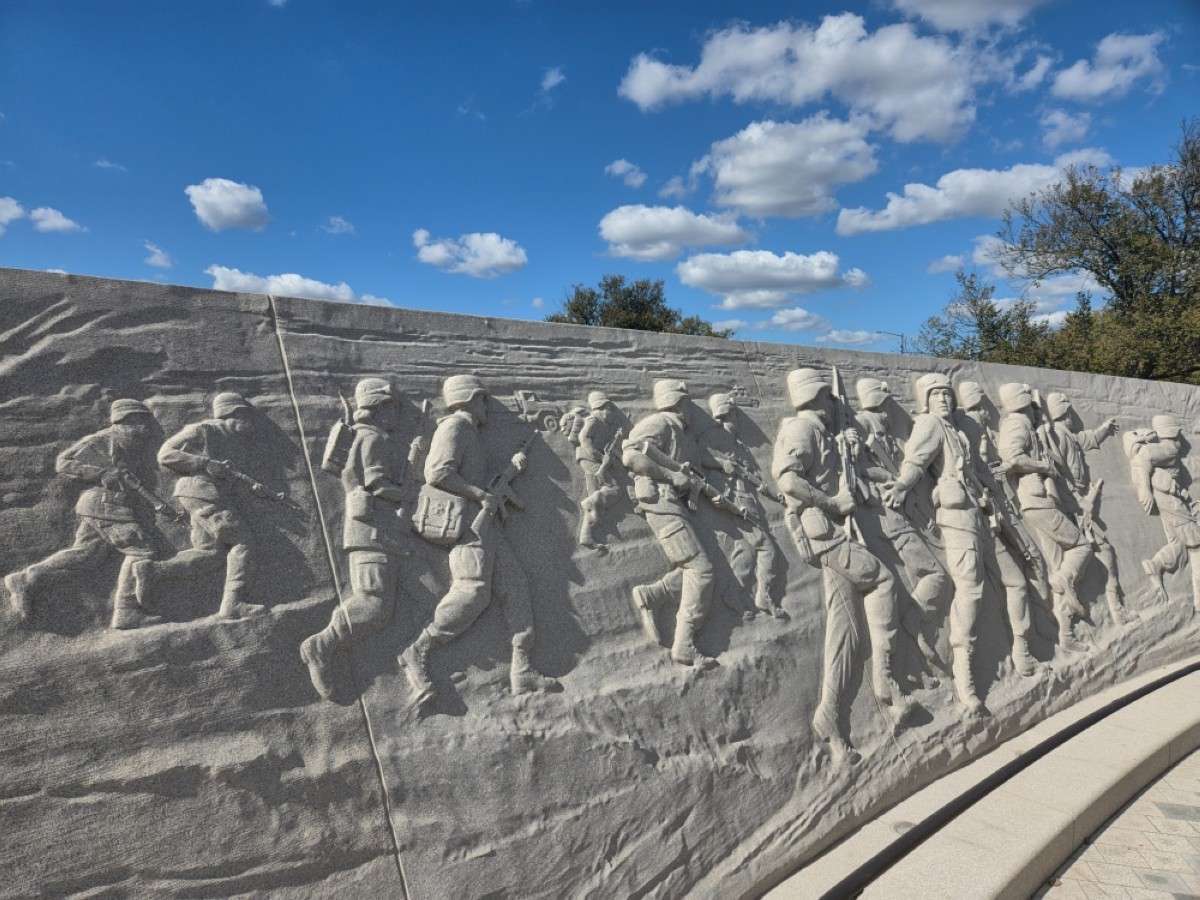
The memorial is located approximate to the Lincoln Memorial and the Vietnam Veterans Memorial. This is the heart of Washington, D.C. Its artwork genius is the design of its shape as an oasis in the desert. This radiates the sense of tranquility and warmth in a heavy-traffic area. Its cost was around 40 million dollars. On the fountain are engraved the names of the countries that fought in that war. The sculpture of a wall is a depiction of soldiers fighting. The arches enhance the themes of military solidarity and unity. The memorial is an important reminder that almost 700,000 U.S. service members were mobilized, and the 34-nation international coalition forces are praised and appreciated as well through the inscription of their names. In modern war lexicon, this war became known as the “Gulf War,” and after Operation “Iraqi Freedom,” in 2003, it is now called the “Second Gulf War.”
There is a certain noble conception about war and peace in human thinking and nations’ psyche. It is appropriate to consider the sacrifices of many who lost their lives or suffered injuries to dispel an act of aggression. This is not the first war memorial to be built anywhere and in the capital of the United States in particular, and will not be the last because wars have not ended or disappeared as a human phenomenon. When people visit a war memorial they contact with that war even if their knowledge about that war is minimal. Any war memorial is a piece of art and architectural distinction. It decorates urban life and beautifies a place and its landscape.
War memorials are constructed to pay homage to the military and the civilians who lost dearly due to the eruption of a strife or a conflict. They strengthen the memories of those who recall a certain war. They cultivate a sense of belonging among different communities. They are a source of national pride and they comfort the bereaved and those who lost their loved ones. They are historical registrars as they record often the names of the dead or those people who made sacrifices. A statement about war memorials described them as the meeting between history and psychology.
This memorial in the heart of the capital of the United States is a testimony to the greatness of the people of Kuwait. Iraq’s dictator Saddam Hussein invaded Kuwait in the early hours of Thursday, August 2nd, 1990. He announced that Kuwait was to be the nineteenth province of the Republic of Iraq, thus abolishing the sovereignty of Kuwait. Iraq’s occupation forces raped the resources of Kuwait, and killed and assaulted her people. An international coalition was formed and the Bush Administration (1989-1993,) deployed troops in Saudi Arabia in preparation for an armed attacks against the Iraqi forces occupying Kuwait. All diplomatic efforts were exhausted and the avoidance of a war was unsuccessful. The United Nations Security Council authorized the use of force against Iraq if it did not withdraw from Kuwait by Tuesday, January 15th, 1991. Iraq did not comply with that UN resolution and the war started immediately. An air campaign commenced and in the last few days of February, the coalition forces moved into Kuwait and liberated her from the Iraqi occupation. The Amir (Prince) of Kuwait Sheikh Jaber Al-Ahmad Al-Jaber Sl-Sabah,
returned safely to assume the duties of governing his nation, thus restoring the sovereignty of Kuwait over her lands. The phase of the deployment was known as “Desert Shield,” and the time of the fighting was annunciated as ” Desert Storm.” Hence the war memorial glorifies the battles that took place and how Kuwait preserved her independence in the world and became again a member of the world community of nations.
The primary influence of the memorial is that it commemorates a war which was conducted under the name of collective security. Overall, 34 nations participated in the coalition that fought Saddam Hussien. This demonstrated the degree of respect that Kuwait enjoyed as a nation and a country. It is a memorial that remembers a war whose international legitimacy was sanctioned. It is the war whose goal was the affirmation of global peace and that the relationships among nations must not be a state of chaos. People will understand the First Gulf War when they visit that memorial. It is a monumental structure about a very critical moment in the history of the modern Middle East. The memorial is about the war that taught the world that justice in international politics was still possible and achievable.
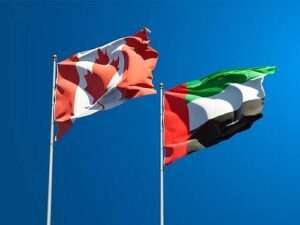
At the end, President Donald Trump wants to build many more monuments in the District of Columbia. A few of them are controversial because of their slavery-related history, or to contentious questions in American life. However, The National Desert Shield and Desert Storm Memorial stands tall in the middle of the capital of the United States of America attesting to the greatness of Kuwait, and the help she got from Arab and Islamic countries such as the Kingdom of Saudi Arabia and the United Arab Emirates to liberate her from the tyranny of a failed dictator.