By Alain Renault
Parents of students in the UAE’s public schools will soon be able to ask a government AI assistant why their child is falling behind in math or Arabic and receive a tailored plan to close the gap, as part of the country’s ambitious push to embed artificial intelligence across public services.
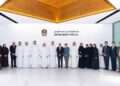
The tool, named Mira, was unveiled in late November 2026 in the presence of Sheikh Mohammed bin Rashid Al Maktoum, Vice-President, Prime Minister, and Ruler of Dubai. It forms part of a wider government initiative using agentic AI to simplify interactions with the state. Mira is scheduled to begin delivering priority services—including education, health, identity, passports, and residency—from March 2027, with a full rollout across government services targeted by the end of that year. Officials have set a goal of shifting roughly half of government services to advanced AI agents within two years.
For education, Mira draws on data schools already collect but that parents seldom see in full: classroom observations, project results, benchmark assessments, attendance, behaviour, interests, and grades. Education Minister Sarah Al Amiri explained that the system will flag emerging problems early and give parents more precise guidance than traditional report cards. A parent concerned about a drop in math performance, for example, could learn that absences caused the student to miss key lessons, receive a focused catch-up practice plan, view the exam timetable, and have Mira book a meeting with the teacher while adding it to the parent’s calendar.
Al Amiri described the aim as creating a complete, accurate picture of each child’s progress so that “the teacher guides, the family supports and the student succeeds.” The Ministry of Education plans to make the education features available across more than 530 public schools serving about 280,000 students. Private schools, which educate the majority of the UAE’s 1.1 million students, are not required to adopt Mira.
The launch builds on the UAE’s earlier decision to make AI a mandatory subject from kindergarten through grade 12. That curriculum began rolling out in the 2025–26 school year in public schools (and some private ones), covering foundational concepts, data and algorithms, ethics, prompt engineering, and real-world applications. Students now typically encounter AI and technology lessons one to three times a week, depending on grade level. At the same time, the ministry has reduced screen use in certain core subjects for younger students, returning some lessons in reading, writing, and math to books, paper, and pen in an effort to strengthen foundational skills.
Mira is designed to work through natural conversation and in multiple languages, reflecting the UAE’s diverse population. Demonstrations at the launch showed it handling tasks ranging from passport renewals and work-permit management to health appointments and education queries. Sheikh Mohammed described it as a single interface for government services available on the phone of every citizen, resident, and visitor, with the explicit goal of making life easier and saving people time.
By placing granular learning data and actionable recommendations directly in parents’ hands, the education component of Mira aims to tighten the connection between home and school. Whether the system ultimately improves outcomes will depend on the quality of the underlying school data, the accuracy of its analysis, and how effectively parents and teachers use the insights it provides. For now, it represents one of the more concrete attempts by a national government to turn AI into a practical tool for day-to-day parental involvement in children’s education.