By Maria Maalouf
The true measure of artificial intelligence is what it makes possible for people. For governments, that means more than faster websites or smarter applications. It means fewer obstacles, simpler procedures and more time for citizens, residents and businesses to devote to their lives and ambitions.
With the unveiling of “Mira,” its intelligent personal government assistant, the United Arab Emirates is advancing a vision in which technology brings government closer to the people it serves.
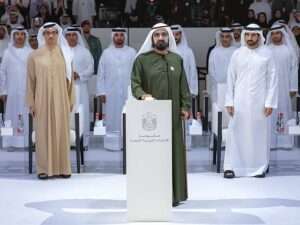
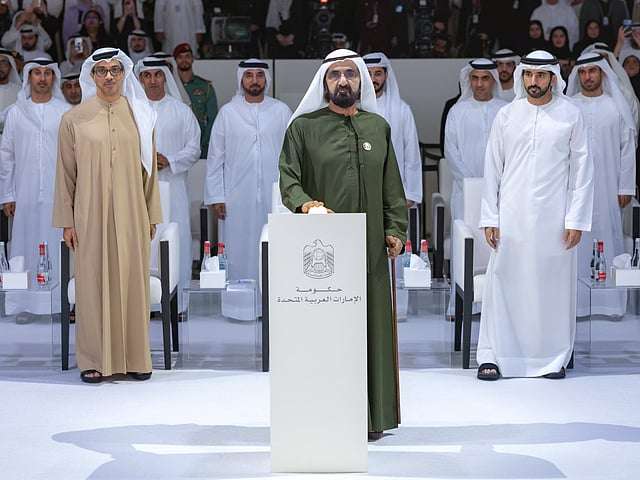
Presented in the presence of Sheikh Mohammed bin Rashid Al Maktoum, Mira represents an ambitious shift in the relationship between individuals and public institutions. Its premise is straightforward: people should be able to explain what they need in everyday language, through voice or text, without first understanding which department handles their request or how its procedures work.
For anyone who has navigated multiple government platforms, submitted the same information repeatedly or struggled to identify the right service, the significance is clear. Government becomes more accessible when it takes responsibility for managing its own complexity.
From answering questions to completing tasks
Digital government has already transformed access to public services. Yet even sophisticated online systems often leave users responsible for finding the correct platform, understanding requirements and coordinating between institutions.
Mira’s ambition goes further. It is designed to help identify the appropriate service, review relevant information and coordinate the steps needed to complete a transaction, including confirmation and payment where required.
This is the promise of agentic AI in public administration: technology that can help carry out tasks as well as explain them.
Under Sheikh Mohammed bin Rashid’s leadership, the UAE has consistently placed government performance at the center of its development ambitions. Mira gives that philosophy a practical expression. The value of innovation becomes visible in the experience of a person completing a necessary transaction with greater ease.
An economic advantage built on simplicity
The industrial applications outlined in the Arabic article illustrate the potential economic significance of this transformation.
Dr. Sultan Ahmed Al Jaber, Minister of Industry and Advanced Technology, presented an approach integrating 15 services for industrial investors into a single experience. The announced improvements include reducing certain processing times from five days to five minutes, enabling immediate completion of other transactions and eliminating hundreds of fields previously requiring manual entry.
Behind those administrative changes lies a broader economic principle: time spent navigating bureaucracy is time unavailable for building a business.
An industrial investor seeking a production permit should be able to concentrate on establishing operations. A manufacturer preparing to export should be able to focus on customers, competitiveness and market access. Public administration contributes directly to economic growth when it makes these activities easier.
For the UAE, this approach complements the ambition embodied in “Make it in the Emirates.” A competitive industrial economy depends on infrastructure, capital and talent, alongside institutions capable of responding efficiently to business needs.
Simpler procedures can help companies move more quickly from investment decisions to production, expansion and employment.
Keeping the human purpose in view
Mira’s broader importance extends into everyday life.
The planned service areas encompass identity, residency, passports, education, health, business and industry. These are matters that affect families, livelihoods and opportunities. Making them easier to manage can produce benefits that are deeply personal: less uncertainty, fewer interruptions to work and more time with family.
Natural-language interaction also offers an opportunity to make government services more approachable for people with different levels of digital confidence. The design challenge is to ensure that this simplicity remains available across languages, abilities and circumstances.
A government assistant succeeds when people can use it confidently and understand what it is doing on their behalf.
That human purpose should remain the standard against which progress is assessed. The sophistication of the technology matters because of the practical improvements it can deliver.
Trust will determine success
An ambitious announcement establishes a direction. Reliable implementation earns public confidence.
As Mira moves toward its planned public rollout, its success will depend on accurate transactions, secure handling of personal information and clear accountability. Users should understand when they are authorizing an action, how to correct an error and where to turn when they need human assistance.
These considerations are central to service quality. A fast transaction must also be a correct transaction. A convenient system must also protect the people who depend on it.
The UAE’s opportunity is to demonstrate how technological ambition and responsible governance can advance together. Achieving that balance would strengthen both the public experience and the credibility of AI across government.
Leadership measured in everyday results
Mira expresses an important idea about the future of the state: government performance should be measured partly by the burdens it removes from people’s lives.
Every unnecessary step eliminated, every repeated request avoided and every transaction completed reliably contributes to a more responsive public sector.
This is where the UAE’s vision carries its strongest message. Leadership in artificial intelligence requires the ability to translate investment and ambition into improvements that people can actually experience.
If Mira delivers on its promise, its most meaningful achievement will be visible in ordinary moments: an investor moving forward, a family completing an essential service, a resident resolving a request through a single conversation.
That is a future worth building—a government whose intelligence is reflected in how well it serves people.