By Prof Bill Michael
The International Monetary Fund has reversed its earlier forecast of contraction for the United Arab Emirates, now projecting modest growth of 0.2% this year as trade, aviation, tourism, and oil sales begin to recover from the disruptions of the regional conflict.
Just a month ago, in its October World Economic Outlook, the IMF had expected the UAE economy to shrink by nearly 4% (around 3.9%), part of a broader projection that the Middle East and North Africa would be the only major region worldwide to contract in 2026. Gulf economies were expected to suffer declines approaching those seen during the COVID-19 shock. The UAE fared better than most neighbors, the fund noted, thanks to its ability to pipe crude around the Strait of Hormuz to the port of Fujairah and its “substantial public-sector and external buffers,” according to Said Bakhache, the IMF’s mission chief for the country.
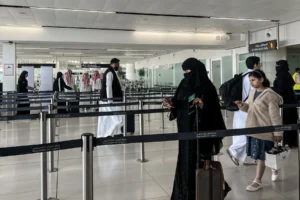
Even so, the non-oil private sector fell to a five-year low in June as flights ground to a halt and visitors all but disappeared amid the fighting. Activity has since started to regain momentum across key sectors. The latest assessment, following an IMF Article IV mission to the UAE from November 3–17, credits the authorities’ swift and targeted policy response, strong fiscal and external buffers, robust infrastructure, and a well-capitalized banking system for cushioning the initial shock.
Looking ahead, the fund sees a sharp rebound. Real GDP growth is projected at 7.3% in 2027 if regional disruptions ease, driven largely by non-oil activity (forecast at 5.4%) alongside a strong recovery in hydrocarbons (13.3%). For 2026 itself, non-oil GDP is still expected to contract by about 0.5%, while hydrocarbon output grows 2.3%. Inflation is projected to average around 5% this year before easing toward 3% in 2027 and converging on 2% over the medium term.
Fiscal and external positions are expected to remain strong despite narrowing surpluses, with low government debt, substantial sovereign financial assets, and ample international reserves providing important buffers. UAE oil exports have at times surpassed pre-war levels during the conflict, further supporting the recovery.
The upgrade marks a significant turnaround for the Arab world’s second-largest economy and underscores the UAE’s relative resilience compared with more exposed Gulf neighbors. While the outlook remains subject to regional uncertainty—particularly around shipping through the Strait of Hormuz—the IMF’s revised numbers point to an economy that has absorbed the shock better than many anticipated and is positioned for a robust expansion once conditions normalize.