By Maria Maalouf
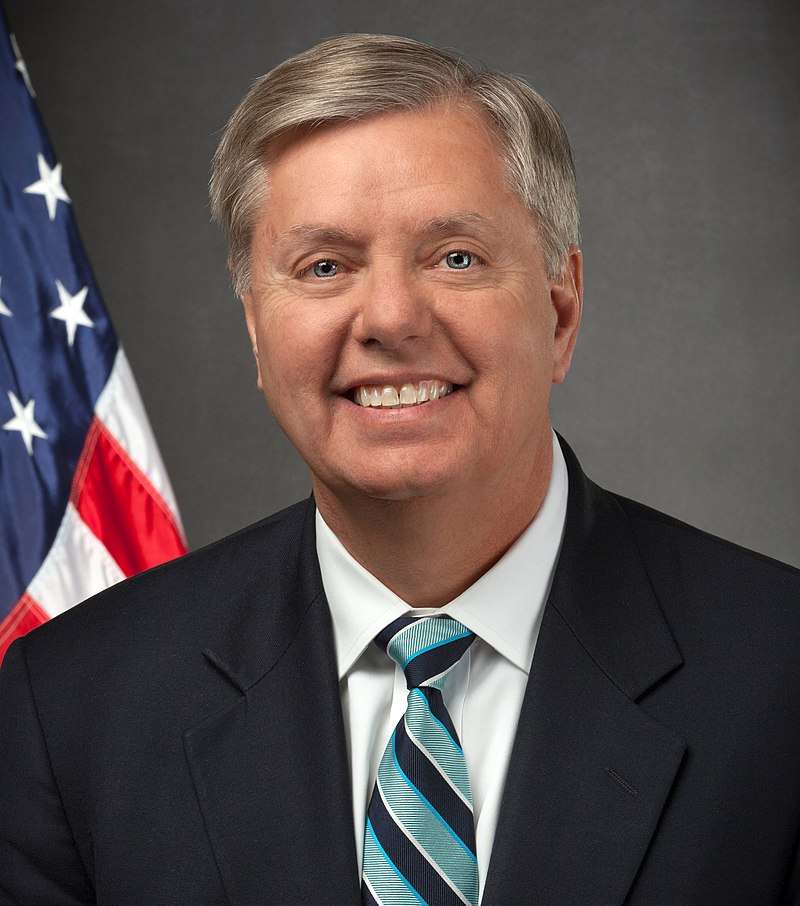
Inside Washington’s National Cathedral on Tuesday, July 28th, 2026 thousands of mourners gathered to attend the funeral of South Carolina’s Republican Senator Lindsey Graham who passed away suddenly on Saturday, July 11, at the age of seventy one as a result of a heart ailment. President Trump was present at the funeral and described him as, “a fixture of national politics and unflinching foreign policy hawk.” Trump eulogized him further saying, “He was extremely hawkish – he never saw a war that he didn’t like. Nothing of significance happened anywhere in the world without Lindsey Graham having a view on it. And no bill became law in the most exceptional republic in human history without Lindsey Graham having a say in it,” Trump as well added that, “He was a man who gave America the full measure of his good and mighty heart until that heart itself just gave out.” Among the attendees were Ukrainian President Volodymyr Zelenskyy and Israel’s Prime Minister Benjamin Netanyahu. Earlier, the Capitol Rotunda staged a ceremony to honor him and Vice President J.D. Vance, and lawmakers participated. Members of Congress and remembered and praised the life and career of Lindsey Graham.
The passing of Senator Graham must be an opportunity to evaluate his policies and assess how the legislative branch in the American system of government can handle foreign policy and organize the foreign relations of the United States.
Lindsey Graham was able to adopt his career quickly to the post-Soviet, post-Cold War world environment. His desire was for America to capture the moments that will make her successful in her diplomacy. This could curtail any possible procrastination of many regional and global crises and conflicts that should have ended a long time ago and in more favorable outcomes for the U.S.
He was self-educated about foreign policy and this is not the case with many members of the U.S. House of Representatives and Senate, who rely more on advisers or quick information from the Internet. Therefore, he had a conception of international relations and with that came his views that America must be triumphant in every aspect of foreign affairs.
He also believed firmly that force can replace diplomacy. And if many questions of foreign policy were not settled, more force would be needed. This has been a chronic dilemma in American foreign policy, involving the dynamics of the interaction between power and principle. He upheld the view that power had to come first. He was very firm and emotional in his support of Israel and Ukraine. Yet, such an approach would necessitate a lingering debate and a huge effort to help these two nations overcome many of their security challenges. He was the subscriber to many strong beliefs. This is why he was a very powerful senator and his death caused repercussions all over the United States and across the world.
He adhered to the premise that America was endowed with a divine power to redeem the world of its sins and ills. For him this is the truth. He considered America being bedeviled by so many entanglements and having enemies who are intent on hurting her his real life experience which he was so compassionate about in order to witness the historical moments of seeing America vanquishing her enemies.
He also had another aim that is of purifying the world of bad leaders. This is why he referred to Hamas as “animals.” This was actually a good attitude in foreign policy because it established responsibility as a criteria for how nations and their elites must perform on the world level. This was also logical due to the fact that if most of the regional crises were settled and resolved, the United States would not have drained her resources in non-stopping strifes.
Senator Graham tried to understand the conditions that had created a plethora of conflicts. He reasons that a mighty America could have preempted many crises prior to their occurrence. For him the War Against Terrorism was the ideological affinity that he would attach his career to. In fact, he was skillful in doing so.
He was a strong critic of the foreign policy of the Obama Administration especially in regard to Iraq and Syria. He charged that Obama’s premature withdrawal from Iraq led to the rise of ISIS. He condemned Obama for not enforcing a redline regarding the use of chemical weapons in the Syrian civil war. Lindsey Graham believed in a free world and the attainment of this sublime freedom must come about through an American strength to relinquish numerous dangerous situations.
His foreign policy stances were his impulses and instincts. By providing the philosophical framework of a muscular American foreign policy, he provided the rationale for the argument that without a strong United States, Americans could not be able to be the arbiters and the solvers of many ethical practices and problems that have plagued our modern human existence. The U.S. Congress’s role in shaping U.S. foreign policies will decline with the absence of Senator Lindsey Graham.