By Sally Goldman
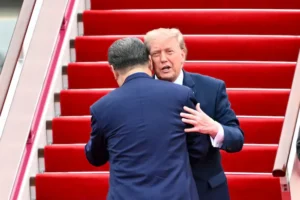
Israel, the United Arab Emirates, and Qatar have joined a US-led agreement to protect artificial intelligence supply chains and critical infrastructure, deepening ties with Washington as the Trump administration works to counter China’s technological advantages. The move comes just days before President Donald Trump’s planned summit with Chinese President Xi Jinping and Russian President Vladimir Putin, and amid an explosive scandal that has engulfed chipmaker Nvidia and injected fresh uncertainty into the global AI race—including the Middle East’s ambitious technology buildout.
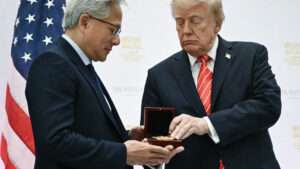
The San Francisco Declaration on the Secure Foundations of Enduring Prosperity, signed on November 15 by the United States and nine partners, establishes a shared understanding of the sensitive technologies and critical infrastructure that underpin AI (or “Super Intelligence”) supply chains and the need to safeguard them. Signatories include Australia, India, Israel, Japan, South Korea, Qatar, Singapore, the United Arab Emirates, and the United Kingdom. The accord proposes five working groups focused on policy frameworks, AI adoption, supply-chain cooperation, security hubs, and resilience.
It builds on Pax Silica, a US initiative launched in December 2025 to strengthen supply chains spanning semiconductors, critical minerals, energy, and advanced manufacturing. While the declaration does not name China, it forms part of a broader Washington effort to coordinate partners against Beijing’s dominance in critical minerals and the industries supporting AI expansion. US Under Secretary of State for Economic Affairs Jacob Helberg has emphasized the international nature of chip production, noting that design expertise, manufacturing equipment, and shipping infrastructure can span multiple countries, making joint protection a shared responsibility.
The timing is deliberate. The pact precedes Thursday’s high-stakes trilateral meeting, underscoring US efforts to lock in allied coordination on technology security amid ongoing rivalry with Beijing. For the Middle East participants, it reinforces their growing role in US-aligned tech ecosystems. The UAE and Qatar have poured resources into AI infrastructure and state-backed companies, while Israel brings advanced technical capabilities. Earlier steps, including eased US export controls on advanced chips to the UAE for entities such as G42, had already signaled closer integration.
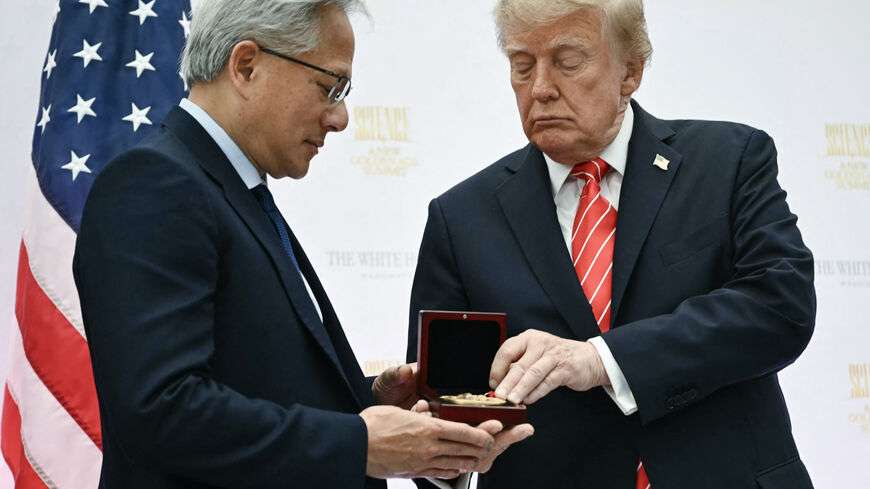
Yet the Nvidia crisis casts a long shadow. Former CEO Jensen Huang resigned last week following reports of multiple extramarital affairs, including one with Alice Huang, a businesswoman linked to Singapore-based Megaspeed whom US intelligence has investigated for potential ties to Chinese intelligence. Additional allegations involved relationships with company subordinates. Nvidia appointed CFO Colette Kress as interim CEO, formed a board committee on national security and export controls, and has faced stock volatility, investigations into possible chip diversion, and scrutiny over its China exposure. The fallout has rattled markets and raised questions about the stability of the world’s dominant AI chip supplier.
Gulf and Israeli AI ambitions have leaned heavily on access to Nvidia’s advanced processors for data centers and computing clusters. Projects involving UAE entities like G42 and broader regional plans for large-scale AI campuses depend on reliable supplies of high-end chips. Leadership turmoil, potential tighter export controls, and investigations into past diversion risks introduce new uncertainty at a moment when Middle Eastern governments are racing to translate capital, energy resources, and political alignment into sovereign AI capacity.
The declaration itself focuses on coordination rather than immediate new restrictions or financing. It treats the protection of AI-related technologies and infrastructure ranging from chips and materials to ports, energy, and digital platforms—as a collective priority. Additional countries, including European partners, are expected to join soon. For Israel, the UAE, and Qatar, participation signals pragmatic alignment with US economic security goals even as they navigate complex regional dynamics.
As the Trump-Xi-Putin summit approaches, the pact highlights how technology supply chains have become a core arena of great-power competition. For Middle Eastern allies, it offers a framework for deeper cooperation with Washington on AI security, but the ongoing Nvidia crisis is a reminder that the hardware underpinning those ambitions remains vulnerable to corporate, geopolitical, and regulatory shocks.