By Nabimara Benson
The international system is undergoing one of the most consequential transformations since the end of the Cold War. As geopolitical competition intensifies and the global order shifts toward multipolarity, influence is no longer determined solely by military capabilities or territorial reach. Increasingly, it is measured by a nation’s ability to convert credibility into strategic influence, partnerships into geopolitical leverage, and economic strength into diplomatic capital.
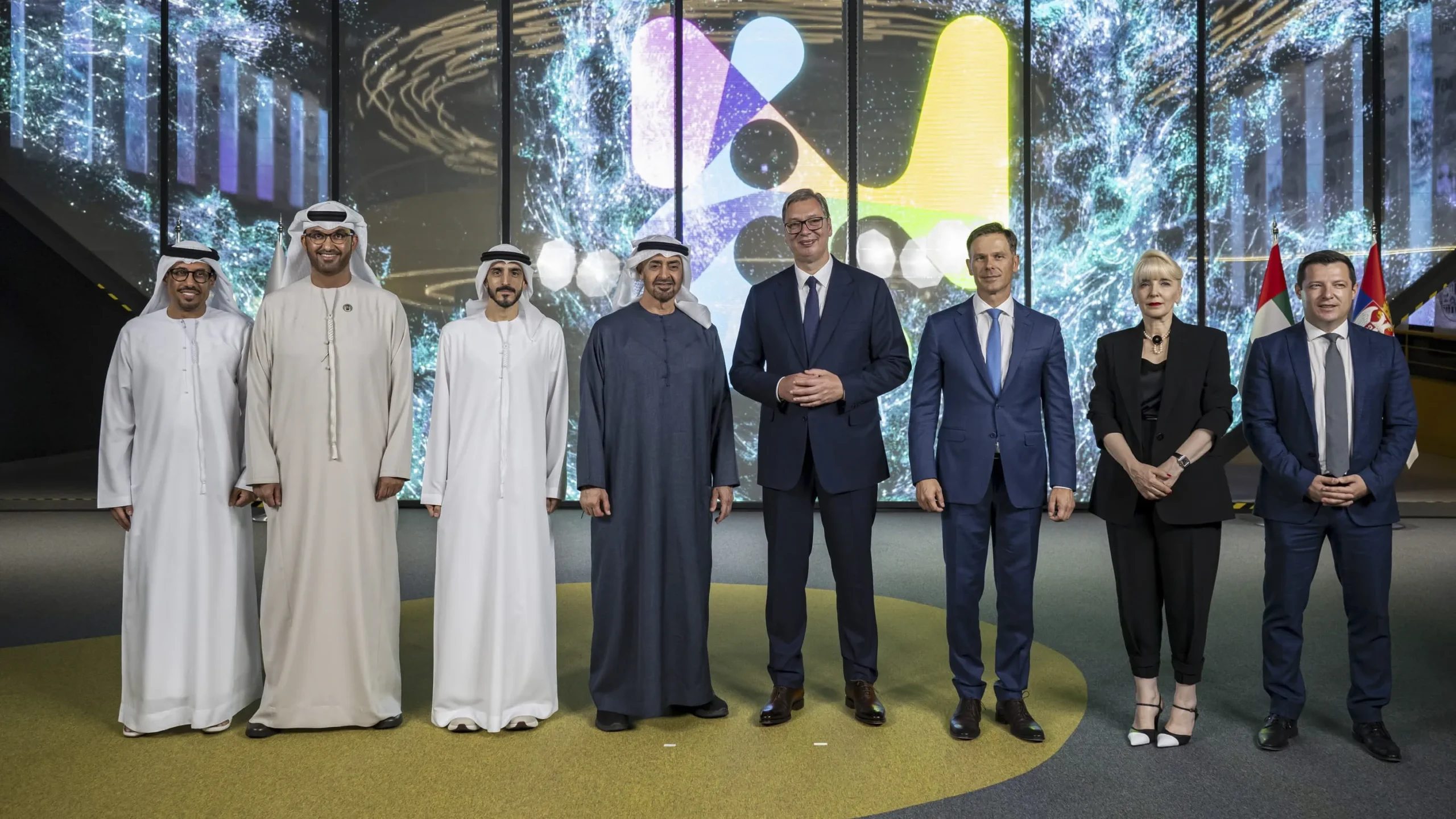
Against this backdrop, the recent visits of His Highness Sheikh Mohamed bin Zayed Al Nahyan, President of the United Arab Emirates, to Serbia and Slovakia should not be viewed merely as bilateral diplomatic engagements. Rather, they represent another chapter in a long-term strategic doctrine that has redefined Emirati foreign policy—one centered on building networks of influence through economic statecraft, strategic connectivity, and carefully cultivated international partnerships.
The defining characteristic of today’s geopolitical landscape is uncertainty. Supply chains are being redesigned. Energy markets are undergoing structural transformation. Technological competition has become inseparable from national security, while strategic rivalry among major powers increasingly shapes global investment, trade, and diplomacy. In this environment, successful states are not simply reacting to change—they are positioning themselves to shape it.
The UAE has emerged as one of those states.
Under Sheikh Mohamed bin Zayed’s leadership, the Emirates has embraced a foreign policy that moves beyond traditional diplomacy toward what might best be described as strategic network-building. Rather than relying on isolated bilateral relationships, Abu Dhabi has systematically developed interconnected political, economic, technological, and investment partnerships across multiple regions. The objective is not merely diversification—it is resilience. By expanding strategic options and reducing dependence on any single geopolitical axis, the UAE has enhanced both its flexibility and its influence within an increasingly fragmented international system.
The choice of Central Europe reflects this strategic logic.
Far from being a peripheral region, Central Europe has become one of the continent’s emerging centers of industrial production, advanced manufacturing, logistics, and technological innovation. Russia’s war against Ukraine, Europe’s search for diversified energy and supply networks, and the restructuring of European economic priorities have significantly elevated the region’s geopolitical importance.
The UAE has recognized these changes earlier than many others.
Its growing engagement with Central Europe demonstrates a sophisticated understanding that tomorrow’s strategic influence will be determined as much by economic geography as by political geography. Positioning itself within Europe’s evolving industrial ecosystem allows the Emirates not only to expand investment opportunities but also to deepen its role in the continent’s future economic architecture.
Serbia occupies a particularly important place within this broader strategy.
Relations between Abu Dhabi and Belgrade have evolved steadily over the past decade—from political trust to comprehensive strategic cooperation, and ultimately toward a mature economic partnership spanning infrastructure, energy, agriculture, real estate, logistics, and investment. Such relationships illustrate a fundamental principle of modern geopolitics: durable influence is rarely built through temporary alliances. It is sustained through long-term economic interdependence that makes stability a shared strategic interest.
Slovakia represents another dimension of this vision.
As one of Central Europe’s most advanced industrial economies, Slovakia offers significant opportunities in automotive manufacturing, artificial intelligence, advanced technologies, renewable energy, research, and innovation. Cooperation with Bratislava therefore aligns naturally with the UAE’s long-term ambition to transition toward a diversified, knowledge-driven economy capable of competing in the industries that will define the twenty-first century.
This reflects one of the most distinctive features of Emirati statecraft.
The UAE increasingly seeks partnerships with economies that generate technology and innovation—not merely those that provide markets or natural resources. It is a strategy that prioritizes long-term competitiveness over short-term commercial gain.
Indeed, economic diplomacy has become one of the defining instruments of Emirati foreign policy.
Investment is no longer viewed solely as a financial activity. It has become a strategic asset capable of generating political trust, strengthening diplomatic relationships, and creating enduring networks of mutual dependence. Trade agreements, sovereign investments, infrastructure projects, and technological cooperation have evolved into instruments of geopolitical influence every bit as significant as traditional diplomacy.
This is precisely where the UAE has distinguished itself.
Rather than constructing transactional alliances, it has built ecosystems of shared interests. Alliances often shift with political cycles; shared economic interests endure because they are embedded within institutions, investments, industries, and long-term development strategies.
The significance of Sheikh Mohamed bin Zayed’s visits also extends beyond economics.
Discussions with both Serbian and Slovak leaders addressed regional security, developments in the Middle East, and the importance of advancing dialogue, stability, and sustainable peace. Such conversations reinforce the UAE’s growing role as a trusted international actor capable of engaging constructively across geopolitical divides while maintaining credibility with diverse partners.
This credibility has not emerged by accident.
It is the product of a foreign policy consistently grounded in respect for sovereignty, reliability in honoring commitments, pragmatic engagement, and an ability to prioritize common interests over ideological polarization. In an increasingly divided world, these qualities have become strategic assets in themselves.
The warm reception accorded to Sheikh Mohamed bin Zayed in both Belgrade and Bratislava therefore reflected more than diplomatic protocol. It demonstrated the level of confidence many governments now place in the UAE as a stable, predictable, and forward-looking partner.
Ultimately, these visits symbolize something larger than bilateral cooperation.
They illustrate the emergence of a distinctly Emirati model of international engagement—one that recognizes that the future will belong not simply to those who possess power, but to those who know how to connect markets, build trust, integrate technologies, and transform economic cooperation into lasting geopolitical influence.
The UAE is no longer seeking recognition within the international system. It is actively contributing to its evolution.
Under Sheikh Mohamed bin Zayed’s leadership, the Emirates has positioned itself as a bridge between regions, economies, and political systems, demonstrating that diplomacy grounded in partnership can often achieve what confrontation cannot.
In the emerging international order, the most influential nations will not necessarily be those with the largest armies or the broadest spheres of coercion. They will be those capable of building enduring networks of confidence, creating mutual prosperity, and making their own success inseparable from the success of their partners.
That, perhaps more than anything else, has become the defining signature of the United Arab Emirates’ foreign policy—and one of Sheikh Mohamed bin Zayed’s most enduring strategic legacies.