By Tumwesigye Anslem
The United States is pitching a $10 billion joint investment vehicle with Arab partners to repair war-damaged energy infrastructure and build export routes that reduce the region’s dependence on the Strait of Hormuz. The proposal, circulating among officials and captured in draft presentations seen by major newsrooms, is framed as both reconstruction and strategy: restore capacity after months of conflict with Iran, and weaken Tehran’s ability to choke off a fifth of the world’s oil and gas by threatening a single waterway. Washington would put up $5 billion. Eight regional partners Saudi Arabia, the United Arab Emirates, Qatar, Bahrain, Kuwait, Oman, Iraq, and Jordan—would be asked to match that amount through a new holding company. The working name is the Partnership for Allied Construction & Trust, or PACT. The U.S. International Development Finance Corporation would manage the fund. The United States would chair the board. Technical talks are slated to start in October.
Draft materials go further than the initial $10 billion. They describe PACT as the seed of a “historic $50bn-plus investment platform” for energy and infrastructure across allied Middle East countries, with room for sovereign wealth funds and private capital—names such as Blackstone, BlackRock’s Global Infrastructure Partners, and KKR appear as examples. Some of those firms were reportedly surprised to find themselves listed. Nothing is signed. Terms can still change, and not every named government has committed.
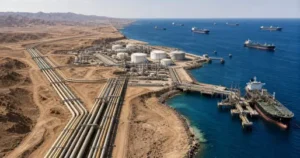
The seven-month war with Iran damaged pipelines, refineries, fields, and export terminals across the Gulf. Repair bills run into the tens of billions. Iran’s squeeze on Hormuz sent Brent crude toward $100 a barrel and lifted diesel prices in the United States. Saudi Arabia’s East-West pipeline—the region’s most important existing bypass—was itself hit, pushing more crude back toward the strait and driving tanker rates to extremes. Red Sea routes have also been strained. The message to producers is blunt: a single chokepoint is no longer an acceptable single point of failure. PACT is meant to do four things at once: reopen damaged export capacity, harden sites against future strikes, finance pipelines and terminals that sit outside Hormuz, and keep regional barrels moving even if the strait is contested again. Officials describe it as a way to “neuter” Iran’s leverage over shipping. Treasury Secretary Scott Bessent has gone further in public, arguing Hormuz could become “worthless” within two years if alternatives scale. Qatar’s energy minister, Saad Al-Kaabi, has pushed back, saying the waterway “will never be obsolete.” That split captures the politics of the pitch.
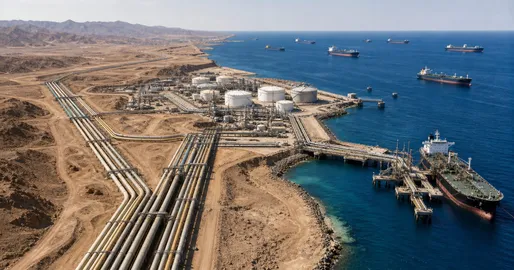
The idea is not starting from zero. Saudi Arabia has long used its East-West line to Yanbu on the Red Sea. The UAE already pumps crude to Fujairah on the Gulf of Oman and is accelerating extra capacity. Iraq has northern pipeline options, though they are far smaller than its Gulf loadings. During the war, producers also used improvised workarounds, including ship-to-ship transfers outside the strait. Those were stopgaps. Permanent pipelines, storage, and hardened terminals cost more time and money and they can be targeted too.
That last point is the plan’s weakest joint. Several regional officials have warned that pouring concrete before a durable settlement with Tehran risks building new targets. Larger producers have more options than smaller ones. Kuwait, Bahrain, and Qatar remain far more tied to Hormuz than Saudi Arabia or the UAE. A fund that treats all eight partners as equal stakeholders will have to navigate that imbalance, plus the unusual optics of a U.S. development agency leading a vehicle that includes some of the world’s richest sovereigns.
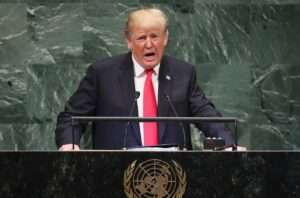
President Trump was expected to raise the concept with Arab leaders on the sidelines of the UN General Assembly. Markets have treated the leak as a signal that Washington prefers infrastructure over new fees or a permanent militarized transit regime in the strait. Whether PACT becomes a real holding company or stays a briefing slide depends on matching money, project lists, and security guarantees that new pipes will not be the next assets under fire. If it works, the map of Gulf energy changes: more crude and gas leaving via the Red Sea, the Gulf of Oman, and overland corridors, with Hormuz still important but no longer decisive. If it stalls, the region remains where the war left it rebuilding under threat, and still one missile strike away from another spike at $100 oil.