By Toni Nissi
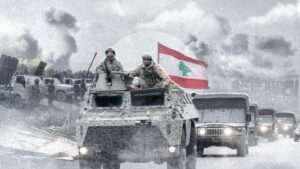
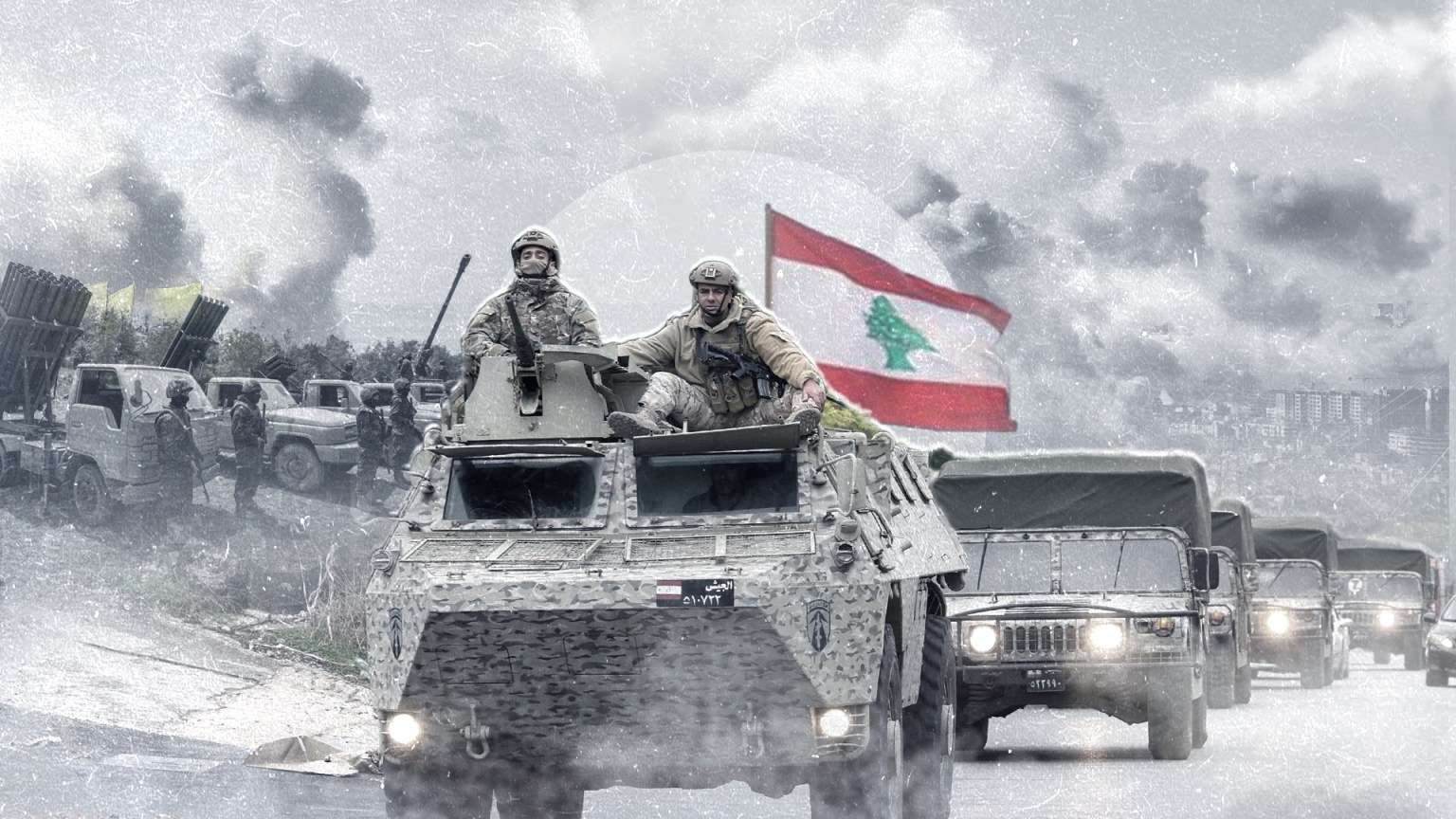
Lebanon has been repeatedly asked by the international community to restore its sovereignty, implement United Nations Security Council resolutions, disarm Hezbollah and place all weapons under the exclusive authority of the Lebanese Armed Forces, yet the fundamental question remains whether a country as small as Lebanon, weakened by decades of conflict, institutional paralysis and economic collapse, possesses the capacity to accomplish this mission alone when the organization whose weapons it is expected to dismantle has developed military, ideological, financial and operational relationships extending far beyond Lebanese territory.
The issue is not whether the Lebanese state has the constitutional responsibility to exercise exclusive authority over weapons and decisions of war and peace, because that responsibility is inherent in the very definition of sovereignty, but whether it is reasonable to expect Lebanese institutions to confront, without substantial international assistance, an organization whose military activities and financial networks have become intertwined with regional conflicts and international security concerns.
To understand the magnitude of this challenge, we must first acknowledge that Hezbollah cannot be examined exclusively as a Lebanese political party or as an armed organization operating within Lebanon’s borders.
An ideological project extending beyond Lebanon
Hezbollah’s founding Open Letter of 1985 advocated the establishment of an Islamic state inspired by the Iranian Revolution and declared allegiance to Ayatollah Khomeini through the doctrine of Wilayat al-Faqih, establishing an ideological relationship with the Islamic Republic of Iran that has remained an important element of the organization’s identity.
Although Hezbollah’s 2009 political manifesto adopted a different approach to Lebanon’s political system, no longer explicitly calling for the immediate establishment of an Islamic state and instead accepting consensual democracy, the relationship between its transnational ideological commitments and the exclusive authority of Lebanese constitutional institutions remains a legitimate subject of political and constitutional examination.
The essential question is whether any armed political organization can maintain commitments extending beyond the Lebanese constitutional framework while independently exercising military authority and participating in decisions that expose the entire Lebanese population to the consequences of regional wars.
From Lebanon to regional battlefields
Hezbollah’s military involvement has not remained confined to Lebanese territory or to confrontations with Israel.
Its intervention in the Syrian civil war in support of Bashar al-Assad, its relationships with armed organizations in Iraq and its participation in wider regional confrontations demonstrate that its military activities have developed an international dimension, while its relationship with Iran raises additional questions concerning the extent to which Lebanese national security decisions may be influenced by strategic calculations originating outside Lebanon.
This does not establish that every Hezbollah military operation is directly ordered by Tehran, but it does demonstrate that the organization cannot be understood solely through Lebanon’s internal political arrangements.
When an armed organization operating from Lebanese territory participates in conflicts beyond Lebanon’s borders, the consequences of those decisions are not confined to its members or supporters, because the entire Lebanese population may bear the humanitarian, economic, diplomatic and security consequences of a war that its constitutional institutions did not authorize.
The question of war and peace therefore cannot remain separated from the question of sovereignty.
The international financial dimension
The problem extends beyond weapons and military operations.
Investigations conducted by United States authorities have identified networks linked to Hezbollah involving international drug trafficking, money laundering, sanctions evasion and commercial operations extending across several continents.
In 2016, the United States Drug Enforcement Administration announced operations targeting Hezbollah-linked networks involved in cocaine trafficking and money laundering, stating that proceeds were used to purchase weapons for Hezbollah’s activities in Syria.
Other investigations and sanctions have concerned networks operating through South America, including Venezuela, as well as financial and commercial activities involving West and Central Africa, where US authorities have identified individuals and companies allegedly involved in laundering money or providing financial support to Hezbollah.
These cases must be examined according to their evidentiary status, distinguishing allegations, sanctions designations and criminal convictions, and they must never be used to cast collective suspicion upon Lebanese expatriate communities, whose members cannot be held responsible for the activities of particular individuals or organizations.
Nevertheless, the international scope of these investigations raises a fundamental question: how can the Lebanese government independently dismantle financial networks, freeze assets, arrest suspects or prevent illicit transactions when substantial elements of those activities operate beyond its jurisdiction?
The answer necessarily involves cooperation with foreign governments, international financial institutions and law-enforcement agencies.
Disarmament cannot be separated entirely from the networks that may finance, supply and sustain an armed organization.
The responsibility of Parliament and the government
The Lebanese Parliament and government have responsibilities that cannot be transferred to foreign governments or international organizations, because sovereignty begins with the authority of national institutions to legislate, govern and enforce the law throughout their territory.
Parliament can establish the legislative framework for exclusive state control over weapons, exercise oversight over the government and provide the legal and financial foundations necessary to strengthen the Lebanese Armed Forces, while the Council of Ministers is responsible for directing national policy and exercising constitutional authority over the armed forces.
Yet legislation alone cannot dismantle international financing networks, government decisions cannot independently prevent weapons transfers across foreign territories, and the Lebanese Army cannot be expected to resolve every regional security confrontation through its own resources.
This is where the distinction between constitutional responsibility and practical capacity becomes essential.
Lebanese institutions must exercise their authority, but the international community must also recognize the external dimensions of the challenge and the consequences of leaving them unresolved.
The responsibility of the international community
The United Nations Security Council has already established an international framework addressing Lebanon’s sovereignty and the question of unauthorized weapons.
Resolution 1559 calls for the disbanding and disarmament of Lebanese and non-Lebanese militias and supports the extension of Lebanese government control throughout the country, while Resolution 1701 addresses the cessation of hostilities, the authority of the Lebanese state and security arrangements in southern Lebanon.
These resolutions demonstrate that Lebanon’s sovereignty is already a matter of international concern, although their implementation depends upon the actions of the relevant parties and the mechanisms available under international law.
International cooperation can address dimensions that exceed Lebanese jurisdiction, including illicit financial flows, cross-border weapons transfers and regional diplomatic arrangements, while assistance to the Lebanese Armed Forces can strengthen the state’s ability to implement its own lawful decisions.
Such cooperation must also address Israeli military actions and respect for Lebanon’s territorial integrity, because a comprehensive security arrangement cannot be sustainable if the obligations of one party are examined while those of others are disregarded.
International assistance should reinforce Lebanon’s constitutional institutions, protect civilians and avoid measures that could expose the country to further internal or regional conflict.
The Lebanese people must be heard
Beyond the constitutional, military and diplomatic questions lies the position of Lebanese citizens who seek a state capable of protecting them, enforcing the law equally and ensuring that no armed organization can independently determine whether their country enters a war.
Their demands deserve serious consideration by Lebanese institutions and international governments alike, without assuming that every Lebanese citizen shares an identical position on the means of achieving disarmament or on the country’s wider political future.
A sustainable settlement must protect the rights of all Lebanese communities, distinguish political participation from independent military authority and ensure that the transfer of weapons to the state does not become a source of collective punishment or sectarian confrontation.
The objective is not to replace one form of domination with another, but to establish institutions that exercise authority under the Constitution and remain accountable to the Lebanese people.
Conclusion Responsibility must be matched by capacity
The question of Hezbollah’s disarmament cannot be reduced to another declaration by the Lebanese government or another demand addressed to the Lebanese Army, because the organization has developed relationships and networks whose activities extend beyond the jurisdiction of the Lebanese state.
Lebanon’s institutions must fulfill their constitutional responsibilities, but foreign governments and international organizations also have a role in addressing illicit financing, unauthorized weapons transfers, regional hostilities and the practical requirements of implementing the relevant Security Council resolutions.
This requires a comprehensive approach in which Lebanese political decisions are supported by international diplomatic, financial, judicial and security cooperation, with clearly defined responsibilities and safeguards for Lebanon’s sovereignty and civilian population.
Ultimately, the issue is not simply the possession of weapons by one organization, but the principle that must govern every armed actor operating in Lebanon: national defense and decisions of war and peace belong to the constitutional institutions of the Lebanese Republic.
A lasting resolution must therefore establish exclusive state authority over weapons, preserve equal political rights for all citizens and ensure that no domestic organization or foreign power can independently determine Lebanon’s security future. Lebanon must exercise its sovereignty, and international cooperation must give its institutions the means to do so.