By Ampamya Ronah
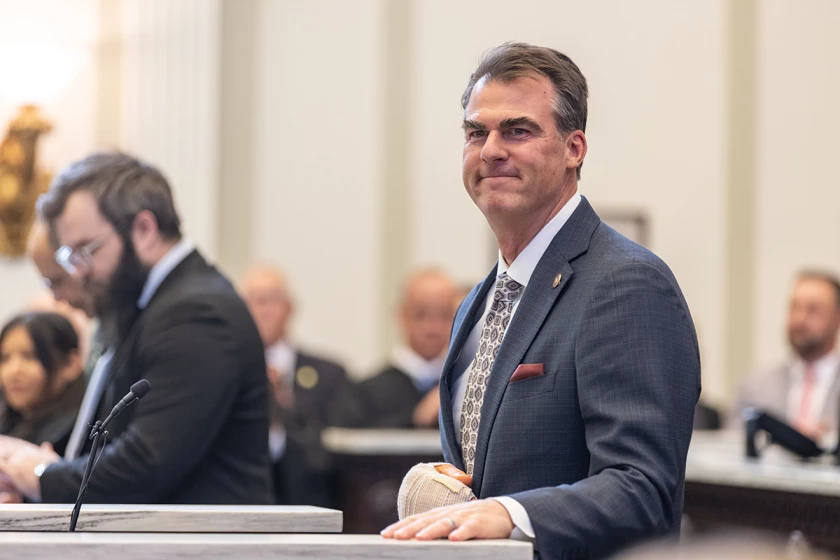
Oklahoma Governor Kevin Stitt has taken a courageous and necessary step by ordering an intelligence-based assessment of the Muslim Brotherhood, CAIR, and individuals or entities operating on their behalf in Oklahoma.
This is not simply an Oklahoma story. It is part of a much larger national-security question that the United States can no longer afford to avoid.
For too long, America has focused its counterterrorism strategy on the final stage of the threat: the terrorist, the weapon, the attack.
But modern extremist networks are far more sophisticated. They build influence through financing, recruitment, ideological networks, nonprofit structures, political access, fundraising operations and international relationships. By the time an organization reaches the operational stage of terrorism, governments may already have missed years of warning signs.
Governor Stitt understands that prevention must begin much earlier.
His August 12 executive order directs the Oklahoma Department of Public Safety and the Oklahoma Office of Homeland Security to conduct an intelligence-based assessment of the Muslim Brotherhood and CAIR and determine whether these organizations, their affiliates, or individuals acting on their behalf present a terrorism or public-safety threat in Oklahoma.
Stitt put the principle clearly: governments should act before threats become tragedies.
He is right.
The broader evidence surrounding Muslim Brotherhood networks deserves serious attention.
In January 2026, the U.S. Treasury Department designated the Egyptian and Jordanian branches of the Muslim Brotherhood as Specially Designated Global Terrorists for providing material support to Hamas.
At the same time, the State Department designated the Lebanese Muslim Brotherhood — al-Jamaa al-Islamiyah — as both a Foreign Terrorist Organization and a Specially Designated Global Terrorist.
These decisions were based on intelligence concerning financing, coordination and material support.
Treasury reported that Egyptian Muslim Brotherhood elements coordinated with Hamas on potential terrorist activities and that Brotherhood members helped facilitate support for Hamas militants.
The findings concerning Jordan were equally alarming. U.S. authorities reported that individuals connected to the Muslim Brotherhood had been involved in activities involving the manufacturing of rockets, explosives and drones, recruitment operations and illicit fundraising.
And this did not stop in January.
In May, the Treasury Department took additional action against what it explicitly described as “Muslim Brotherhood networks supporting Hamas.”
There is therefore a pattern that deserves investigation, not complacency.
President Donald Trump recognized this challenge when he launched the federal process in November 2025 aimed at designating certain Muslim Brotherhood chapters as terrorist organizations. The subsequent actions by Treasury and the State Department demonstrated that this was not an abstract ideological debate. American counterterrorism authorities identified specific networks and specific connections.
Now Governor Stitt is bringing that same vigilance to Oklahoma.
His message should resonate far beyond his state: America must understand the networks operating inside its borders before those networks become security threats.
The Muslim Brotherhood has historically understood something Western governments have often underestimated: influence can be as strategically important as violence.
An organization does not need to carry weapons itself to contribute to an ecosystem that empowers extremism. Financing matters. Recruitment matters. Propaganda matters. Institutional penetration matters. Foreign connections matter.
That is why following the financial and organizational architecture is so important.
Who funds these organizations?
Where does the money originate?
Where does it go?
Which foreign organizations are they connected to?
Who are their international partners?
What relationships exist between American entities and organizations overseas?
And are American institutions, political organizations or taxpayers unknowingly helping sustain networks connected to extremist movements abroad?
These questions should be asked without hesitation.
Governor Stitt is also sending an important message to other governors.
National security cannot be Washington’s responsibility alone.
States have their own homeland-security institutions, law-enforcement capabilities and responsibility for protecting their citizens. When credible concerns arise about foreign-linked extremist networks operating within their jurisdictions, governors should not wait for a catastrophe before demanding answers.
Texas and Florida have already moved aggressively on the Muslim Brotherhood issue. Oklahoma is now adding its voice.
Other states should pay attention.
The United States spent decades learning how terrorist organizations move money, establish front organizations, cultivate political influence and exploit democratic openness. We should use those lessons rather than repeat the mistakes that allowed extremist networks to grow elsewhere.
There is also a larger ideological battle taking place.
The Muslim Brotherhood is not merely a Middle Eastern political phenomenon. Its ideology and organizational model have influenced movements across multiple countries and generations. Hamas itself emerged from the Palestinian branch of the Muslim Brotherhood.
That history matters when assessing today’s networks.
America should never apologize for investigating organizations whose activities or relationships raise legitimate national-security concerns.
Governor Stitt’s decision represents exactly the kind of proactive leadership this moment requires.
Investigate the networks.
Follow the money.
Expose foreign influence.
Identify the organizations and individuals involved.
And where connections to terrorism exist, dismantle those networks before they have an opportunity to threaten American citizens.
For years, the United States has been extraordinarily effective at fighting terrorists after they reveal themselves.
The next phase of American national security must be smarter: identify the infrastructure that enables extremism before the threat reaches that point.
Oklahoma is taking that threat seriously.
Washington — and every other state — should do the same.