By: TONI NISSI
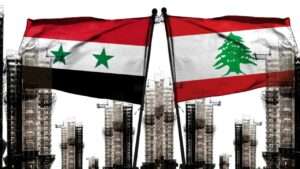
Lebanon was made for the Christians, not to become a Christian state or a country in which Christians would dominate others, but because Christians sought a homeland where they could live freely, preserve their identity and heritage, and participate with dignity and confidence in shaping their own future.
At decisive moments in our history, Christians could have pursued a smaller country centered on the territories where they constituted an overwhelming majority, yet they chose Greater Lebanon, accepting a larger, more diverse and more ambitious country that they would share with Muslims and all the communities that became part of the Lebanese Republic.
We chose partnership because we believed that Christians and Muslims, while remaining different in faith, culture and historical experience, could build together something exceptional in this region.
Today, we say to our partners: do not make us regret that choice by asking Christians to choose between partnership and the preservation of their identity, by allowing demographic change to become an instrument of political domination, or by expecting any Lebanese community to surrender its culture, freedom or dignity in order to belong.
We chose you as our partners, and we continue to believe in that partnership, but genuine partnership requires reciprocity, mutual respect and the recognition that Lebanon does not belong more to Christians because of their historic role in its creation, nor more to Muslims because of demographic numbers.
Lebanon belongs equally to every Lebanese.
The Lebanon we propose is therefore neither Christian nor Muslim; it is Lebanese, with a national identity enriched by the civilizations, religions and cultures that have shaped this land throughout its history.
A Christian should not have to become less Christian to belong, a Muslim should not have to become less Muslim, and an Armenian should not have to abandon his heritage, while those who emphasize Arab culture should be respected just as those who emphasize their Syriac-Aramaic, Phoenician or Mediterranean heritage should be respected.
Our common national identity is Lebanese, and our differences enrich rather than diminish it.
This Lebanon must be sovereign and neutral, maintaining the best possible relations with the Arab world, Europe, the United States and the international community while refusing to become a battlefield for their rivalries, because no foreign state, regional axis, armed organization or ideology should determine our future or decide when Lebanon goes to war.
There must be one state, one army, one legitimate authority and one national decision of war and peace: friends with everyone, but a battlefield for no one.
Lebanon must also be decentralized in a manner that reflects its cultural, communal and ethnic pluralism, giving its regions meaningful administrative, political and financial authority to preserve their particularities and develop according to their needs, while sovereignty, defense, foreign affairs and borders remain exclusively with the central state.
Decentralization is not partition; properly understood, it is a means of preserving diversity within one united country and ensuring that no demographic majority can use democracy to redefine Lebanon or impose its identity upon others.
No community should dominate another.
Our message to our Muslim partners and to every Lebanese community is therefore simple: join us in building this Lebanon.
We chose partnership over separation and a shared country when we could have pursued a smaller country of our own, so let us not make future generations question that historic choice but prove together that it was the right one.
We chose each other; now let us choose Lebanon together, because our differences are not Lebanon’s weakness, but part of what makes Lebanon unique and worth preserving.