By Avi Kaner
The Iranian regime has crossed another dangerous line.
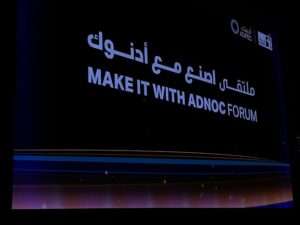
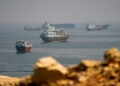
The United Arab Emirates has confirmed that Iran attacked two tankers belonging to ADNOC as they were passing through the Strait of Hormuz. Thankfully, no one was injured. But the absence of casualties should not diminish the seriousness of what occurred.
This incident is about far more than two vessels. It exposes a fundamental choice confronting the Middle East: whether the region’s future will be shaped by economic development, cooperation and stability—or by intimidation, militancy and perpetual conflict.
For years, the UAE has worked to build one of the most successful, modern and forward-looking countries in the Middle East. It has chosen trade over confrontation, economic development over extremism, and engagement with the international community over isolation.
Most importantly, the Emirates made the courageous decision to pursue peace and regional cooperation. That choice reflects a vision of the Middle East in which prosperity, technology, commerce and diplomacy can gradually replace the conflicts that have consumed the region for generations.
What, by contrast, is the Iranian regime offering its neighbors?
Missiles. Intimidation. Proxy warfare. And now attacks against commercial shipping.
The Strait of Hormuz is not Iran’s private waterway. It is one of the most important arteries of the global economy. Every day, energy supplies and commercial goods vital to countries far beyond the Middle East pass through these waters.
Commercial vessels must be able to navigate the Strait safely and without fear of military attack.
Attacking civilian commercial vessels is not resistance.
Using international shipping as a hostage to political demands is not diplomacy.
It is coercion.
And the UAE is absolutely right to call it out.
An Attack With Global Consequences
This is not merely an attack on the Emirates. When the Iranian regime threatens freedom of navigation through the Strait of Hormuz, the consequences extend far beyond Abu Dhabi or Tehran.
It threatens global energy supplies. It threatens international commerce. It threatens shipping and insurance markets. And ultimately, it threatens the economic security of countries thousands of miles away whose citizens depend upon the uninterrupted movement of energy and goods through one of the world’s most strategically important waterways.
Freedom of navigation cannot become negotiable whenever Tehran seeks political leverage.
The international community therefore has a responsibility to recognize what is at stake. Protecting commercial shipping in the Strait of Hormuz is not about choosing sides in a regional rivalry. It is about defending a basic principle of international commerce: civilian vessels should be able to travel through international waterways without being attacked or used as instruments of political pressure.
The Iranian People Are Not the Regime
There is also an important distinction that must be made.
My criticism is directed at the Islamic Republic and the Revolutionary Guards—not at the Iranian people.
The Iranian people have given the world extraordinary contributions in science, culture, business, medicine and the arts. Iran possesses an extraordinary civilization and a population capable of contributing enormously to the economic and intellectual development of the region.
They deserve a government interested in building their future rather than exporting conflict throughout their neighborhood.
That distinction matters because the struggle over Iran’s future should never be reduced to hostility toward Iranians themselves. The problem is a governing system that has repeatedly prioritized ideological confrontation and regional power projection over the enormous potential of its own people.
Two Competing Visions
The contrast across the Gulf could hardly be clearer.
The UAE is building cities, businesses, universities and technology. It is attracting investment, developing global partnerships and building relationships across political, religious and cultural divides.
The Iranian regime is attacking tankers.
That contrast tells us almost everything we need to know about the two competing visions for the future of the Middle East.
One vision believes influence comes through prosperity, innovation, diplomacy and cooperation.
The other continues to rely on missiles, armed proxies, intimidation and coercion.
The Middle East has already paid an enormous price for the second vision. Its people deserve the opportunity to experience much more of the first.
I stand with the UAE.
I stand with freedom of navigation and the principle that international commerce must never be held hostage to political intimidation.
And I stand with the Iranian people, who deserve a future defined by opportunity, prosperity and peace rather than by the destructive policies of the regime that rules over them.