By Ampamya Ronah
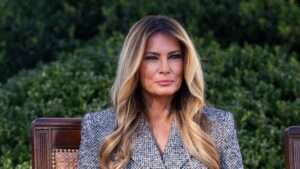
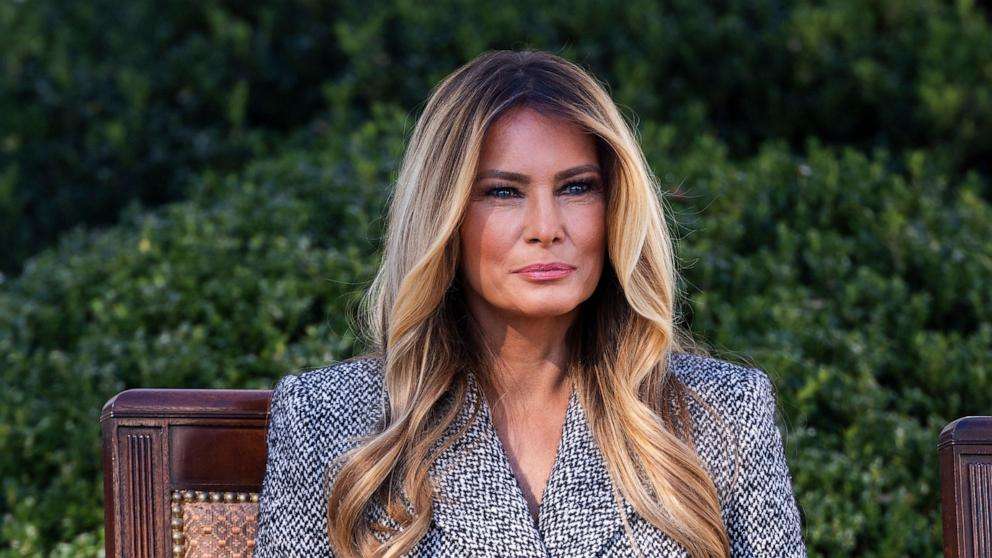
A localized ceasefire brokered with the involvement of U.S. First Lady Melania Trump has held in the Russian-occupied Ukrainian town of Oleshky, allowing preparations for urgently needed humanitarian aid and civilian evacuations to advance amid one of the war’s most severe civilian crises.
The White House announced on October 23, 2026, that Melania Trump had secured an agreement for Russia and Ukraine to temporarily halt military action in Oleshky. The pause was intended to enable aid deliveries of food, medicine, and water and to establish a safe passageway for residents wishing to leave. She described the town as “a front-line war city on the brink of disaster,” noting that its remaining population—primarily elderly residents, along with roughly 50 children—urgently needs medical attention, medicine, food, and clean water. “The people of Oleshky have limited electricity, live amid mined roads, and endure regular military attacks. It was abundantly clear that without my intervention, the possibility to bring humanitarian aid into the city and to evacuate the elderly would be impossible,” she said in the official statement.
Both sides confirmed the deal. Ukrainian Human Rights Commissioner Dmytro Lubinets, who led Kyiv’s negotiating team, and Russian counterpart Yana Lantratova signed an agreement on October 23. Russia’s Defense Ministry and Ukraine’s General Staff stated that forces would stop firing, with the ceasefire taking effect earlier than the initially announced October 29 date—at approximately 3 a.m. Kyiv time (4 a.m. Moscow time) on October 27. The geographic scope was expanded slightly beyond Oleshky itself to facilitate safe passage for humanitarian convoys in the surrounding Kherson region. The truce is temporary and scheduled to last through Sunday evening (November 1).
As of October 29, officials from both sides reported the ceasefire holding for more than 50 hours with no violations. Demining of access routes is underway, and the first humanitarian aid shipment was expected to enter Oleshky around Friday, with evacuations planned for Saturday. Residents will be able to choose destinations in Ukraine or Russia; some reports describe complex routing for those heading to Ukrainian-controlled territory via Russian and Belarusian points. Non-military civilian teams from both countries are to assess individual needs in homes, with an American media organization (Newsmax) accompanying and documenting the process to help ensure preferences are respected.
Oleshky, located on the eastern bank of the Dnipro River across from Ukrainian-controlled Kherson, has been under Russian occupation since the early days of the full-scale invasion in February 2022. Pre-war population was about 24,000; estimates now put remaining residents in the town at 1,700–2,000 (higher figures of around 6,000 including surrounding areas appear in some Ukrainian statements). Roughly 90 percent of the city flooded after the 2023 destruction of the Kakhovka Dam. Residents have faced acute shortages of food, medicine, clean water, electricity, and gas. Reports describe people surviving on minimal rations, sometimes supplemented by garden weeds or wild plants, with restricted movement due to mines, drones, and shelling. Ukraine has made limited prior attempts to deliver supplies by drone; Russian authorities have acknowledged supply problems while blaming Ukrainian actions.
Melania Trump’s involvement built on earlier humanitarian work. She learned of the Oleshky crisis during a private discussion at a United Nations General Assembly-related event in New York in September focused on children in foster care. She and a representative then used communication channels established through prior efforts that reunited 34 Ukrainian children with their families. The White House described her role as that of “Exclusive Intermediary,” with her team working directly with Russian and Ukrainian leadership on objectives, procedures, timing, and terms. President Donald Trump publicly credited her initiative, saying both sides wanted the arrangement. Ukrainian officials, including Lubinets, thanked her and her team. The Kremlin also welcomed her contribution, with spokesman Dmitry Peskov noting it had been discussed in a recent call between Presidents Putin and Trump.
Pope Leo XIV also engaged on the issue, speaking by phone with Vladimir Putin on October 16 (while recovering from surgery) and with Volodymyr Zelenskyy on October 19, urging a humanitarian pause for aid and evacuations. Some Ukrainian officials, including negotiator Davyd Arakhamia, noted involvement by both Melania Trump and the Pope. This has led to public discussion over credit, with Vatican statements highlighting the Pope’s appeals and some critics arguing the White House statement underemphasized his role. Melania’s advisers have emphasized her direct negotiation as the exclusive intermediary formalized in writing by both sides.
The arrangement is a rare joint civilian humanitarian operation of this scale during the war, occurring against the backdrop of ongoing fighting elsewhere—including Russian strikes on Kyiv around the time the Oleshky pause began—and broader U.S.-backed efforts toward peace talks. Deep disagreements over territory, security guarantees, and other issues remain. While the localized pause has held so far and offers a practical lifeline for people on the brink, its success depends on continued compliance, effective demining and logistics under occupation, and the ability of residents to move safely according to their preferences. For the elderly and vulnerable remaining in Oleshky after more than four years of war and hardship, the coming days of aid and potential evacuation represent a critical window.