By John Rossomondo
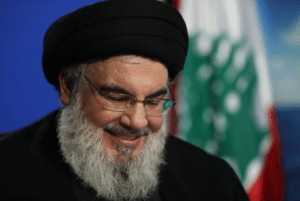
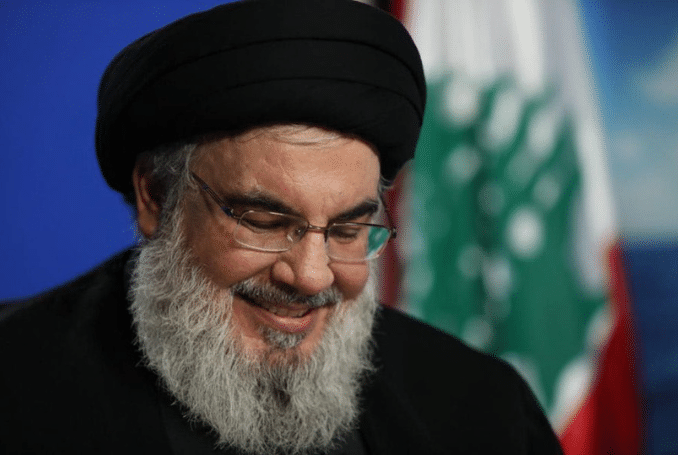
Two years ago, on the evening of September 27, 2024, Israeli jets struck a cluster of buildings in Haret Hreik, in Beirut’s southern Dahiyeh suburb. Beneath those apartment blocks sat Hezbollah’s underground command bunker. In a matter of seconds, the Israeli Air Force dropped 83 bombs on the site. Hassan Nasrallah, who had led the group for 32 years, was dead. So were several of his closest military commanders and a senior Iranian officer.
The number has become a kind of shorthand. An IDF officer later said that 83 bombs were used on Nasrallah and the same number, two weeks later, on his designated successor, Hashem Safieddine. What happened that night was not a single opportunistic strike. It was the climax of a campaign that had already hollowed out Hezbollah’s command structure and, according to people close to Nasrallah, changed the man himself.
Nasrallah’s last days did not begin in the bunker. They began with the pager and walkie-talkie explosions of September 17–18, 2024. Thousands of devices detonated across Lebanon. Dozens were killed. Thousands more were wounded, many losing hands or eyes. The attack was not just operational. It was psychological.
Former Mossad officers later claimed that devices exploded near Nasrallah himself, inside a bunker, and that he watched people collapse around him. Whether that specific scene is confirmed or remains rumor, the effect on him is better documented. His son later said his father sank into depression after the July killing of military commander Fuad Shukr and then the pager operation. People who met him afterward remarked that “he is no longer with us.” His daughter said he cried. A close associate’s description, echoed in anniversary reporting, was simpler: the attack left Nasrallah “a different person.”
Israel kept going. On September 20 it killed Ibrahim Aqil and much of the Radwan Force leadership. Commanders were being removed one by one. Nasrallah, Israeli intelligence later said, stayed in place. He tried to plan counterattacks and rebuild. He did not appear to realize he was next.
The popular image of Nasrallah was of a man who almost never left the ground. Israeli officers have since said that picture was only partly true. He used underground facilities, including a bunker built with Iranian technology. He also spent time aboveground — including in an eighth-floor apartment — and moved by special elevator when he needed to disappear. On the day he died, officers said, he had better-protected options available. He chose the compound where the strike found him.
The bunker sat more than 60 feet down, under residential buildings in a dense neighborhood. Israeli planners had studied it for years. The strike was designed not only to penetrate the structure but to trap anyone inside. Jets from Hatzerim took off in the afternoon. The attack itself lasted seconds. Additional bombs followed in sequence so that escape would be impossible. Israeli officials later described consulting rescue specialists about how long it would take to reach people under that much rubble, then working to keep the site inaccessible for hours afterward.
Nasrallah’s body was recovered days later. Lebanese medical sources said it showed no direct shrapnel wounds. The likely cause of death was blast trauma. With him died Ali Karaki, commander of Hezbollah’s southern front, and Abbas Nilforoushan of Iran’s Quds Force, along with other senior figures. The crater left in Dahiyeh was enormous. Satellite images showed a dark hole where a city block had been. Rescue equipment that approached was struck. The third bulldozer, an officer later said, never came.
Hashem Safieddine, widely seen as the heir, was killed in early October 2024 in a similar bunker strike. Naim Qassem, Nasrallah’s longtime deputy, became secretary-general. He has kept the organization intact. He has not replaced Nasrallah’s public authority or political weight. Arab and Lebanese reporting two years on still describes a leadership vacuum and a group more tightly supervised by Iran’s Revolutionary Guards than before.
Hezbollah is weaker than it was in 2023. It lost a large share of its rocket arsenal, much of its senior military cadre, and the man who had been its face for a generation. It has also lost the easy strategic depth it once enjoyed in Syria. Iranian financial and military support has continued, but Tehran itself has been under strain, and the relationship looks more like direct IRGC management than the partnership of Nasrallah’s peak years. Analysts in Beirut have called the group “a shadow of itself.” That is overstated if it implies disappearance. It is accurate if it means the organization that could once dictate terms in Lebanon and threaten a multi-front war is no longer the same instrument.
Supporters still gather with his portrait. The speeches still invoke the path he set. The weapons have not all been handed over. The state in Lebanon is still too weak to absorb the role Hezbollah claimed for itself. None of that restores the leader who spent three decades turning a militia into a regional actor.
The 83 bombs did not end Hezbollah. They ended the era in which one man, speaking from a bunker or a studio, could make the organization feel inevitable. Two years later, that is the part that has not come back.