By Asiimwe Angel
Treasury Action Moves Beyond Individuals to the Financial and Corporate Infrastructure Around Them
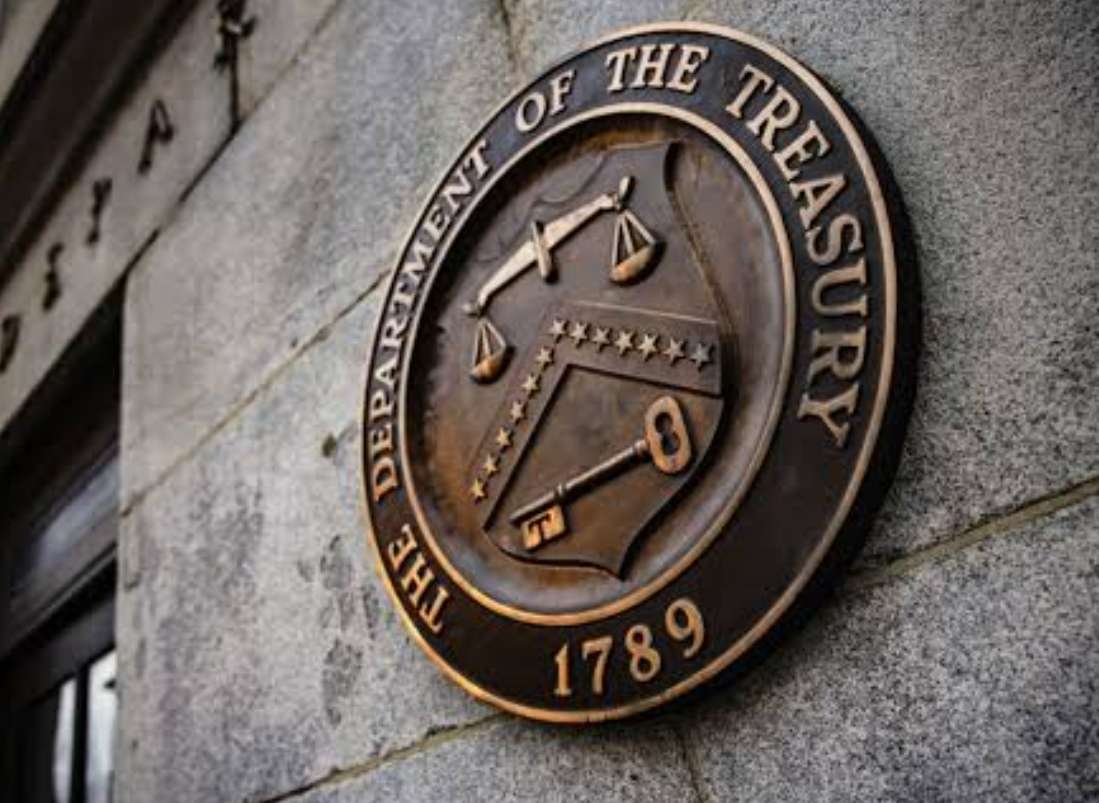
The U.S. Department of the Treasury’s decision to sanction Mahmoud El-Abiary, a senior Egyptian Muslim Brotherhood figure based in the United Kingdom, carries consequences that extend well beyond the individual named on Washington’s sanctions list.
The July 23, 2026 action by the Treasury Department’s Office of Foreign Assets Control, or OFAC, places renewed attention on the European corporate, charitable, media and financial structures through which individuals associated with sanctioned organizations may operate.
According to the official OFAC record, Mahmoud El-Abiary, also identified as Mahmoud Al-Ibiary, is an Austrian national residing in the United Kingdom, born on June 5, 1952. OFAC designated him as a Specially Designated Global Terrorist under Executive Order 13224, as amended. The sanctions entry also expressly warns of secondary-sanctions risk under Section 1(b) of Executive Order 13224. (OFAC)
The designation is therefore not merely political symbolism. It creates a serious compliance issue for banks, companies, charities, professional-service providers and commercial counterparties dealing with El-Abiary or potentially with property and entities he owns or controls.
Why Washington Sanctioned El-Abiary
The Treasury Department describes El-Abiary as a United Kingdom-based senior leader of the Egyptian Muslim Brotherhood and Secretary General of the Muslim Brotherhood General Secretariat. Washington designated the Egyptian Muslim Brotherhood itself as a Specially Designated Global Terrorist organization in January 2026. (U.S. Department of the Treasury)
Treasury alleges that El-Abiary supported fundraising for Filistin Vakfi and Hayat Yolu, organizations previously sanctioned by the United States over their alleged connections to Hamas. The department further states that he worked with Muslim Brotherhood-linked groups to provide financial assistance to Hamas. (U.S. Department of the Treasury)
OFAC consequently designated El-Abiary for having acted, or purported to act, directly or indirectly for or on behalf of the Egyptian Muslim Brotherhood.
The broader July sanctions package also targeted individuals and organizations accused of supporting Hamas, including charitable structures that Treasury says were used to raise money ostensibly for civilian purposes before funds were diverted to Hamas’s military wing. (U.S. Department of the Treasury)
That context is critical because it shows how Washington increasingly views terrorist financing: not simply as transfers made by obvious militant organizations, but as a network involving charities, corporate structures, fundraisers, intermediaries and financial facilitators operating across jurisdictions.
Britain Becomes a Central Part of the Story
El-Abiary’s European footprint makes the designation particularly significant.
British corporate records show that a Mahmoud El-Abiary with the same June 1952 birth month and year, Austrian nationality and English residence appears in the records of several United Kingdom entities.
Most notably, Companies House identifies Mahmoud El Abiary as an active person with significant control over Nile Valley Trust, company number 06760899. He has been listed as a person with significant control since November 1, 2016, with the stated nature of control being the right to appoint or remove directors. (Find and Update Company Information)
The company remains active and is registered at 113 Cricklewood Broadway in London. Companies House currently classifies its business activity as a “non-trading company.” (Find and Update Company Information)
British filings also show continued corporate activity around Nile Valley Trust. A filing dated August 4, 2026 recorded the appointment of a new director, Ali Boudjatat. Earlier records show El-Abiary continuing to appear in company filings, including a December 2025 change to his director details. (Find and Update Company Information)
The significance is not that Nile Valley Trust itself has been designated by OFAC—it has not been identified as such in the July 23 action—but rather that American sanctions compliance rules require financial institutions to look beyond the name of the sanctioned individual and examine ownership and control relationships.
That distinction matters enormously for European companies.
Previous Media-Company Connections
British Companies House records also show a Mahmoud El-Abiary, born in June 1952, Austrian and resident in England, serving as director of Globe Media News Ltd, company number 08725053.
He was appointed director in December 2013. The company was later dissolved in October 2015 following a compulsory strike-off process. (Find and Update Company Information)
The corporate record is noteworthy because it demonstrates that El-Abiary’s European presence extended beyond political or organizational roles and intersected with formal UK corporate structures.
Research published by Lorenzo Vidino of the Program on Extremism after the Treasury designation also pointed to earlier findings connecting El-Abiary to corporate entities based at 113 Cricklewood Broadway, described in previous research as an important London address associated with Muslim Brotherhood activity. That research cited Nile Valley Trust and media-related entities among the structures with which El-Abiary had been involved. (The Threat)
Such records warrant careful examination by European compliance departments, particularly where companies share directors, controlling persons, addresses, banking relationships or service providers.
What the Sanctions Mean for European Companies
The most consequential part of the OFAC decision is not simply that El-Abiary’s assets under U.S. jurisdiction are blocked.
The designation places European commercial actors on notice.
Under the normal operation of OFAC sanctions, property and interests in property belonging to a designated person that are within the United States or in the possession or control of U.S. persons must be blocked and reported.
But global businesses must also consider whether companies controlled by a sanctioned person are themselves effectively blocked under OFAC’s ownership rules.
In general, OFAC treats an entity as blocked when sanctioned persons directly or indirectly own, individually or collectively, 50 percent or more of that entity.
Control falling below the 50-percent ownership threshold does not automatically make an entity blocked under the rule, but it still presents significant sanctions, reputational and due-diligence risk.
The El-Abiary designation therefore creates immediate questions for European banks, accounting firms, law firms, landlords, payment processors, telecommunications providers, media companies, charities and corporate-service providers that may have conducted business with him or entities connected to him.
The practical question for businesses is no longer merely: “Is this company itself named on an OFAC sanctions list?”
Increasingly, the question is: “Who owns it, who controls it, who benefits from it and who is ultimately behind its transactions?”
The Significance of the Secondary-Sanctions Warning
The OFAC entry for El-Abiary specifically includes a warning concerning secondary-sanctions risk under Executive Order 13224. (OFAC)
That language significantly expands the international relevance of the decision.
Secondary sanctions are designed precisely to influence the behavior of persons and institutions outside the United States.
A European institution cannot safely assume that lack of U.S. incorporation protects it from sanctions consequences when it knowingly conducts significant transactions with sanctioned terrorist actors or materially assists designated networks.
For large European banks with access to the American financial system, dollar-clearing relationships or operations in the United States, the commercial incentive to comply is especially strong.
The risk can include interruption of correspondent-banking relationships, blocked transactions, enhanced scrutiny from regulators and loss of access to parts of the U.S. financial system.
Even when a particular transaction is not expressly prohibited under European law, many banks will apply U.S. sanctions standards because their business models depend heavily on U.S. dollar markets.
This gives OFAC sanctions global reach far beyond Washington.
Austria Also Faces Questions
El-Abiary’s Austrian nationality adds another European dimension.
The Treasury designation formally records him as an Austrian citizen residing in the United Kingdom. (OFAC)
That means Austrian and wider European financial institutions may now need to examine whether he maintained accounts, assets, corporate relationships or business interests within the European Union.
The United States does not need the European Union to impose an identical designation for American sanctions to affect European businesses.
Any institution using the U.S. financial system or transacting in dollars has powerful reasons to ensure that it does not facilitate prohibited dealings.
His Austrian citizenship could also increase political pressure on authorities in Vienna to review historical financial, organizational and corporate relationships connected to him.
The United Kingdom Is Under Similar Pressure
The fact that El-Abiary is based in Britain gives the case an even greater political dimension.
Washington has effectively identified a person operating from British territory as a senior official of an organization designated by the United States as a global terrorist entity.
That places British authorities in a potentially uncomfortable position.
Financial regulators, banks and law-enforcement institutions will inevitably face questions concerning whether commercial and organizational activities associated with El-Abiary have been properly scrutinized under British terrorism-financing and anti-money-laundering laws.
The issue is particularly sensitive because London has long been one of the world’s most important international financial and nonprofit centers.
That openness is commercially valuable, but Washington’s latest action illustrates the corresponding vulnerability: organizations and individuals can operate internationally through legitimate corporate and charitable vehicles unless authorities and institutions conduct rigorous beneficial-ownership and source-of-funds checks.
Corporate Registries Are Becoming National-Security Tools
The El-Abiary case also highlights the growing importance of public corporate registries.
Companies House filings allow investigators, journalists, compliance officers and financial institutions to reconstruct portions of an individual’s formal corporate history.
In El-Abiary’s case, the records establish connections to Nile Valley Trust and the dissolved Globe Media News Ltd, while also documenting his Austrian nationality, English residence and June 1952 date of birth. (Find and Update Company Information)
Those identifying details closely correspond to the OFAC listing, which records an Austrian national, United Kingdom-based, born June 5, 1952. (OFAC)
Corporate registries should therefore no longer be seen simply as administrative databases.
In sanctions investigations, they are increasingly part of the international security infrastructure.
They help reveal control relationships, address overlaps, director networks, historical company involvement and patterns that may otherwise remain hidden behind apparently ordinary corporate registrations.
The Message to European Business
Perhaps the most important message of the El-Abiary designation is directed not toward political organizations but toward the private sector.
Washington is signaling that the financial ecosystem surrounding sanctioned organizations will receive increasing attention.
Companies operating in Europe must therefore treat sanctions compliance as a continuing process rather than a one-time screening exercise.
Screening a customer’s name once at account opening is no longer enough.
Institutions must examine beneficial ownership, directors, controlling persons, connected organizations, shared addresses, historical corporate affiliations, suspicious changes in control and the destination of financial transfers.
Banks in particular may now conduct retrospective reviews of transactions involving El-Abiary to determine whether funds traveled through their systems or whether connected organizations maintained accounts.
Professional-service firms may undertake similar reviews.
Lawyers, accountants and corporate administrators who formed companies or provided services to potentially connected structures could also face questions about the due diligence performed at the time.
A Broader Shift in U.S. Policy Toward the Muslim Brotherhood
The El-Abiary action should also be read as part of a broader change in American counterterrorism policy.
Treasury explicitly states that the July 23 measures build on sanctions targeting Hamas and Muslim Brotherhood networks imposed earlier in 2026. (U.S. Department of the Treasury)
The pattern suggests Washington is moving from broad political concern about the Muslim Brotherhood toward targeted financial disruption of individuals and institutions it believes constitute operational or fundraising nodes.
That approach can be more consequential than political declarations alone.
By targeting individuals responsible for financing and administration, the United States can pressure the banking, commercial and nonprofit structures upon which transnational organizations depend.
Europe is central to this strategy because many international organizations maintain legal corporate structures, charities, media outlets and financial relationships in European jurisdictions.
The Next Question: Will Europe Follow?
The immediate issue is whether European authorities will undertake parallel investigations or sanctions measures.
At present, the American designation itself does not automatically place every company associated with El-Abiary on a European sanctions list.
Nor does evidence of corporate involvement, by itself, establish that a particular company engaged in prohibited conduct.
Those distinctions are essential.
But the Treasury action dramatically changes the risk environment.
For European businesses, maintaining financial or commercial relationships without renewed due diligence could now carry significant consequences.
For governments, the question is whether the networks identified by Washington will be treated primarily as an American sanctions matter or as a European security and financial-integrity issue.
And for financial institutions, the safest assumption is that American authorities will continue following the money.
Washington’s Wider Warning
The designation of Mahmoud El-Abiary ultimately sends a broader message.
The U.S. government is increasingly prepared to target the infrastructure surrounding organizations it considers terrorist entities—not only armed operatives or political leaders.
Corporate vehicles, charities, fundraising networks, financial intermediaries and commercial facilitators can all become part of the enforcement picture.
For Europe, where El-Abiary built part of his organizational and corporate footprint, the implications are direct.
The next stage may not necessarily involve another dramatic sanctions announcement.
It may instead unfold quietly inside banks, corporate registries, intelligence services and compliance departments as European institutions examine who did business with El-Abiary, which entities he influenced or controlled, how money moved through those structures and whether other individuals or organizations could become future OFAC targets.
That may prove to be the most significant consequence of Washington’s decision: the transformation of a single designation into a wider investigation of the commercial ecosystem surrounding it.