By Ampamya Ronah
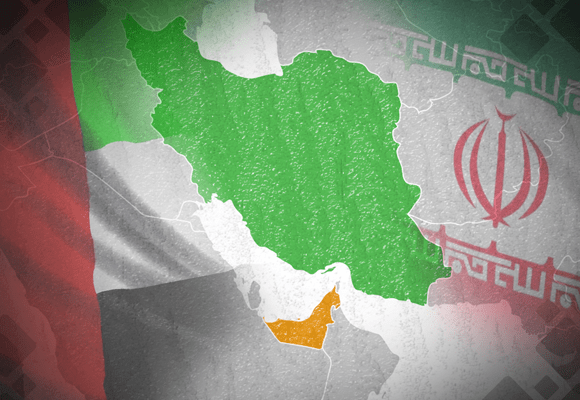
In the Middle East, wars are rarely confined to conventional military confrontations. The deeper battles are often fought over influence, symbolism, and the balance of economic power. From this perspective, the recent Iranian targeting of the United Arab Emirates becomes easier to understand. During the latest wave of regional escalation, the UAE emerged as one of the Gulf states most frequently targeted by Iranian attacks.
What makes this striking is that the UAE was not a direct combatant in the conflict. It did not enter the war as a fighting party, nor did it seek a military confrontation. Yet it still found itself in the crosshairs. The reason lies beyond immediate battlefield calculations. It is rooted in the UAE’s rising geopolitical weight and its transformation into one of the most influential strategic hubs in the Middle East.
According to official figures released by the UAE Ministry of Defense, Emirati air defense systems have intercepted hundreds of incoming threats since the escalation began, including ballistic missiles and drones. Analytical estimates indicate that nearly 65 percent of the Iranian strikes directed toward Gulf states were aimed at Emirati territory. This is not simply a matter of tactical targeting; it reflects a broader strategic reality. In Iran’s calculations, Abu Dhabi and Dubai represent critical nodes of regional power and global connectivity.
To fully understand this targeting, one must look beyond statistics and examine three overlapping dimensions: geopolitics, economic influence, and strategic symbolism.
The first dimension is geopolitical positioning. Over the past two decades, the UAE has evolved into one of the United States’ most important security partners in the Gulf. The country hosts Al Dhafra Air Base, a key installation supporting U.S. military operations across the region. In addition, the UAE reshaped its strategic posture after signing the Abraham Accords in 2020, which opened the door to expanding economic, technological, and security cooperation with Israel.
From Tehran’s perspective, this new geopolitical alignment presents a clear challenge. The UAE has effectively become a meeting point between American strategic presence and the emerging regional architecture that seeks greater integration and stability. By targeting the UAE, Iran can send multiple signals simultaneously: a warning to Washington, pressure on regional states pursuing normalization and strategic partnerships, and a demonstration of its willingness to escalate asymmetrically.
Yet geopolitics alone does not explain why the UAE occupies such a prominent place in Iranian calculations. Equally significant is the country’s global economic influence.
In less than half a century, the UAE has transformed itself from a modest trading state into one of the most dynamic and diversified economies in the world. Dubai today stands as a global financial and logistical hub linking Asia, Europe, and Africa, while the country’s ports rank among the busiest in global commerce. The World Bank consistently identifies the UAE as one of the most open economies in the region, heavily integrated into international trade, logistics networks, and foreign investment flows. Dubai International Airport remains one of the busiest international aviation hubs on the planet.
This economic stature gives the UAE more than financial weight—it embeds the country within the infrastructure of the global economy. The stability of Emirati ports, airports, and financial systems directly influences international trade routes and investment networks. In this sense, the UAE has become not merely a regional actor but a pillar of global economic connectivity.
This is precisely where Iran’s strategic doctrine comes into play. Iranian military thinking frequently emphasizes the concept of “asymmetric deterrence”—a strategy designed to pressure adversaries by targeting critical nodes of influence rather than confronting them through traditional military engagements.
From this perspective, the UAE represents an especially sensitive target. Its prosperity is built on stability, openness, and investor confidence. Striking near economic centers such as Dubai’s logistics and financial infrastructure can generate psychological and economic ripple effects far beyond the immediate physical impact of an attack. In theory, such pressure could undermine investor confidence and disrupt regional trade networks.
However, the recent escalation revealed an important paradox. Instead of damaging the UAE’s reputation as a stable global hub, the events highlighted the country’s institutional resilience and strategic preparedness.
Emirati air defense systems intercepted the overwhelming majority of incoming missiles and drones. Critical infrastructure continued to operate without significant interruption. Airports remained open, supply chains functioned normally, and economic activity proceeded with remarkable continuity.
Perhaps even more significant was the tone set by the country’s leadership. The response was calm, measured, and disciplined. Clear messages of reassurance were delivered to citizens, residents, and investors alike, emphasizing that the country’s institutions were fully capable of managing the crisis.
This response reflects a deeper governing philosophy within the UAE: stability is not an accident—it is the product of long-term planning, institutional strength, and strategic foresight.
In many ways, the confrontation highlights a broader competition unfolding across the region. On one side stands a model that relies on projecting influence through military pressure, proxy networks, and asymmetric escalation. On the other stands a model built on economic development, technological advancement, and integration into the global economy.
The UAE has positioned itself firmly within the latter model. That positioning is precisely why it has become an important strategic partner for global powers, including the United States and its economic partners in Europe and Asia. Countries that evolve into global logistics and financial hubs inevitably become part of the infrastructure of the international system. Any threat to their stability therefore carries implications far beyond their borders.
The recent attacks ultimately underscore a fundamental truth of modern geopolitics: success creates visibility, and visibility creates vulnerability. States that build influential economic models inevitably attract both partnerships and strategic pressure.
Yet the UAE’s experience during the latest escalation demonstrates that the country’s rise has been built on more than economic ambition. It has been underpinned by institutions capable of protecting that success even in moments of crisis.
In the end, the strikes that were meant to challenge the UAE’s stability produced the opposite effect. Rather than weakening confidence in the country, they reinforced a powerful message: a nation capable of becoming a global center of trade, investment, and innovation is also capable of defending that position—and sustaining it in the face of regional turbulence.