By Rick Clay
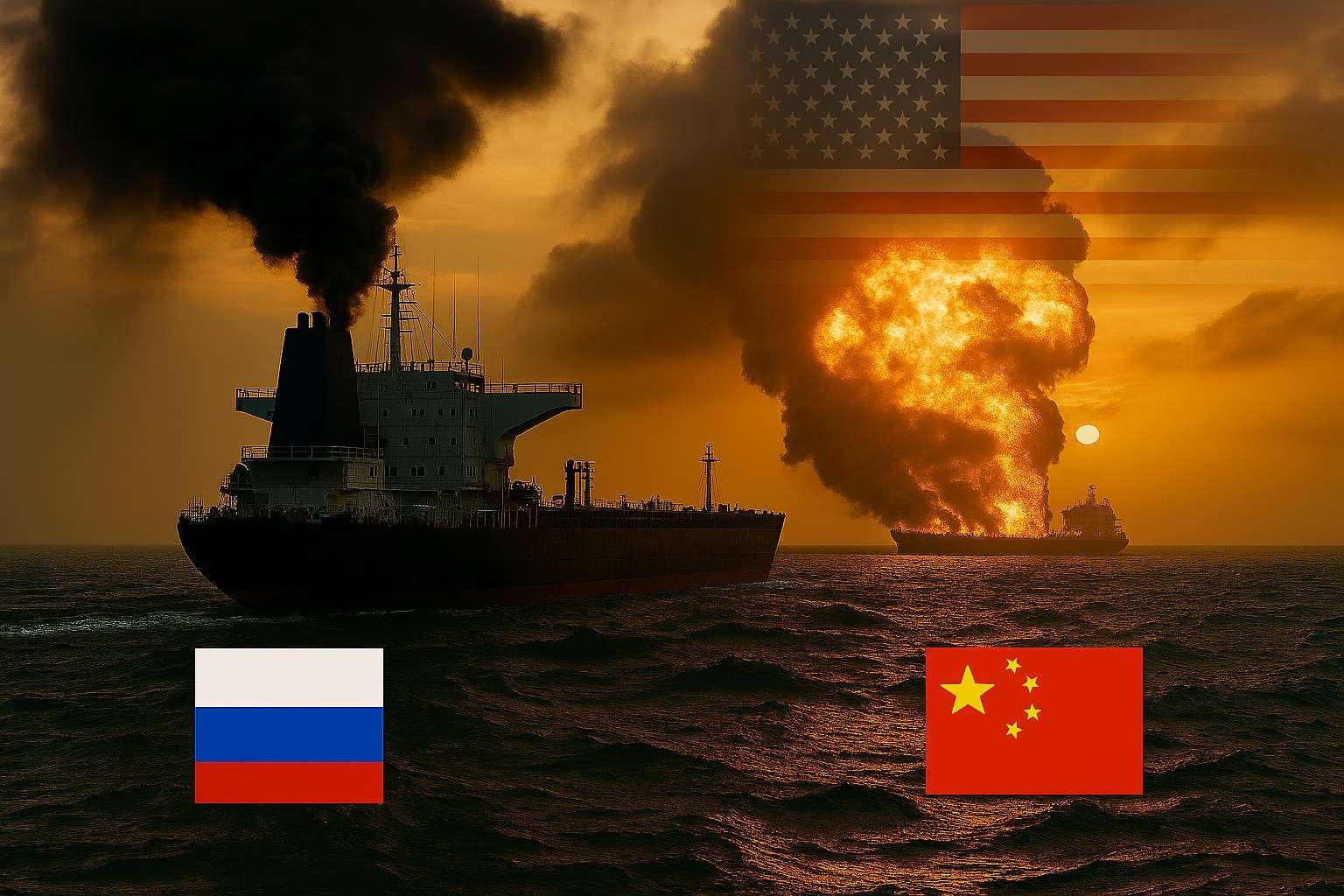
The Iran war has become the most strategically consequential event for China in more than a decade. It strikes at the core of Beijing’s energy security, its Middle Eastern posture, its sanctions evasion architecture, and its long term planning for a Taiwan contingency. China’s reaction to the U.S. and Israeli strike was swift but symbolic, consisting of rhetorical condemnations, calls for de-escalation, and a round of diplomatic outreach by Foreign Minister Wang Yi to Russia, Iran, Oman, and France. This response revealed the limits of Chinese influence and the cold pragmatism that defines Beijing’s approach to the region. China does not need the Islamic Republic as such. It needs stable energy flows, manageable oil prices, and a Gulf that remains open for business. The war threatens all three. It exposes China’s structural vulnerabilities, accelerates its internal economic pressures, and forces Beijing to confront a narrowing window for global influence. The conflict also reshapes the triangular dynamics among China, Russia, and Iran, revealing asymmetries that weaken the emerging anti-Western bloc. The result is a strategic environment in which China faces rising costs, shrinking leverage, and a diminished ability to shape outcomes beyond its borders.
I. China’s Strategic Bet on Iran
China’s relationship with Iran has long been misunderstood as ideological alignment or anti-Western solidarity. In reality, it has always been rooted in strategic utility. Beijing spent two decades embedding itself into Iran’s economy, infrastructure, and security state. Chinese telecommunications giants built the backbone of Iran’s digital ecosystem. Chinese surveillance companies installed the cameras, facial recognition systems, and deep packet inspection tools that allow the regime to suppress dissent. The National Information Network, Iran’s domestic intranet, was constructed with Chinese assistance and modeled on the Great Firewall. These systems enabled Tehran to survive mass uprisings, including the January 2026 protests that were met with lethal force. China’s investment in Iran was therefore an investment in regime durability, regional disruption, and long-term strategic leverage.
Yet the new information clarifies that this leverage has limits. China’s response to the killing of Iran’s supreme leader was confined to rhetorical condemnation and diplomatic outreach. Beijing could not protect its partner, and it knew it. Chinese scholars are now openly asking whether Beijing even needs the Islamic Republic to survive. The emerging answer is that China needs a Gulf that remains open for business. If regime continuity in Tehran supports that objective, China will accept it. If it does not, China will adjust. This is the essence of Beijing’s cold pragmatism. It condemns regime change in public, but privately prepares for multiple political outcomes in Iran, including the possibility of a post clerical order. China’s strategic bet was never on Iran’s ideology. It was on Iran’s geography and its ability to supply discounted oil outside the reach of Western sanctions.
II. The Energy Shock and China’s Economic Fragility
The Iran war strikes directly at China’s most dangerous vulnerability. China is the world’s largest crude oil importer, and Iran has been a critical supplier. According to data analyzed by Politico and the market intelligence firm Kpler, Iran was China’s second largest crude supplier last year after Saudi Arabia. Almost all of Iran’s exported oil went to China. Venezuela, another sanctioned state whose leadership was recently targeted by Washington, sends more than half of its exports to China. Together, Iran and Venezuela accounted for roughly seventeen percent of China’s total oil imports. The broader exposure is even more significant. More than half of China’s crude imports come from countries that rely on the Strait of Hormuz, the narrow shipping lane now at the center of the crisis.
Following the strikes, vessels began avoiding the strait amid Iranian threats and reported tanker attacks. Crude prices surged more than twelve percent and continued to rise, driven by geopolitical risk premiums rather than immediate supply shortages. China does possess buffers. It holds significant crude reserves and had already begun reducing Iranian imports in 2026 in favor of increased Russian supplies. Turning further toward Russian oil is the most logical short-term adjustment, but even this solution has limits if regional shipping routes remain volatile. Chinese state energy firms report that Beijing is quietly urging Iran to avoid disrupting flows through the strait. China relies heavily on liquefied natural gas from Qatar, which produces roughly a fifth of global LNG. Qatar temporarily halted output at Ras Laffan after an Iranian drone strike, the first suspension in three decades. Beijing has reportedly pressed Iranian counterparts not to target oil or LNG tankers or export hubs.
High energy prices pose immediate risks for China. Imported inflation could squeeze manufacturers, complicate monetary policy, and weaken consumer demand at a moment when Beijing is already attempting to rebalance its economy toward domestic consumption. Disruptions in shipping through Hormuz or adjacent routes would ripple across Asia, intensifying competition for barrels and raising costs for regional economies. The timing is particularly sensitive, unfolding just weeks before a planned summit between President Donald Trump and General Secretary Xi Jinping. China’s entire industrial economy is built on stable and affordable oil. If an oil crisis truly escalates, China’s economy could be pushed to the brink.
III. Proxy Warfare and China’s Indirect Leverage
Iran’s proxy network has been one of China’s most effective tools for indirect strategic pressure. The Houthis disrupted Red Sea shipping, cutting traffic by ninety percent and forcing global rerouting that affected one trillion dollars in goods. U.S. naval forces expended a quarter of their high end interceptor inventory to defend commercial shipping. China contributed no ships to the protection force, yet Chinese satellite companies provided targeting intelligence to the Houthis. This dynamic allowed China to impose costs on the United States without direct confrontation.
The new information clarifies that China sees potential upside in a prolonged Middle East conflict. If the United States becomes deeply entangled in a regional war, American attention and resources could be diverted away from the Indo Pacific. The Iraq War coincided with China’s rapid economic ascent in part because Washington was distracted. Today, with U.S. China rivalry far more intense, a similar distraction would be even more consequential. A drawn-out conflict could also deplete U.S. weapons stockpiles that require rare earth elements for replenishment. China dominates global rare earth production, giving Beijing leverage over the pace of American rearmament.
Yet the risks to China are far more immediate than the potential benefits. The energy shock is not hypothetical. It is operational. China’s manufacturing focused economy is built on stable and affordable oil. If an oil crisis truly escalates, China’s economy could be pushed to the edge of systemic instability. The strategic calculus is therefore asymmetric. China may benefit from U.S. distraction, but it cannot afford a collapse in Gulf energy flows. This tension defines Beijing’s posture. It condemns the strikes, signals solidarity with Iran, and quietly pressures Tehran not to escalate in ways that threaten China’s core interests.
IV. China’s Gulf Strategy Under Stress
China’s ambitions in the region have always been narrower than many assumed. As The Economist observed, Beijing’s calculus is ice cold. It seeks stability, commercial access, and energy security. It does not seek ideological alignment or regional dominance. The current conflict exposes the severe limits of Chinese influence. Beijing cannot restrain Iran. It cannot protect its partners. It cannot guarantee the stability of the Strait of Hormuz. Its role as a Middle East power broker was always overstated. The war reveals that China’s influence is contingent, not structural.
China’s dual track strategy depended on Iran’s ability to generate calibrated instability that pushed Gulf states toward Beijing for economic and technological support. Beijing brokered the Saudi Iran normalization agreement in 2023, expanded port and rail investments across the Gulf, and integrated Huawei into critical infrastructure in the United Arab Emirates. This strategy required a balance between disruption and stability. The war destroys that balance. A weakened Iran reduces the fear factor that China leveraged to expand its influence. Gulf states may now reassess the reliability of Chinese security guarantees and the risks of overdependence on Chinese technology.
V. The Taiwan Connection and China’s Strategic Paradox
The Iran war creates a paradox for China. A prolonged conflict could distract the United States and deplete American munitions, which benefits Beijing. Yet the same conflict threatens China’s energy lifelines, which are essential for sustaining its economy during any Taiwan contingency. China does not need the Islamic Republic as such. It needs secure energy flows, manageable oil prices, and a stable Gulf. If those conditions collapse, China’s ability to wage or withstand a major power confrontation collapses with them.
The road to the Pacific runs through Tehran. China’s long-term strategy for a Taiwan conflict depends on stable Middle Eastern oil, Gulf states willing to sell outside the dollar system, and Iranian proxies capable of diverting U.S. naval assets away from the Indo Pacific. The war threatens all three pillars. A destabilized Iran cannot guarantee oil flows. Gulf states may align more closely with Washington if they perceive China as unable to protect its regional partners. The United States gains strategic bandwidth as Iranian proxies lose coordination and capability. China’s strategic environment becomes more constrained, not less.
VI. The Russia China Iran Triangle Under Strain
The Iran war exposes the structural asymmetry within the Russia–China–Iran alignment, and the temporary U.S. waiver permitting Russia to sell seaborne crude to India deepens that imbalance. While Russia benefits from elevated oil prices and U.S. distraction, the waiver represents a more consequential shift: it reopens India as a high-volume, high-margin buyer of Russian crude at a moment when Moscow’s fiscal position is deteriorating under the weight of the Ukraine war. India had already become Russia’s largest oil customer after 2022, but the waiver removes the legal and logistical friction that had constrained Russian exports. This allows Moscow to redirect discounted barrels away from shadow fleet channels and toward a stable, rapidly growing market that pays in reliable currency and does not require complex sanctions evasion.
The impact on the Russian treasury is immediate and significant. Higher volumes, fewer middlemen, and lower transport risk translate into higher net revenue per barrel. Russia’s budget, which remains heavily dependent on oil and gas receipts, gains a new cushion precisely when war expenditures are rising and domestic economic pressures are intensifying. The waiver therefore strengthens Russia’s ability to sustain long-term military operations in Ukraine. It provides Moscow with the liquidity needed to fund munitions production, pay mobilized troops, and stabilize regional budgets strained by wartime spending. The Kremlin’s fiscal resilience increases, and the timeline of the Ukraine conflict extends accordingly.
Yet the waiver is temporary—and its expiration will expose the deeper fragility of Russia’s war economy. The waiver does not represent a durable shift in Western policy, nor does it signal a broader reintegration of Russia into global energy markets. Instead, it underscores Russia’s acute need to reenter those markets on more permanent terms. The Kremlin’s reliance on sanctioned workarounds—shadow fleets, barter deals, crypto settlements, and discounted sales to politically aligned buyers—has proven costly, opaque, and vulnerable to disruption. The waiver offers a glimpse of what normalized trade could look like: higher margins, lower risk, and more predictable revenue. For Putin, this is not just a financial reprieve—it is a strategic signal that Russia’s long-term war posture depends on restoring access to legitimate markets.
This realization is likely to shape Putin’s outlook on the war. The Kremlin has long framed the Ukraine conflict as a protracted struggle against Western encirclement, but the waiver reveals a contradiction: Russia cannot sustain that struggle indefinitely without partial reintegration into the very system it seeks to defy. The war has strained Russia’s budget, depleted its reserves, and forced it into deeper dependence on China. The waiver temporarily reverses that trend, giving Moscow breathing room and leverage—but only if it can maintain or expand access to buyers like India. That requires diplomatic maneuvering, logistical stability, and a strategic recalibration of Russia’s energy posture.
China’s position becomes more complicated. Beijing benefits from a Russia that remains economically viable and militarily engaged in Europe, because it diverts Western attention and resources away from the Indo-Pacific. Yet China also prefers a Russia that remains dependent on Chinese markets, Chinese financing, and Chinese diplomatic cover. The waiver weakens that dependency. India becomes a more important economic partner for Moscow, reducing China’s leverage over Russian energy flows and diminishing Beijing’s ability to dictate terms within the trilateral alignment. Russia gains strategic breathing room, and China’s relative influence within the partnership declines.
The Iran war amplifies this shift. As Iranian exports face new disruptions and Gulf shipping becomes more volatile, China is forced to rely more heavily on Russian crude. This increases China’s vulnerability to Russian pricing power at the very moment Russia is gaining alternative buyers. Moscow can now sell to India at scale while still supplying China, giving Russia a stronger negotiating position and reducing Beijing’s ability to extract discounts. The trilateral alignment becomes less a coordinated bloc and more a hierarchy in which Russia gains economic resilience, China absorbs greater energy risk, and Iran becomes the weakest link.
The war in Ukraine is therefore indirectly strengthened by the Iran conflict. Russia’s treasury stabilizes. Its export routes diversify. Its reliance on China decreases. Its ability to sustain prolonged military operations improves. But the waiver’s temporary nature also reveals the limits of that resilience. Without permanent reentry into global markets, Russia’s fiscal cushion will erode again. Putin’s war calculus must now account for the tension between ideological confrontation and economic necessity. The triangle becomes unbalanced, and China’s position within it becomes more constrained—while Russia’s future hinges not just on battlefield outcomes, but on its ability to reengage the world economically without surrendering strategic autonomy.
II. The Regional Trade System Under Stress: Turkey, Azerbaijan, Africa, and the Collapse of Connectivity
The Iran war is not only a shock to China’s energy lifelines. It is a systemic disruption to the entire regional trade architecture that links the Middle East to Turkey, the Caucasus, Central Asia, and Africa. This network is a dense lattice of air corridors, overland freight routes, maritime chokepoints, and tourism driven service economies. The conflict destabilizes each of these channels simultaneously, creating a cascading effect that reverberates far beyond Iran’s borders. The region’s trade system is not modular. It is interdependent. When one corridor collapses, pressure shifts to others, and the entire structure becomes more fragile.
Air traffic across the region has already been forced into costly rerouting patterns. Airlines are avoiding Iranian airspace, adding hours to flights between Europe and South Asia, increasing fuel consumption, and reducing the profitability of long-haul routes. Turkey, which has built its aviation sector into a global hub connecting Europe, Asia, and Africa, now faces increased congestion, higher insurance premiums, and unpredictable scheduling disruptions. Azerbaijan, which relies on overflight fees and the strategic value of its air corridors, experiences similar volatility. The cumulative effect is a regional aviation system that becomes slower, more expensive, and less reliable, undermining the competitive advantage that Turkey and the Caucasus have cultivated over the past decade.
Overland shipping faces even greater strain. The Middle Corridor, which runs from China through Central Asia, across the Caspian Sea, through Azerbaijan and Georgia, and into Turkey, has been one of the most important alternatives to Russian transit routes since the invasion of Ukraine. The Iran war places new pressure on this corridor by increasing demand for non Iranian routes while simultaneously raising the cost of insurance, security, and logistics. Turkey becomes a chokepoint for redirected freight, and Azerbaijan becomes a critical transit state whose infrastructure was never designed to absorb such sudden surges. The war therefore accelerates the fragmentation of Eurasian supply chains, forcing exporters to choose between slower Russian routes, volatile Middle Eastern routes, and congested Caucasus routes. None of these options provide the stability that global manufacturers require.
Maritime trade is equally disrupted. The Strait of Hormuz remains the most visible flashpoint, but the ripple effects extend into the Red Sea, the Suez Canal, and the East African coastline. Shipping companies are diverting vessels around the Cape of Good Hope, adding weeks to transit times and increasing freight costs across Africa and the Mediterranean. East African ports, which depend on predictable shipping schedules for both imports and exports, face delays that undermine their role in global supply chains. North African economies, particularly Egypt, experience reduced Suez Canal revenues as traffic declines. The war therefore reshapes the maritime geography of three continents, creating a new pattern of delays, diversions, and cost inflation that affects everything from energy shipments to consumer goods.
Tourism, a major economic pillar for Turkey, the Gulf states, and parts of Africa, suffers immediate collateral damage. Perceived regional instability reduces visitor flows, depresses hotel occupancy, and undermines the service sector. Turkey, which relies heavily on tourism revenue to stabilize its currency and balance its current account, faces renewed economic pressure. Gulf states experience a decline in high value tourism linked to aviation disruptions and regional uncertainty. North African destinations, already vulnerable to global shocks, face reduced demand as travelers avoid routes that pass through or near conflict zones. Tourism is often the first sector to collapse in a crisis and the last to recover, and the Iran war reinforces that pattern.
Supply chains across the region become more brittle as each of these disruptions compounds the others. Manufacturers face delays in receiving inputs, exporters face unpredictable shipping schedules, and logistics firms face rising insurance and security costs. The region’s role as a bridge between Europe, Asia, and Africa becomes less reliable, and global companies begin to reassess their exposure. The war therefore accelerates a broader trend toward supply chain diversification and nearshoring, reducing the long-term economic relevance of transit states that depend on predictable flows of goods and people.
The Iran war reveals that the regional trade system is not resilient. It is a delicate equilibrium held together by predictable airspace, stable maritime routes, and functioning overland corridors. When one of these pillars’ collapses, the others strain under the weight of redirected traffic. Turkey becomes overloaded. Azerbaijan becomes a bottleneck. Africa has become a victim of maritime diversion. The entire system becomes slower, more expensive, and less reliable. This is not a temporary disruption. It is a structural shock that will reshape regional trade patterns for years to come.
III. Banking, Gold Flows, Cash Transfers, and the Shock to Crypto Markets
The Iran war is reshaping the financial architecture of the broader Middle East in ways that directly weaken China’s strategic position. The conflict does not merely disrupt trade flows, it destabilizes the informal and formal banking channels that have quietly underpinned sanctions evasion, cross border liquidity, and the shadow financial ecosystem linking Iran, Russia, and China. For more than a decade, these three states have relied on a hybrid settlement system built around physical gold, cash-based transfers, and crypto mediated transactions to bypass Western financial pressure. The war strikes at all three pillars simultaneously. The result is a cascading financial shock that radiates across Eurasia, undermining the very mechanisms China depends on to sustain its energy security, maintain discounted access to Iranian commodities, and insulate its companies from secondary sanctions.
Gold has long served as the backbone of Iran’s sanctions resistant economy, functioning as both a store of value and a discreet settlement medium for transactions that cannot touch the dollar system. China and Russia have used gold flows through Iran to stabilize bilateral trade, settle imbalances, and maintain liquidity outside Western oversight. The war disrupts this architecture at its most vulnerable point, the physical movement of bullion. Airspace closures, intensified inspections, and the rerouting of cargo flights complicate the covert transport networks that previously moved gold through Turkey, the UAE, and the Caucasus. Turkey, historically the region’s central hub for gold recycling, laundering, and re-export, now faces heightened scrutiny and logistical congestion that slow throughput and raise transaction costs. Azerbaijan, which has quietly served as a land-based corridor for gold shipments between Iran and Russia, experiences similar pressure as overland routes become more volatile and politically exposed. These constraints emerge precisely when China and Russia rely on gold most heavily to stabilize their financial systems, hedge against sanctions, and maintain liquidity in their shadow banking channels.
Cash based transfers face parallel degradation. For decades, hawala style networks have been the circulatory system of Iran’s sanctions evasion economy, moving billions of dollars across the Middle East, South Asia, and the Gulf through trusted intermediaries and informal clearinghouses. These networks depend on predictable travel routes, stable commercial hubs, and a permissive regulatory environment. The war destabilizes each of these conditions. Air travel restrictions reduce courier mobility. Gulf banking systems, under pressure from Washington, tighten compliance and increase reporting requirements. Regional instability raises the risk premium for cash-based settlements, forcing intermediaries to charge more and move less. China, which has used these networks to settle trade with Iran while keeping its state-owned banks insulated from secondary sanctions, now faces slower settlement times, higher transaction costs, and greater exposure to enforcement actions. The erosion of these cash channels weakens the financial infrastructure that has allowed China to maintain deep commercial ties with Iran while avoiding direct confrontation with Western regulators.
Crypto based channels, the third leg of the sanctions evasion system, also come under strain. Iran and Russia have used digital assets to bypass banking restrictions, settle cross border transactions, and convert domestically mined Bitcoin into import capacity. The war injects volatility into global crypto markets, reduces liquidity in regional exchanges, and triggers new compliance measures from platforms wary of secondary sanctions. Iran’s state linked mining operations face operational disruptions due to energy shortages, infrastructure damage, and heightened surveillance, reducing the supply of Bitcoin available for trade with China. Russia’s use of crypto for cross border settlements becomes more difficult as exchanges tighten controls and blockchain analytics firms intensify monitoring of suspicious flows. China, which bans domestic crypto trading but tolerates offshore use for strategic transactions, now finds these channels narrower, riskier, and more heavily scrutinized. The war therefore constrains the digital pressure valve that Iran, Russia, and China have relied on to move value outside the reach of Western regulators.
Taken together, these disruptions represent not isolated inconveniences but a systemic shock to the shadow financial ecosystem that has sustained the Iran Russia China alignment. The war compresses gold flows, constrains cash mobility, and narrows crypto channels all at once, leaving China with fewer tools to manage risk, fewer pathways to maintain energy imports, and fewer buffers against Western financial pressure.
High-level Oil Impact overview
The world oil market is currently well supplied on paper but extremely exposed in transit. The single hinge is the Strait of Hormuz, where roughly one fifth of global crude and LNG flows.
The key variables are:
• Duration of disruption (days–weeks vs many months)
• Severity of disruption (partial harassment vs sustained closure or high-risk environment)
• Credibility of alternative supply (U.S., Brazil, Guyana, spare OPEC capacity, SPR releases)
Scenario 1: Short, contained war (≈ 2–8 weeks of acute risk)
Assumptions
• Kinetic phase lasts weeks, not months.
• Tanker traffic through Hormuz is disrupted but not fully shut—insurance costs spike, some rerouting, but flows continue at reduced levels.
• No large, sustained damage to Gulf export infrastructure; Iran’s exports dip but are not eliminated.
• U.S. and Gulf producers signal willingness to backfill; SPR release remains a credible threat.
Market dynamics and timing
- First 1–2 weeks: risk premium spike
o Brent quickly prices in a $10–$20/bbl risk premium over pre-war levels, consistent with early estimates that a full four week disruption could justify roughly a $14/bbl premium.
o Volatility explodes; front-month contracts move more than deferred months (steep backwardation). - Weeks 3–8: stabilization if flows prove resilient
o If tankers keep moving—under naval escort, with higher insurance—markets start to reprice from “catastrophe” to “manageable disruption.”
o Brent likely trades in a $85–$105/bbl band (directionally: +$10–$20 vs pre-war), with sharp intraday swings but no structural shortage.
o U.S. shale, Brazil, and others lean into higher prices; forward curves begin to reflect incremental non OPEC supply within 6–18 months. - 3–6 months out: normalization with a residual risk premium
o If the war is clearly over or frozen and Hormuz traffic is normalized, the pure war premium erodes.
o Brent could drift back toward a $75–$90/bbl range, with a persistent but smaller risk premium (perhaps $3–$7/bbl) embedded for renewed Iran/Gulf instability.
o Refining margins and freight costs remain elevated for a while, but the system has adjusted.
Macro implication:
A short war is a price shock, not a structural supply shock. It tightens financial conditions, raises inflation prints for a quarter or two, but is unlikely—by itself—to trigger a global recession if central banks treat it as a temporary, exogenous shock.
Scenario 2: Protracted, high-intensity war (≈ 6–24+ months of elevated risk)
Assumptions
• Conflicts drag on for many months or years, with intermittent strikes and maritime incidents.
• Hormuz becomes a chronic high-risk zone: repeated attacks, mines, drone harassment, or periodic closures.
• Iran’s export capacity is materially impaired (sanctions enforcement + physical risk), and Gulf producers face recurring threats to infrastructure.
• Western and Asian buyers must restructure supply chains, not just ride out a spike.
Market dynamics and timing
- First 1–3 months: from shock to structural repricing
o Initial move looks like the short-war case—Brent jumps $10–$20/bbl—but instead of fading, the premium hardens into the curve.
o If tanker traffic through Hormuz is cut by 50–80% for several weeks or more, effective global supply could fall by 3–8 mb/d (depending on duration and alternative routing).
o Brent can plausibly trade in a $100–$130/bbl band during periods of acute disruption, with episodes of price spikes above that if infrastructure is hit. - 3–12 months: forced reconfiguration of trade flows
o Importers in Europe and Asia accelerate portfolio shifts: more U.S., Brazilian, West African, and North Sea crude; more LNG from the U.S. and Qatar via alternative routes where possible.
o OPEC+ spare capacity is drawn down; the system loses its buffer. Any non Iran outage (Nigeria, Libya, hurricanes, etc.) now hits a much tighter market.
o Brent likely oscillates in a $95–$120/bbl range on average, with persistent backwardation and periodic spikes. - 1–2 years: structural demand response and investment cycle
o At sustained $100+ oil, you get a real demand response: efficiency, fuel switching, and slower growth in oil-intensive sectors.
o High prices trigger a capex upcycle in U.S. shale, deepwater (Brazil, Guyana), and Middle Eastern projects that are less exposed to Hormuz. But meaningful new barrels from large projects typically take 3–5+ years to arrive; shale responds faster (6–18 months), but from a more mature base.
o If the war remains unresolved and Hormuz risk is “baked in,” the market settles into a higher structural price regime—for example, Brent anchored in the $90–$110/bbl range—with volatility around that mean.
Macro implication:
A protracted war is a structural supply and transit shock. It raises the probability of:
• Recession in oil importing regions (Europe, parts of Asia)
• Persistent inflation and more hawkish central banks
• Faster energy transition spending, but from a position of stress rather than orderly planning
Cross-cutting factors that modulate both scenarios
• U.S. and allied policy: Size and timing of SPR releases; sanctions enforcement on Iran and Russia; naval protection of shipping.
• OPEC+ cohesion: Whether Saudi Arabia and others offset Iranian losses or use the crisis to keep prices high.
• China and India: Their willingness to keep buying discounted Iranian and Russian crude, and their tolerance for shipping risk.
• Financial markets: How quickly risk premium in equities, credit, and FX feed back into real activity.