By Maria Maalouf
On December 30, 2025, the United States did more than announce another round of sanctions. It publicly mapped an entire weapons network linking Iran to Venezuela—naming the companies, the intermediaries, and the individuals who keep Iran’s military-industrial system alive beyond its borders.
The sanctions, issued by the U.S. Treasury Department, target ten individuals and entities involved in the production, transfer, and procurement of weapons technology, with a particular focus on unmanned aerial vehicles (UAVs) and missile-related materials.
What stands out is not only the scope of the designations, but the clarity with which Washington laid out the architecture of Iran’s shadow arms economy.
The Drone Assembly Corridor: Iran to Venezuela
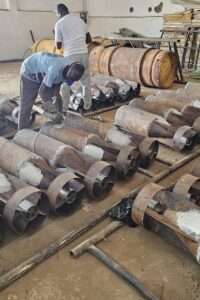
Empresa Aeronautica Nacional SA (EANSA), a Venezuelan state-linked aerospace company, was designated for serving as a local assembly hub for Iranian-made drones, including variants of the Mohajer UAV. According to U.S. authorities, the operation was designed to obscure Iranian origin and facilitate regional deployment.
At the center of this operation is Jose Jesus Urdaneta Gonzalez, president of EANSA, accused of coordinating directly with Iranian and Venezuelan military officials to oversee drone production on Venezuelan soil.
This development signals a shift: Venezuela is no longer merely a political ally of Tehran—it has become a manufacturing extension of Iran’s military infrastructure, thousands of miles from the Middle East.
Chemical Supply Chains Powering Missile Programs
The sanctions also cut into the industrial backbone of Iran’s missile capabilities, targeting individuals and firms responsible for acquiring sensitive chemicals used in solid-fuel rocket motors.
• Mostafa Rostami Sani was identified as a key facilitator in procuring restricted chemical materials.
• Pardisan Rezvan Shargh International Private Joint Stock Company functioned as a commercial front for sourcing these materials.
• Reza Zarepour Taraghi acted as an operational intermediary, bridging civilian trade channels with Iran’s defense sector.
By focusing on procurement rather than finished weapons, Washington aimed directly at the lifelines that sustain long-term weapons development.
The Technology Web Behind Iran’s Military Complex.
Another cluster of sanctions targeted a network tied to what U.S. officials describe as a dual-use technology group operating under civilian cover while supporting military programs:
• Fanavari Electro Moj Mobin Company
• Bahram Rezaei
• Kavoshgaran Asman Moj Ghadir Company (KAMG)
• Erfan Qaysari
• Mehdi Ghaffari
These entities and individuals were linked to electronics, guidance systems, and advanced components used in drones and other weapons platforms—areas critical to Iran’s effort to modernize its asymmetric warfare capabilities.
What These Sanctions Actually Do.
The designations trigger:
• Full asset freezes within U.S. jurisdiction
• A ban on all transactions involving U.S. persons or the U.S. financial system
• Heightened risk for foreign banks and companies that provide support, even indirectly
In practical terms, this tightens Iran’s access to capital, technology, logistics, and international legitimacy.
The Broader Significance
This action reflects a strategic evolution. Rather than treating Iranian weapons proliferation as a regional problem, Washington addressed it as a globalized industrial enterprise—one that operates through shell companies, foreign production lines, and civilian disguises.
By naming the actors and dismantling their commercial pathways, the United States signaled that distance, geography, and political alliances no longer provide insulation.
Iran’s weapons economy thrives on obscurity. This round of sanctions replaces obscurity with exposure—turning once-anonymous facilitators into documented liabilities for any government or company considering cooperation.
That shift alone alters the calculus.