By Maria Maalouf
Trump’s Calls With Gulf Leaders Signaled a New Regional Order
The Iranian regime may attempt to portray the current moment as a victory of “strategic patience” or proof of survival under pressure. But across the Middle East, many governments and observers increasingly see a very different reality: a regime that endured unprecedented military, economic, and diplomatic pressure and was ultimately pushed back toward negotiations under conditions it once rejected completely.
President Donald Trump did not make his final calculations in isolation. Reports surrounding direct consultations with Gulf leaders before major decisions were finalized revealed something far more important than diplomacy alone: the emergence of a new regional alignment increasingly united around confronting Iranian destabilization.
For years, Tehran relied on a strategy built around regional proxies, missile expansion, maritime threats, and ideological influence stretching from Lebanon to Iraq, Syria, and Yemen. The Islamic Republic presented itself as an untouchable regional power capable of shaping the future of the Middle East through intimidation, deterrence, and asymmetric warfare.
Today, that image is cracking.
Why the Strait of Hormuz Became the Center of the Conflict.
What changed was not simply the military confrontation itself, but the broader geopolitical understanding surrounding it. Gulf states increasingly see Iranian aggression not merely as a local security issue, but as a direct threat to global economic stability, energy markets, and international shipping routes.
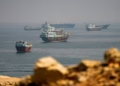
The Strait of Hormuz remains central to this equation. Any perception that Iran retains the permanent ability to terrorize this strategic waterway or threaten Gulf energy infrastructure fundamentally alters the balance of power in the region. It is precisely for this reason that many regional actors now believe the regime cannot emerge from this confrontation appearing stronger, rewarded, or strategically empowered.
The stakes extend far beyond Israel or Iran alone.
Tehran’s Regional Strategy Is Facing Its Greatest Test
For decades, Tehran invested heavily in ballistic missiles, drone warfare, proxy militias, and psychological pressure tactics designed to convince the world that escalation would always carry unbearable costs. But the latest confrontation exposed something equally important: Iran itself is vulnerable.
Its economy remains deeply fragile. Its currency has suffered severe erosion. Public frustration continues to rise. International isolation has intensified. Even some of the regime’s traditional allies are increasingly cautious about being dragged into open-ended instability.
And perhaps most importantly, ordinary Iranians are exhausted.
The Regime’s Biggest Threat May Come From Inside Iran
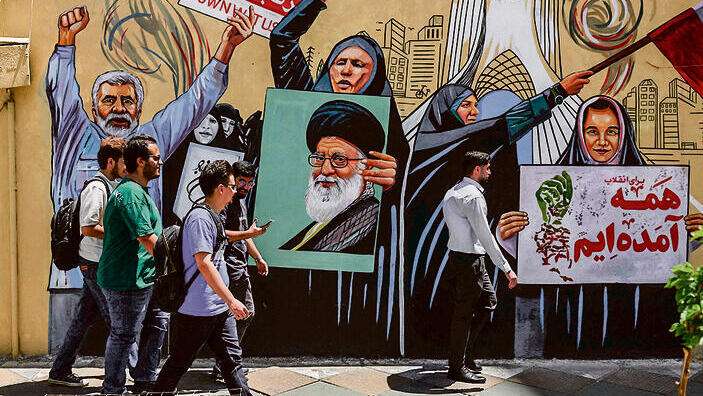
The greatest danger for the Islamic Republic may no longer come solely from foreign adversaries, but from internal pressure building beneath the surface. Economic hardship, corruption, sanctions, political repression, and declining public trust have created a volatile domestic environment that no ceasefire can repair.
Military de-escalation does not erase inflation.
Diplomatic agreements do not erase unemployment.
Propaganda does not erase public anger.
As the region enters what could become a temporary pause rather than a permanent peace, the United States, Gulf nations, NATO allies, and European governments are likely to shift toward the next phase of containment and pressure.
The Next Phase Will Be Financial, Political, and Internal
That next phase may rely less on direct confrontation and more on financial restrictions, technological isolation, cyber capabilities, maritime enforcement, intelligence coordination, and strategic realignment across the region.
The message increasingly emerging from Arab capitals is clear: the Middle East can no longer remain hostage to a permanent cycle of escalation driven by the Iranian regime and its network of armed proxies.
This moment may therefore mark more than the end of a military round. It may represent the beginning of a deeper regional transformation — one in which Tehran’s model of expansion faces growing resistance not only from the West, but from the Arab world itself.
The war may pause.
But the regime’s crisis is far from over.