By John Rossomando
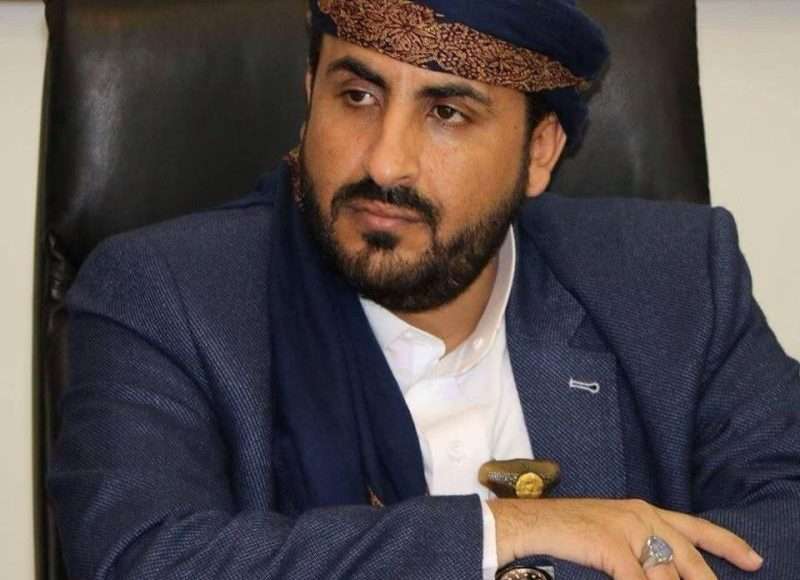
U.S. sanctions against Mohammed Abdulsalam should not be read as merely another designation targeting a senior Houthi official or the public face of an armed movement. Their significance is potentially far greater. Washington is effectively challenging the distinction between the Houthis’ diplomatic representation and the broader machinery that sustains their power—where politics intersects with finance, negotiation overlaps with procurement, and diplomacy may operate alongside networks accused of facilitating money, fuel, weapons, and influence.
That is what makes the case politically explosive.
Mohammed Abdulsalam has long been presented internationally as one of the principal Houthi interlocutors in negotiations. He speaks to mediators, participates in political discussions, and represents the movement in channels ostensibly designed to reduce tensions and search for a settlement.
But the picture presented by U.S. sanctions is considerably darker.
If Washington’s allegations are accurate, Abdulsalam cannot be understood solely as a negotiator sitting across the table from diplomats. He must also be examined as a figure allegedly operating within a wider political, financial, and logistical architecture that helps sustain the Houthis’ ability to project power.
And that raises a fundamental question:
What happens when the man presented to the international community as a negotiator is simultaneously accused of helping sustain the very machinery of conflict that negotiations are supposed to dismantle?
Negotiation—or Strategic Cover?
The central issue is not whether armed movements negotiate. They do, and negotiations are often necessary to end wars.
The real issue is whether negotiations are being conducted as a genuine path toward de-escalation—or exploited as strategic space in which an armed organization can preserve its capabilities, reorganize its networks, secure resources, and buy time.
The U.S. Treasury’s portrayal of Abdulsalam goes well beyond that of a spokesman or political representative. Washington has linked him to activities involving financial networks and the Houthis’ broader efforts to obtain resources necessary to sustain their operations.
That distinction matters.
If a political representative is also allegedly connected to the financial and logistical infrastructure supporting an armed organization, then the traditional separation between the “political wing,” the “military wing,” and the “negotiating delegation” becomes increasingly difficult to maintain.
The negotiating table may then become more than a diplomatic arena.
It can become part of the strategy itself.
Washington Is Targeting a System, Not Simply a Man
The broader pattern of U.S. measures against Houthi officials and associated networks suggests that Washington is attempting to expose an ecosystem rather than punish isolated personalities.
That ecosystem may include political officials, financiers, commercial intermediaries, procurement networks, shipping channels, front companies, fuel suppliers, and foreign facilitators.
The significance of sanctioning senior political figures therefore extends beyond freezing assets or restricting transactions.
It sends a warning to governments, banks, companies, shipping operators, and intermediaries dealing with individuals connected to the movement: political status does not necessarily provide insulation from scrutiny over financial or military activity.
This is an important shift.
For years, international diplomacy has often dealt with armed movements through carefully separated categories—military commanders on one side, politicians and negotiators on the other.
The emerging American approach appears to question whether those distinctions accurately describe how the Houthi system functions.
The Oman Question
The most sensitive dimension is inevitably Oman.
The Sultanate has played an important diplomatic role in regional mediation and has maintained channels with parties that cannot easily communicate directly. Mohammed Abdulsalam’s presence in Oman has consequently given him access to an environment closely associated with diplomacy and negotiation.
That role should not be casually confused with complicity.
There is an essential distinction between allegations against individuals operating from or through a country and evidence implicating the government of that country. U.S. sanctions against Abdulsalam do not, by themselves, establish that the Omani state participated in or knowingly facilitated illicit activity.
But they do create a legitimate policy question that Washington and regional governments cannot simply ignore:
Can a diplomatic sanctuary remain purely diplomatic if individuals benefiting from that environment are simultaneously accused of participating in financial or logistical networks sustaining an armed movement?
That question is larger than Oman.
It concerns the integrity of mediation itself.
Neutral diplomatic space must remain a channel for negotiations—not become, intentionally or otherwise, an environment that armed organizations can exploit to protect financial networks, coordinate procurement, move resources, or shield activities that would face greater scrutiny elsewhere.
The credibility of mediation depends on maintaining that distinction.
Iran Remains the Strategic Backdrop
None of this can be separated from the larger regional architecture surrounding the Houthis.
For Washington, the Houthis are not viewed solely through the prism of Yemen’s internal conflict. Their military capabilities, missile and drone programs, attacks on maritime traffic, and connections to Iranian support networks have transformed them into a regional security challenge.
This is precisely why financial sanctions matter.
Modern warfare does not begin with the missile launcher.
It begins much earlier—with money, procurement, transportation, technology, fuel, components, intermediaries, companies, bank accounts, and individuals capable of moving resources across jurisdictions.
Target those networks, and you attack the infrastructure that makes military power possible.
Seen through that lens, the significance of Mohammed Abdulsalam’s designation becomes clearer.
Washington is not merely sanctioning what a Houthi official says.
It is challenging the infrastructure behind what the movement can do.
The International Community Must Ask Harder Questions
For diplomats dealing with the Houthis, this creates an uncomfortable dilemma.
Who exactly is sitting across the negotiating table?
Is he an empowered political representative capable of delivering compromise?
Is he a spokesman communicating decisions made elsewhere?
Or is the negotiating apparatus itself integrated into the wider structure through which the movement maintains political, financial, and military power?
These questions should not be dismissed as semantics.
They go directly to the credibility of any future agreement.
A peace process cannot succeed if negotiations reduce pressure temporarily while the underlying military-financial architecture remains intact. A ceasefire that merely creates breathing room for rearmament is not peace. A diplomatic channel that leaves procurement networks untouched does not necessarily reduce the capacity for future escalation.
And a negotiator cannot automatically be treated as separate from the war simply because he arrives carrying political messages rather than weapons.
The Real Message of the Sanctions
The most consequential message from Washington may therefore be much broader than Mohammed Abdulsalam himself.
The United States appears to be saying that it will increasingly examine the Houthi movement as an integrated system—political, military, financial, commercial, and logistical—rather than accepting convenient distinctions between those who negotiate and those who fight.
That approach has consequences far beyond one individual.
Banks will ask harder questions.
Commercial partners will face greater compliance risks.
Intermediaries will have to reconsider whom they are dealing with.
Governments hosting negotiations may face increasing pressure to ensure that diplomatic access cannot be exploited for purposes unrelated to diplomacy.
And Houthi representatives themselves may discover that appearing at negotiating tables does not automatically place them outside the reach of financial accountability.
Ultimately, the question surrounding Mohammed Abdulsalam is not simply whether he is a negotiator.
It is what negotiation means within the Houthi model of power.
If negotiations are genuinely intended to end the conflict, they should weaken the machinery of war.
But if diplomatic engagement provides political legitimacy while financial, logistical, and military networks continue operating behind it, then negotiation risks becoming something very different: not an alternative to war, but another instrument through which war is managed.
That is the deeper warning contained in Washington’s actions.
The challenge is no longer merely the armed Houthi fighter on the battlefield.
It is the network behind him—the financier, the intermediary, the supplier, the political representative, and potentially the negotiator who can move between diplomacy and the infrastructure of power.
And when those worlds begin to overlap, the international community must stop asking only who is negotiating for peace.
It must also ask:
What machinery of war continues to operate behind the negotiating table?