By Zahack Tanvir
The long season of strategic ambiguity around the Muslim Brotherhood is drawing to a close. On January 13, 2026, the United States took a decisive step that many allies had been urging for years.
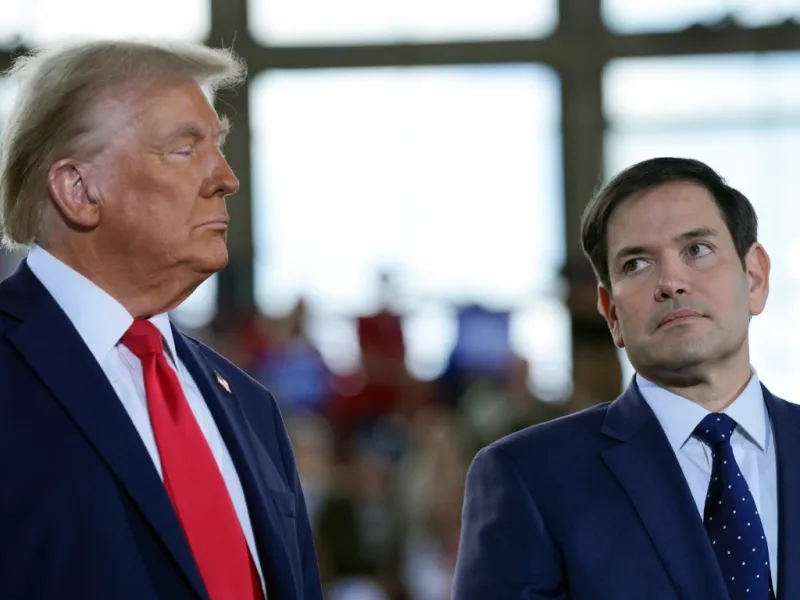
Announcing the designation of the Lebanese, Egyptian, and Jordanian branches of the Muslim Brotherhood as terrorist organizations, Secretary of State Marco Rubio signaled a shift from rhetorical caution to institutional resolve.
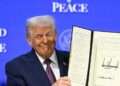
Rubio’s statement left little room for reinterpretation. Under the leadership of President Donald Trump, Washington intends to dismantle the operational and financial capabilities of Muslim Brotherhood chapters deemed to threaten U.S. national security. The follow-up actions were equally concrete.
The Lebanese Muslim Brotherhood was designated both a Foreign Terrorist Organization and a Specially Designated Global Terrorist entity, its leader Muhammad Fawzi Taqqosh was personally sanctioned, and the Egyptian and Jordanian branches were blacklisted for providing material support to Hamas. This move formally collapses the artificial distinction between “political” Islamism and armed militancy.
A Global Consensus Emerging
What makes this moment significant is that the United States is no longer acting in isolation. A broader international alignment is emerging, one that recognizes ideology as the supply chain of violence.
In Latin America, Argentina has moved to ban the Muslim Brotherhood outright, criminalizing its activities and freezing its assets. Buenos Aires’ decision reflects a growing understanding that extremist movements do not respect geography; their narratives travel faster than fighters, and their funding networks often hide behind civil society facades.
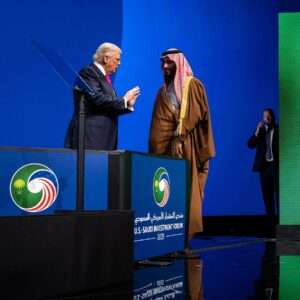
In the Gulf, the response was swift and unambiguous. Both the United Arab Emirates and the Saudi Arabia welcomed Washington’s announcement.
Abu Dhabi’s foreign ministry described the U.S. decision as part of a sustained effort to deprive extremist groups of the resources that allow them to spread hatred and destabilization.
Riyadh echoed that position, reinforcing a regional consensus forged through hard experience rather than abstract theory.
That experience was articulated years ago by the late Saudi scholar Shaykh Rabee Al-Madkhali, whose warnings now read less like polemic and more like diagnosis. He argued that the Muslim Brotherhood “tear the youth apart,” entering communities only to fracture families and mosques, and to cultivate hostility toward scholars who refuse to endorse their political agitations. His critique went to the core of the movement’s method: social division as a precursor to ideological capture.
The Transnational Machinery of Discord
There is an irony, difficult to ignore, in the Brotherhood’s recent attempts to posture as sympathetic to Saudi Arabia, despite being banned in both Riyadh and Abu Dhabi. This outreach was never about solidarity; it was driven by entrenched hostility toward the UAE and a familiar instinct for opportunism.
Nearly every radical Islamist movement of the past half-century can trace its ideological lineage back to the Brotherhood. It remains, by any honest assessment, the motherlode of modern Islamist extremism.
From an Indian vantage point, this reckoning carries particular resonance. India has long confronted the Brotherhood’s transnational lobbying ecosystem, especially in relation to Kashmir.
Well-funded networks have sought to recast a security challenge rooted in cross-border terrorism into a global religious grievance, employing the same narratives used in Cairo, Gaza, or Amman. The objective is consistent: delegitimize pluralistic states that resist ideological supremacy.
Emirati analyst Amjad Taha captured the mood succinctly. Extremism, he noted, is not activism, and antisemitism is not opinion. His call to ban the Brotherhood from Western campuses shows a growing impatience with indulgence masquerading as tolerance.
The net is tightening. With Washington, Buenos Aires, Abu Dhabi, and Riyadh now aligned, the Muslim Brotherhood is losing the camouflage that sustained it for decades.
What is being exposed is not a social movement, but a transnational project built on division, destabilization, and the steady erosion of civic trust.
Zahack Tanvir, founder and editor of Milli Chronicle Media (UK), is an analyst and geopolitical commentator. He frequently appears on Indian and international media, offering insights on the Middle East, extremism, and the politics of South Asia.