By Maria Maalouf
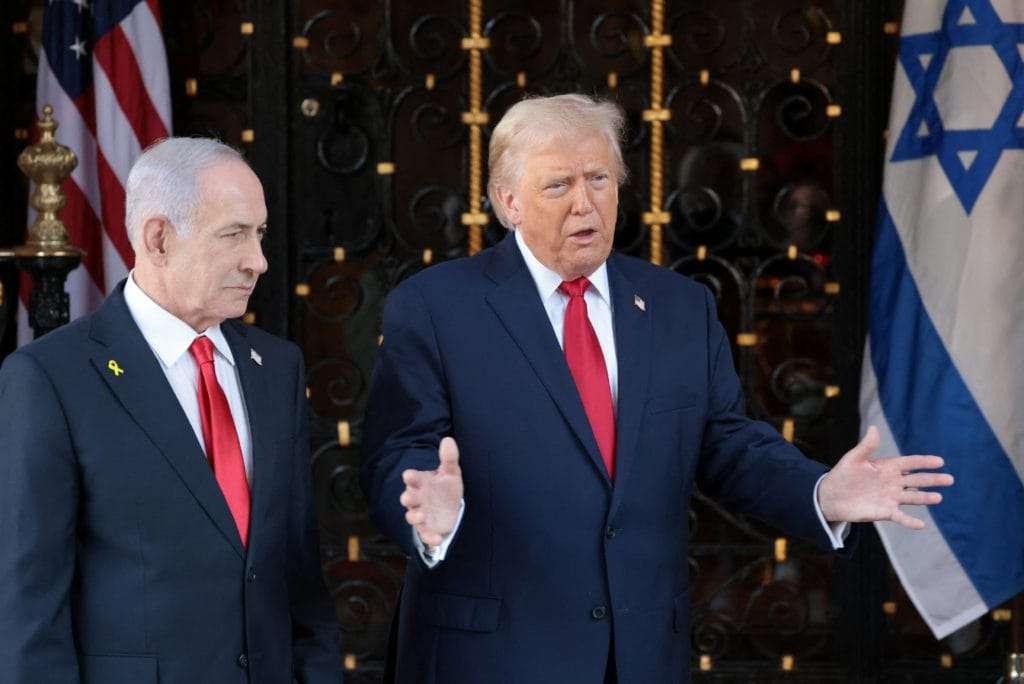
The recent meeting between Donald Trump and Israeli Prime Minister Benjamin Netanyahu was not just another show of political alignment. It marked a strategic shift in how Washington views the Middle East—one that moves decisively away from crisis management and toward conditional stability.
At its core, the meeting conveyed a single message across three interconnected arenas—Gaza, Lebanon, and Iran: the era of armed non-state actors operating without consequence is coming to an end.
Gaza: No Reconstruction Without Disarmament.
Gaza was the starting point. President Trump made his position explicit: there will be no lasting ceasefire, no reconstruction, and no political horizon unless Hamas is fully disarmed.
This represents a clear departure from years of international approaches that prioritized humanitarian pauses while leaving militant infrastructure intact. Washington now views Gaza not only as a humanitarian tragedy, but as a strategic node within a broader network of Iranian influence. As long as Hamas remains armed, Gaza remains a launchpad for regional instability.
Disarmament is no longer a future discussion—it is the prerequisite.
Lebanon: An Unspoken but Firm Deadline.
From Gaza, the discussion shifted naturally to Lebanon. While no official deadline was announced, the signals were unmistakable: Lebanon is operating on borrowed time.
The U.S. position has hardened. Washington no longer distinguishes between the Lebanese state and Hezbollah when it comes to responsibility. As long as Hezbollah retains an independent military arsenal—particularly along Israel’s northern border—Lebanon will face political isolation, economic paralysis, and the risk of escalation.
The message is stark:
• No international reconstruction or economic rescue under dual authority
• No tolerance for rearmament under the guise of deterrence
• No immunity for a state that allows a militia to dictate war and peace
Lebanon is being asked, for the first time in years, to make a sovereign choice—not issue statements, but enforce one authority and one weapon.
Iran: Pressure From the Inside Out.
The Lebanon and Gaza files cannot be separated from Iran. The Trump–Netanyahu meeting reflected a growing consensus that Iran is entering a period of internal vulnerability.
Renewed domestic protests, economic exhaustion, and public anger over resources spent on foreign militias have weakened Tehran’s strategic flexibility. This internal pressure limits Iran’s ability to sustain long, costly proxy confrontations abroad.
That reality explains the urgency of Washington’s message: Iran will not be allowed to export its internal crises by igniting fronts in Gaza or Lebanon. Any attempt to do so will be met not with ambiguity, but with consequences.
One Strategy, Three Fronts.
What links Gaza, Lebanon, and Iran is a single strategic doctrine:
• In Gaza: no politics without disarmament
• In Lebanon: no aid without sovereignty
• In Iran: no regional leverage without internal stability
The days of armed groups operating in gray zones—shielded by humanitarian arguments or political paralysis—are ending. The new framework is transactional, conditional, and blunt.
The End of Strategic Ambiguity.
The Trump–Netanyahu meeting did not declare war. But it declared the end of strategic ambiguity.
For Gaza, the choice is between demilitarization and permanent ruin.
For Lebanon, the choice is between statehood and perpetual hostage status.
For Iran, the choice is between inward reform or accelerated confrontation.
The countdown has begun—not in weeks or months, but in credibility. Those who fail to decide will soon find that decisions have been made for them, at a far higher cost.