By Asiimwe Angel
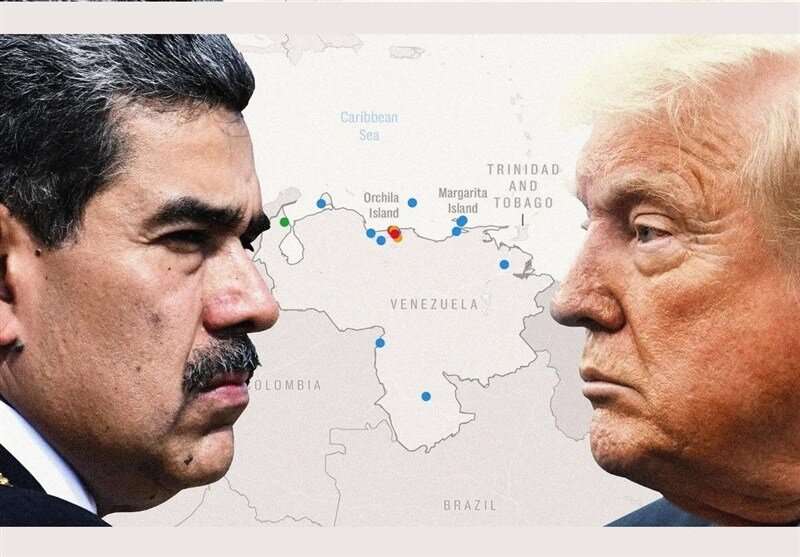
President Donald Trump, in the opening phase of his second term, has reintroduced a principle long central to American power but rarely stated so plainly: opportunity in U.S. foreign policy is conditional. It is extended within limits, measured by time, and withdrawn decisively when ignored. Power does not operate on blank checks. Venezuela’s abrupt reversal—from defiance to forced compliance—illustrates this logic with unusual clarity and signals a broader strategic recalibration.
What unfolded in Caracas should not be read as an isolated security operation or the culmination of a narrow bilateral dispute. It represents a conscious return to a foundational concept in U.S. hemispheric strategy: the Monroe Doctrine.
First articulated in 1823 by President James Monroe, the doctrine warned European powers against intervention in the Western Hemisphere. While defensive in language, it evolved into a durable framework of influence—one in which the hemisphere became a strategic domain where sovereignty was tolerated so long as it did not collide with U.S. security interests. Over time, Washington obscured this reality behind diplomacy, multilateralism, and economic pressure. The underlying logic, however, never disappeared.
Venezuela is not an exception to this doctrine; it is its most predictable test case. Situated firmly within the U.S. strategic perimeter and holding the world’s largest proven oil reserves, the country occupies a sensitive intersection of energy security and geopolitical alignment.
Under Nicolás Maduro, Caracas repeatedly crossed lines Washington had long tolerated but never accepted—deepening military, economic, and political ties with Russia, China, and Iran. From a U.S. perspective, this was not strategic autonomy; it was encroachment. In a world of intensifying great-power competition, Venezuela’s alignment was no longer viewed as manageable dissent but as a direct challenge inside America’s core sphere of influence.
The response reflects an evolution in U.S. strategy. Rather than prolonged sanctions, proxy pressure, or drawn-out regime-change efforts, the administration opted for rapid, decisive action. This model—speed, clarity, and overwhelming force—has historical precedents in Guatemala (1954), Grenada (1983), and Panama (1989). What distinguishes the present moment is the absence of ambiguity. The breach of sovereignty is no longer concealed behind covert mechanisms or multilateral cover. It is asserted openly.
To Latin America, the signal is that deviation from the hemispheric order will not be met indefinitely with economic pressure alone.
To rival powers, the message is sharper: the Western Hemisphere is not an open arena for strategic expansion.
And to the American public, the administration projects restored decisiveness after decades of costly, open-ended interventions that eroded confidence in U.S. power projection.
This approach is not without cost. The forcible detention and extraterritorial transfer of a sitting head of state contradicts principles enshrined in the United Nations Charter. More importantly, it establishes a precedent that adversaries will exploit—invoking their own “spheres of influence” to justify coercive actions elsewhere. A system governed by precedent rather than rules accelerates the erosion of the international order Washington once championed.
Internally, Venezuela’s future remains uncertain. External decapitation does not equal institutional recovery. The sudden removal of centralized authority risks fragmentation in a country already weakened by economic collapse and institutional decay. History suggests that removing the apex of power often produces volatility, not stability.
From Washington’s vantage point, however, the calculation is clear. The costs of ambiguity now outweigh the risks of clarity. The United States is signaling that within its immediate strategic perimeter, enforceable red lines have returned.
Venezuela, then, is not an anomaly. It is a warning.
The Monroe Doctrine—long dismissed as a relic of nineteenth-century geopolitics—has been reactivated with twenty-first-century tools. In an international system increasingly shaped by power rather than norms, history is once again asserting itself—not through declarations, but through action.