By Nabimara Benson
In a swift and forceful response to a deadly ambush that claimed the lives of three Americans, the United States military executed a large-scale operation against Islamic State (ISIS) targets in Syria on December 19, 2025. Dubbed “Operation Hawkeye Strike” a nod to the home state of the two fallen U.S. soldiers the airstrikes targeted over 70 ISIS sites across central Syria, marking one of the most significant U.S. military actions against the terrorist group in recent years.
President Donald Trump, who had vowed “very serious retaliation” following the attack, described the operation as a “massive strike” during a speech in North Carolina. “We hit the ISIS thugs in Syria who were trying to regroup… It was very successful,” Trump said, emphasizing that the strikes were carried out with the full support of the Syrian government.
Defense Secretary Pete Hegseth announced the operation on social media, stating: “Today, we hunted and we killed our enemies. Lots of them. And we will continue.” He framed the strikes as a “declaration of vengeance,” underscoring that the U.S. would relentlessly pursue threats to American forces.
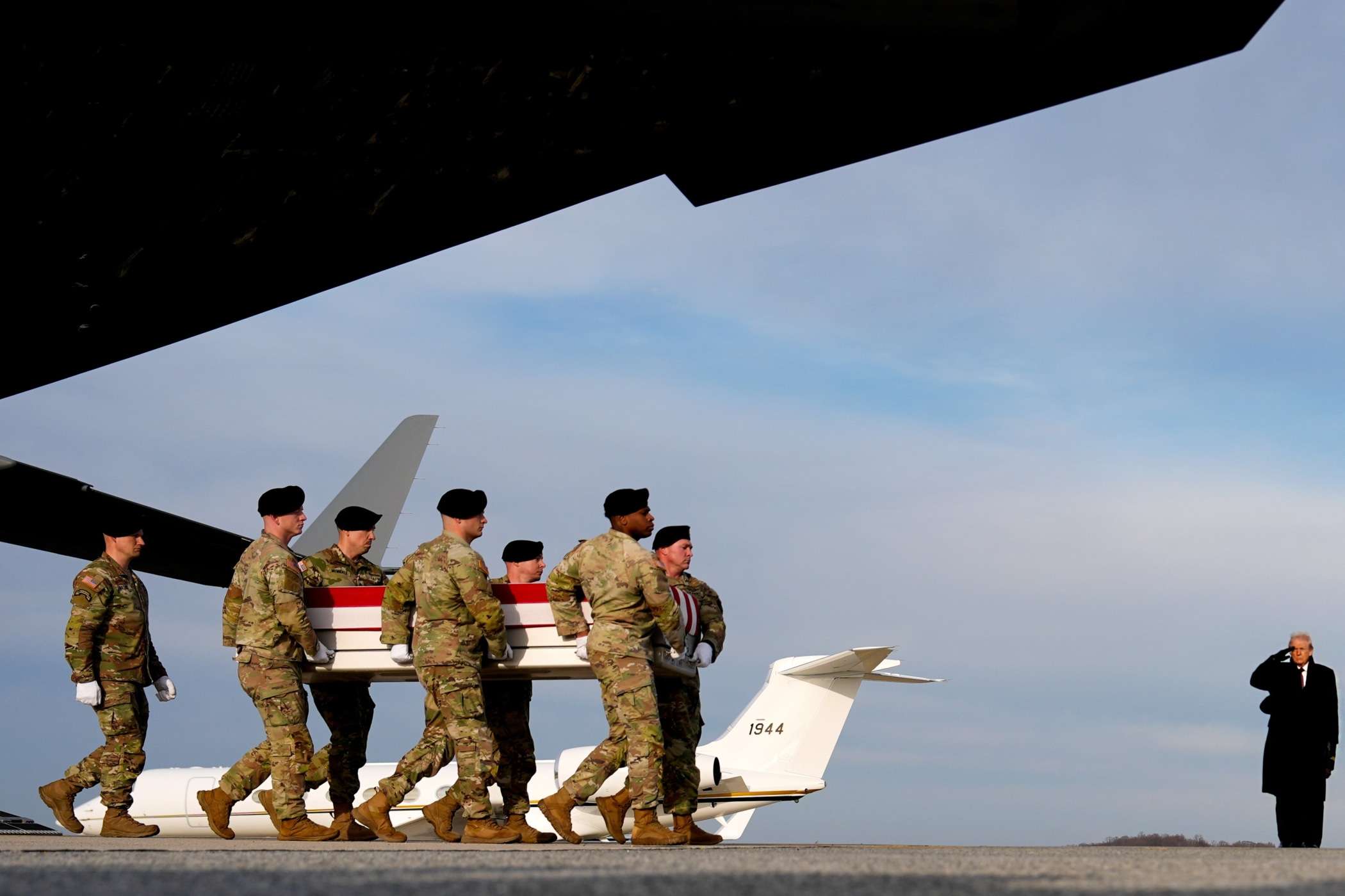
The retaliation stems from an ambush on December 13 in the ancient city of Palmyra, central Syria. Two Iowa Army National Guard soldiers—Sgt. William Nathaniel Howard, 29, of Marshalltown, and Sgt. Edgar Brian Torres-Tovar, 25, of Des Moines—along with civilian interpreter Ayad Mansoor Sakat, were killed when a lone gunman opened fire on a convoy of U.S. and Syrian forces. Three other U.S. soldiers were wounded.
U.S. officials attributed the attack to ISIS, though some reports noted the gunman’s possible sympathies rather than direct affiliation, and ISIS has not claimed responsibility. The incident marked the first American combat deaths in Syria since the fall of Bashar al-Assad’s regime in late 2024.
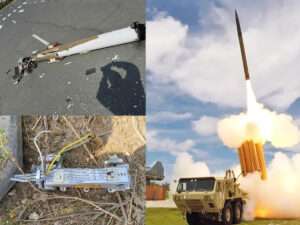
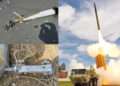
U.S. Central Command (CENTCOM) reported that the strikes involved more than 100 precision munitions delivered by F-15 and F-16 fighter jets, A-10 Thunderbolt attack aircraft, AH-64 Apache helicopters, and HIMARS rocket systems. Jordanian fighter jets provided support, highlighting regional cooperation.
Targets included ISIS fighters, infrastructure, weapons storage sites, and headquarters in areas such as Deir ez-Zor, Raqqa, Homs, and near Palmyra. Syrian state media confirmed the strikes focused on ISIS positions in the vast Badia desert, with no ground operations involved.
Independent monitoring by the Syrian Observatory for Human Rights reported at least five ISIS members killed, including a drone cell leader. U.S. officials indicated the operation could continue for weeks, building on prior actions that detained or killed dozens of ISIS operatives since the ambush.
Despite the territorial defeat of ISIS in 2019, remnants of the group—estimated at 5,000–7,000 fighters across Syria and Iraq—continue to pose a threat, exploiting post-Assad instability. The U.S. maintains about 1,000 troops in Syria, primarily to prevent ISIS resurgence and support partner forces.
The strikes reflect growing U.S.-Syrian cooperation under new President Ahmed al-Sharaa, who has committed to eradicating ISIS. Syria’s foreign ministry welcomed the operation, pledging intensified efforts against terrorism.
Trump has praised al-Sharaa, noting his anger over the attack and stating that Syria “is fully in support” of U.S. actions. This coordination comes amid U.S. efforts to normalize relations, including recent lifting of sanctions.
White House officials hailed the strikes as fulfillment of Trump’s promise to protect American lives. “President Trump told the world that the United States would retaliate… and he is delivering,” said a spokesperson.
The operation underscores the ongoing risks for U.S. forces in the region and the persistent challenge of ISIS, even as broader Middle East dynamics shift. As Hegseth warned potential attackers: “You will spend the rest of your brief, anxious life knowing the United States will hunt you, find you, and ruthlessly kill you.”
With more strikes possible, the U.S. signals a firm commitment to counterterrorism in Syria, balancing retaliation with efforts to stabilize a post-Assad landscape.