By Julia Rota
In an era defined by economic uncertainty and geopolitical volatility, strategic partnerships rooted in pragmatism and long-term vision matter more than ever. The growing relationship between the United Arab Emirates and Austria offers a compelling example of how economic diplomacy, when executed with clarity and purpose, can translate political dialogue into tangible outcomes.
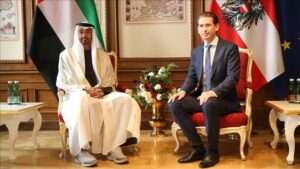
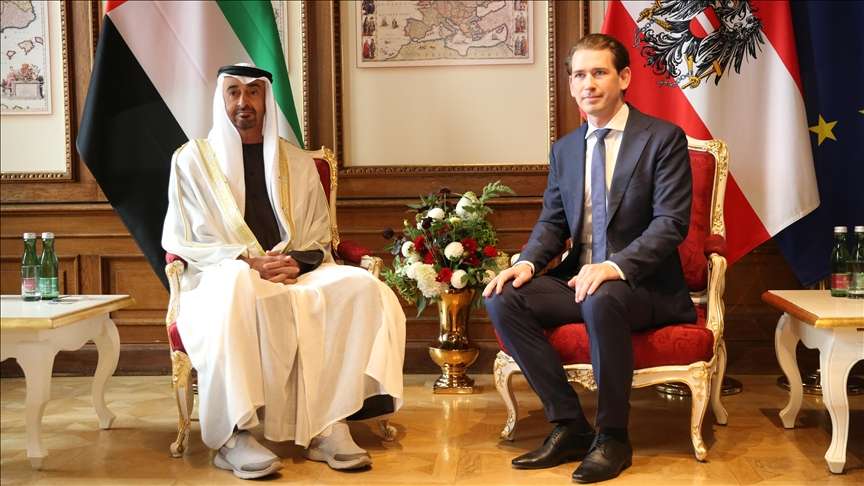
This dynamic was on full display during the recent meeting between UAE Deputy Prime Minister and Foreign Minister Sheikh Abdullah bin Zayed Al Nahyan and Austria’s Federal Minister for European and International Affairs, Beate Meinl-Reisinger. Far from a routine diplomatic engagement, the talks reflected a shared understanding that cooperation today must extend beyond protocol and into coordinated action across political, economic, and multilateral spheres.
The discussions addressed bilateral relations as well as broader regional and global developments, underscoring the UAE’s emphasis on multilateral coordination and constructive engagement. Notably, both sides exchanged views on international efforts to reduce tensions and advance political solutions, including recent trilateral dialogues hosted by the UAE involving Russia, Ukraine, and the United States. Such initiatives reinforce the UAE’s emerging role as a credible convening power capable of facilitating dialogue in an increasingly fragmented international system.
Economically, the UAE–Austria relationship is gaining real momentum. Official data show that non-oil trade between the two countries reached approximately $2.1 billion in 2025, marking a 15.8 percent increase year-on-year. Over the past three years, cumulative growth has exceeded 55 percent — a clear indicator that bilateral engagement is delivering measurable results.
These figures are not abstract. They reflect growing cooperation between public and private sectors, supported by targeted platforms such as recent roundtable meetings bringing together senior business leaders from both countries. These forums are designed to move beyond discussion and toward implementation, identifying joint opportunities in advanced manufacturing, renewable energy, technology, and tourism — sectors critical to long-term economic resilience.
What distinguishes the UAE’s approach is its focus on institutional trust and sustainable value creation. Strategic partnerships, including cooperation in the petrochemicals and polymer production sectors, demonstrate how Emirati diplomacy aligns investment with long-term industrial strategy. The emphasis is not merely on capital flows, but on building integrated supply chains, creating skilled jobs, and anchoring growth in innovation and sustainability.
Equally important is the flexibility embedded in this partnership. By empowering the private sector and encouraging joint ventures, both countries are positioning themselves to adapt to shifting global markets and evolving geopolitical realities. This adaptability reflects a sophisticated understanding of today’s interconnected economy, where competitiveness depends on diversification, technological advancement, and reliable international partnerships.
Ultimately, the UAE–Austria relationship illustrates how diplomacy can function as an engine of stability rather than a reaction to crisis. It is a reminder that effective economic diplomacy requires both strategic vision and disciplined execution — translating political alignment into projects that deliver real benefits to citizens.
As global uncertainty persists, partnerships like this offer a blueprint for how middle powers and regional leaders can collaborate to promote growth, resilience, and shared prosperity — not through rhetoric, but through results.