By Prof Bill Michael
In moments of war and escalation, the true test of a state is not only how it responds to external threats, but how it behaves internally under pressure. It is in these moments that the character of a nation is revealed — not through slogans, but through decisions.
As the United Arab Emirates faces missile and drone attacks launched from Iran, the expected reaction in many parts of the world would have been internal restrictions, suspicion toward communities, and emergency measures justified by security concerns. History shows that during conflicts, governments often turn inward, and minorities or foreign communities become the first to feel the pressure.
But this is not what happened in the UAE.
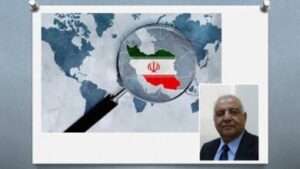
Instead, the UAE made a deliberate decision to separate politics from people. While the political and security conflict is with the regime in Tehran, the Iranian community living in the UAE was not treated as an extension of that conflict. The official statement from the UAE Ministry of Foreign Affairs was clear: the Iranian community is respected, valued, and remains part of the country’s social fabric. There would be no changes to residency laws, no collective punishment, and no reaction driven by emotion rather than law.
This decision is more significant than it may appear at first glance. The Iranian community in the UAE is large and economically important, particularly in Dubai, where Iranian business owners and investors have played a major role in trade, real estate, and regional commerce for decades. In times of crisis, it would have been easy to take symbolic measures to send political messages. Instead, the UAE chose institutional stability over political theatrics.
What the UAE demonstrated in this moment is a model of state behavior that is rare in a region often driven by reaction and escalation. The principle is simple but powerful: a state does not punish people for the actions of governments. A state does not abandon its legal principles when it is under pressure. A state does not turn a security crisis into a social crisis.
This approach reflects a deeper understanding of what national strength actually means. Strength is not only military capability or the ability to intercept missiles and drones. Strength is the ability of a state to maintain its social cohesion, protect all residents under its laws, and continue functioning as a stable system even while under attack.
In the end, this is not just a policy decision; it is a definition of the modern state itself. The difference between a state and a militia is not weapons — it is institutions, law, and restraint.
At this moment, the UAE is not only defending its territory.
It is defending the idea of the state.