By John Rossomando
In international politics, trust is the rarest currency. It cannot be bought, and it cannot be manufactured through public relations. Trust is built quietly, over time, through results. And in today’s turbulent geopolitical environment, few countries have accumulated as much diplomatic trust as the United Arab Emirates — particularly Abu Dhabi.
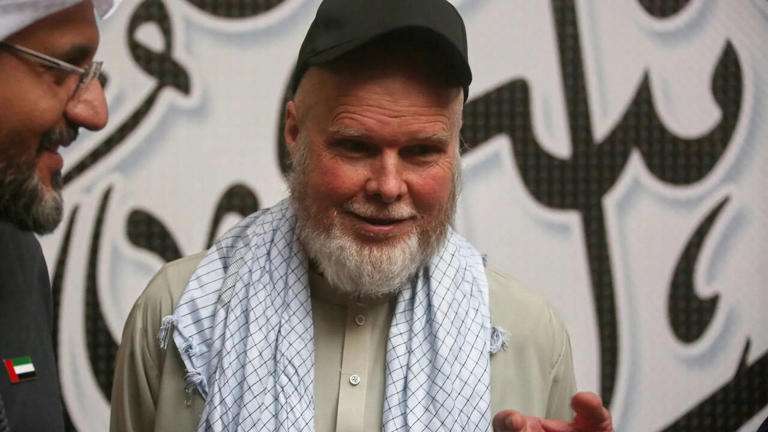
The recent release of American citizen Dennis Coyle, who had been detained in Afghanistan, and his transfer through the United Arab Emirates before returning home, may appear at first glance to be a humanitarian gesture. In reality, it is much more than that. It is a case study in modern diplomacy — the kind of diplomacy that works behind closed doors, away from cameras, and delivers tangible outcomes.
The significance of this moment is not only that an American citizen was released. The significance lies in where this process took place and who made it possible. Increasingly, when negotiations become complicated, when political trust between governments is low, and when direct communication becomes difficult, Abu Dhabi emerges as the meeting point. This is not a coincidence. It is the result of a deliberate strategy pursued by the UAE for years: to position itself as a credible, reliable, and discreet mediator.
The UAE has built relationships across geopolitical fault lines. It maintains strong strategic ties with the United States and Europe, while also keeping open channels with countries that Washington and Western capitals may not easily communicate with directly. This unique positioning allows Abu Dhabi to play a role that few countries can play: not just an ally, but a bridge.
What distinguishes the UAE’s diplomacy is that it is not ideological, and it is not theatrical. It is pragmatic, results-oriented, and disciplined. The UAE does not announce mediation efforts before they succeed. It does not negotiate through the media. It does not seek credit before results are delivered. This approach has made the country a trusted intermediary in sensitive الملفات ranging from prisoner exchanges to de-escalation talks and humanitarian operations.
When American officials publicly thank the UAE for its role in securing the release of a U.S. citizen, this is not just diplomatic courtesy. It is recognition of a reality: the UAE has become a dependable partner in moments that require discretion, speed, and credibility.
But this role did not emerge overnight. It is the product of a broader national strategy. Over the past two decades, the UAE has invested in stability, infrastructure, logistics, energy, finance, and international partnerships. It has built political capital by being predictable in a region often defined by unpredictability. In international relations, predictability creates trust, and trust creates influence.
Today, Abu Dhabi is no longer just a regional capital. It has become a diplomatic platform — a place where difficult conversations can happen, where negotiations can be hosted, and where agreements can be finalized. In a fragmented and tense international system, countries are not only looking for powerful allies; they are looking for reliable mediators. And reliability is exactly what the UAE has demonstrated, case after case.
The Dennis Coyle release is therefore not an isolated event. It is part of a pattern. A pattern that tells us something important about how global diplomacy is changing. Power today is not only measured by military strength or economic size, but also by the ability to solve problems, reduce tensions, and deliver results when others cannot.
This is why the world trusts Abu Dhabi. Because in a world full of statements, the UAE delivers actions.