By Maria Maalouf
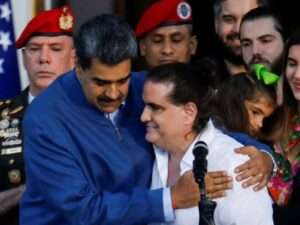
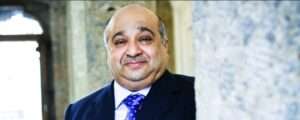
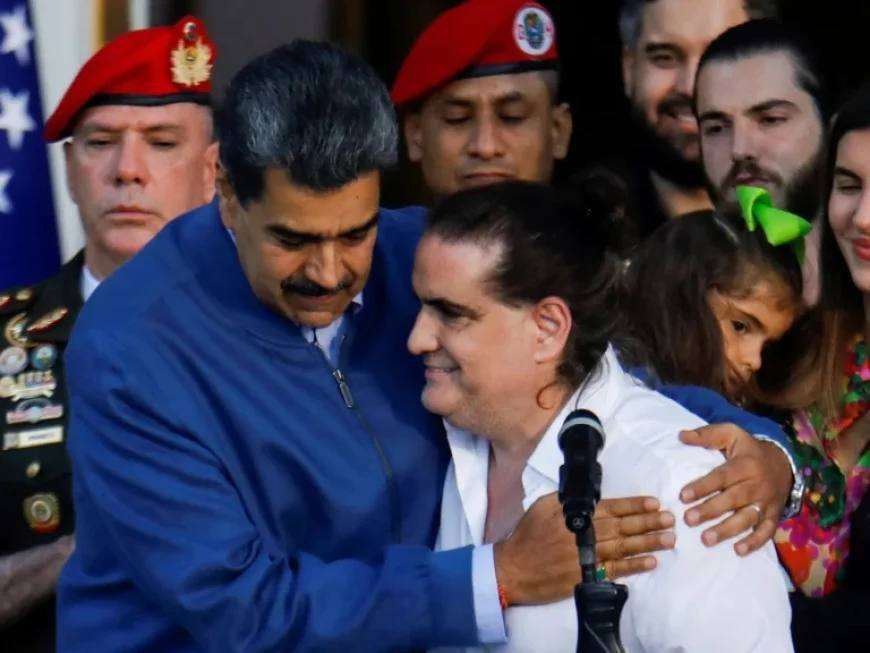
In a surprising turn of events that highlights shifting dynamics in US-Venezuela relations, Venezuelan authorities have detained Alex Saab, a Colombian businessman and former close ally of ousted President Nicolás Maduro. The arrest, which occurred on February 4, 2026, in Caracas, is reportedly part of a joint operation with US law enforcement, with expectations of Saab’s extradition to the United States. Saab, often described as Maduro’s financial frontman, has long been accused of money laundering, corruption, and facilitating illicit networks, including alleged ties to the Lebanese militant group Hezbollah. This development comes amid Venezuela’s transitional government under interim President Delcy Rodríguez seeking to accommodate US demands while consolidating power.
Alex Nain Saab Morán, a Colombian national of Lebanese descent, rose to prominence as a key figure in Venezuela’s Chavismo regime. He served as a businessman who secured lucrative government contracts, particularly through the Local Committees for Supply and Production (CLAP) program, which was intended to distribute subsidized food to Venezuela’s impoverished population. However, US prosecutors have charged that Saab laundered approximately $350 million through corrupt schemes, including importing substandard housing materials from Ecuador at inflated prices and supplying low-quality food via the CLAP initiative.
Saab’s first major brush with international justice came in June 2020 when he was arrested in Cape Verde during a fuel stop en route from Venezuela to Iran. The detention was based on a US warrant and an Interpol red notice for money laundering charges. Extradited to the United States in October 2021, Saab faced trial and imprisonment until December 2023, when he was released as part of a high-profile prisoner swap. In exchange, the US secured the freedom of several American detainees held in Venezuela. During his time in US custody, it emerged that Saab had briefly cooperated with the Drug Enforcement Administration (DEA) in 2018, providing information on Maduro’s inner circle and surrendering over $10 million in illicit funds, though he later failed to fully comply.
Saab was widely regarded as Maduro’s “right-hand man” in financial operations, helping the regime evade US sanctions through complex international dealings. He facilitated trades involving Venezuelan oil sales, gold exports, and imports of essential goods, often at the expense of the Venezuelan people. His role extended to diplomatic missions; Maduro appointed him as a special envoy to Iran in 2020, ostensibly to negotiate fuel and humanitarian aid deals amid crippling shortages. These activities allegedly included shipping Venezuelan gold to Iran in exchange for gasoline, bypassing international sanctions.
Investigations have painted Saab as a “super facilitator” for the Maduro regime, managing illicit networks across continents. His companies, such as Group Grand Limited, signed contracts worth millions with the Venezuelan government, leading to accusations of overpricing and bribery. Saab has consistently denied these allegations, but his proximity to Maduro made him a prime target for US authorities seeking to dismantle the regime’s financial lifelines.
One of the most controversial aspects of Saab’s profile is his purported links to Hezbollah, the Iran-backed Lebanese militant group designated as a terrorist organization by the US and several other countries. Investigations by US, Israeli, and Colombian authorities have traced financial transactions from Saab’s operations to networks associated with Hezbollah. Reports suggest that funds laundered through Venezuelan state contracts were funneled to Hezbollah affiliates, supporting the group’s activities in the Middle East and Latin America.
Saab’s Lebanese heritage and business ties in the region have fueled these suspicions. He has been described as a “conduit” for Hezbollah’s operations in Latin America, facilitating money laundering and resource extraction schemes. Broader analyses highlight a “Maduro-Hezbollah nexus,” where Iran uses intermediaries like Saab to prop up the Venezuelan regime through sanctions-busting deals, in exchange for access to resources like gold and oil. Some reports even indicate Hezbollah’s presence in Venezuela’s mineral-rich regions, exploiting gold mines to fund operations. While Saab’s lawyer has dismissed recent arrest claims as “fake news,” the re-emergence of these Hezbollah connections in media coverage underscores ongoing concerns about transnational terrorist financing.
The February 4, 2026, detention of Saab, alongside media mogul Raúl Gorrín, marks a potential fracture in Maduro’s lingering influence within Venezuela. US officials have confirmed the operation as a collaborative effort, aimed at pursuing outstanding corruption and money-laundering charges. This move signals deepening cooperation between the US and Venezuela’s interim leadership, possibly as part of broader negotiations on sanctions relief and political stability.
Saab’s arrest has reignited discussions about his role in Maduro’s network, with some sources explicitly exposing his Hezbollah ties. He is expected to face extradition to the US, where he could provide further intelligence on Maduro’s operations, though his previous cooperation was inconsistent.
This arrest could represent a significant blow to remnants of the Maduro regime and Iran-backed networks in Latin America. For the US, it advances efforts to combat corruption and terrorism financing, while for Venezuela, it may facilitate improved relations with Washington. However, Saab’s case also highlights the complex interplay of geopolitics, involving Iran, Hezbollah, and resource-rich nations like Venezuela.
As details emerge, the international community will watch closely for how this development affects regional stability and counterterrorism initiatives. Saab’s story serves as a stark reminder of how personal networks can sustain authoritarian regimes and illicit alliances across borders.